

2 hrs ago
Future Supercontinent Could Make Earth Uninhabitable for Humans
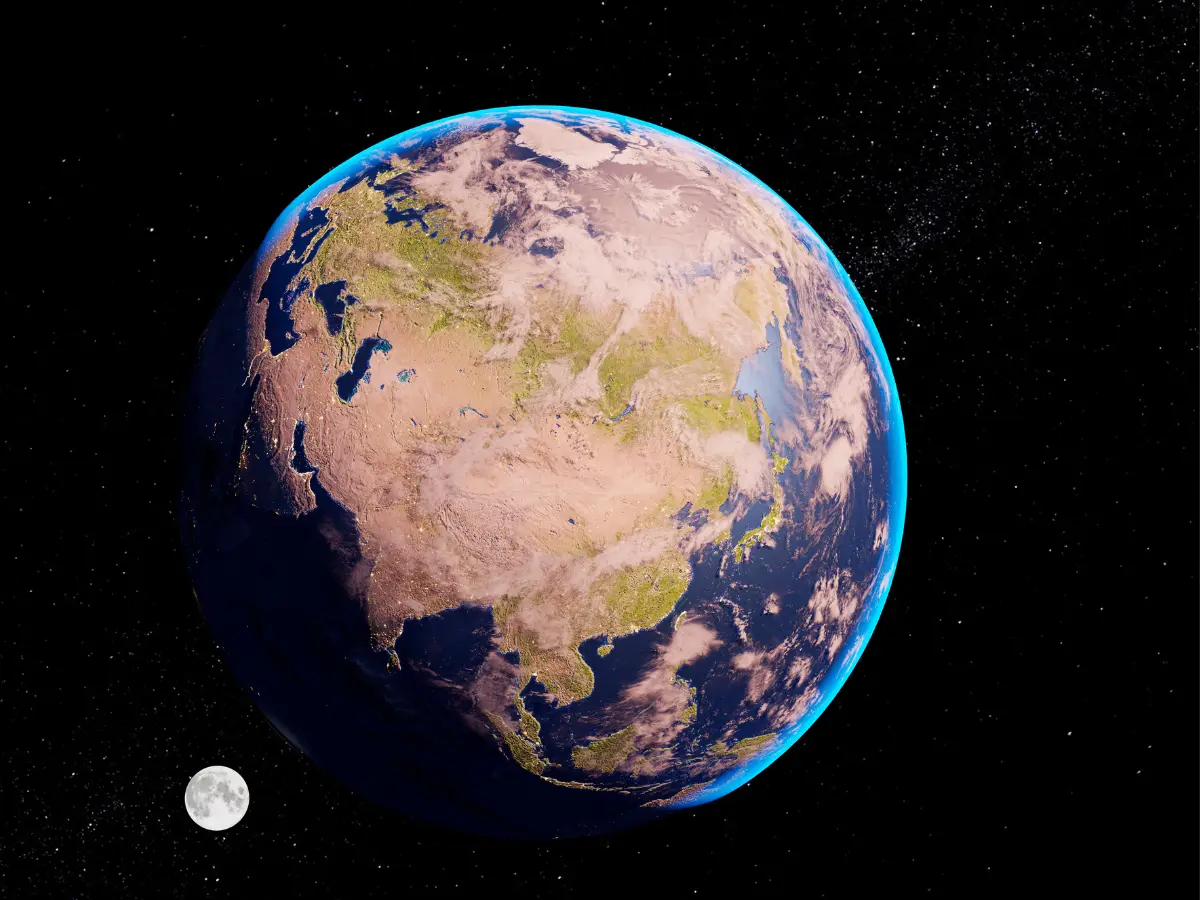
Earth’s continents slowly move, and scientists think they may join into one giant continent again.
This could happen in about 200 million years.
Researchers have described four possible shapes for this future supercontinent.
One possibility, called Pangea Ultima, would put most of the land near the equator.
Much of the land would be far from the ocean, so it could become extremely hot and dry.
The Sun would also be brighter by then, adding more heat.
Volcanoes linked to the moving continents could add more carbon dioxide to the atmosphere.
Temperatures could become too high for humans and many other mammals to survive.
This is a long-term scientific projection, not an immediate danger.

Earth’s continents may reassemble into a supercontinent in roughly 200 million years.
A 2018 Geological Magazine study outlined four possible configurations: Novopangaea, Aurica, Amasia and Pangea Ultima.
Pangea Ultima would place most land in a ring around the equator after the Atlantic and Indian oceans close.
The scenario could leave about 90 percent of land hot, dry and far from ocean breezes.
Projected temperatures of 40°C to 70°C could push Earth beyond the thermal limit for mammalian life, including humans.
- Who
- Scientists studying plate movement and future supercontinents; the projection concerns humans and other mammals.
- What
- Researchers described four possible future supercontinents and identified Pangea Ultima as a configuration that could cause extreme heat and mammalian extinction.
- Where
- Across Earth, especially land concentrated around the equator in the Pangea Ultima scenario.
- When
- The supercontinent could form in approximately 200 million years; the cited study was published in 2018.
- Why
- Closing oceans, altered ocean circulation, greater solar brightness and volcanic carbon dioxide could make much of the planet excessively hot and dry.
Scientific Projection
Uncertainty and Alternatives
Future supercontinent configuration
Scientific Projection
The cited research outlines four possible arrangements, with Pangea Ultima presented as the scenario most likely to create lethal conditions for humans.
Uncertainty and Alternatives
The articles describe multiple possible configurations, including Novopangaea, Aurica and Amasia, each with different effects on temperature, oceans and ice.
Human survivability
Scientific Projection
Pangea Ultima could produce 40°C to 70°C temperatures, leaving only 8% to 16% of land hospitable to mammals and potentially causing human extinction.
Uncertainty and Alternatives
The outcome depends on which supercontinent configuration forms; the article presents the extinction risk as a long-term scenario rather than a certain result for every configuration.
Key facts
- Projected timescale
- Approximately 200 million years
- Study
- A research article published in Geological Magazine in 2018
- Scenarios
- Novopangaea, Aurica, Amasia and Pangea Ultima
- Most dangerous scenario
- Pangea Ultima
- Projected temperatures
- About 40°C to 70°C
- Potential habitable land
- Approximately 8% to 16% of Earth’s land area for mammals
- Main climate conditions
- Hot, dry interiors far from ocean breezes, with additional warming from a brighter Sun and volcanic carbon dioxide
Quotes
João C. Duarte
Assistant professor in tectonics at the University of Lisbon and creator of the Aurica hypothesis
“it will probably be a little warmer, and maybe drier than today’s Earth,”
 wionews.com
Sources
Related news
Earth’s Oceans Reach 125,000-Year Heat Record Amid El Niño
UN Reports Warn Climate Crisis Threatens Humanity’s Future
Scientists Examine Mauritia as Believers Link It to Lemuria

World's seas hottest July on record as Europe faces heatwaves

UN Report Says 1.5°C Breach Near, Return Still Possible
