1 hr ago
Historian Highlights Qutb Shahi Women’s Political and Cultural Influence
A historian said women in the Qutb Shahi dynasty helped shape Golconda’s history.
Their work was often left out of official royal records.
Hayat Bakshi Begum was one of the most important women in the dynasty.
She helped lead the government when her son Abdullah was still a child.
She also spoke directly with Mughal leaders to protect her son and the kingdom.
She supported religious and community projects, including Bibi ka Allam and a village now called Hayathnagar.
Large amounts of food were distributed during her time, helping many people.
Other women helped with diplomacy, building projects and the royal court.
Artists such as Premamati and Taramati were also remembered through their tombs.

Historian Fatima Husna said Qutb Shahi women shaped the region’s political, social and cultural history.
Hayat Bakshi Begum helped govern Golconda while her son Abdullah Qutb Shah was a minor.
She negotiated with Mughal forces in 1636 and 1656 to protect Golconda and her son.
Hayat Bakshi Begum is associated with Bibi ka Allam, Hayathnagar and large-scale food distribution.
Bibi Jamal, Khulsum Agha, Premamati and Taramati were also cited as influential women of the period.
- Who
- Historian and museum professional Fatima Husna discussed women of the Qutb Shahi dynasty, especially Hayat Bakshi Begum.
- What
- A talk examined how Qutb Shahi women influenced politics, administration, society, culture and diplomacy.
- Where
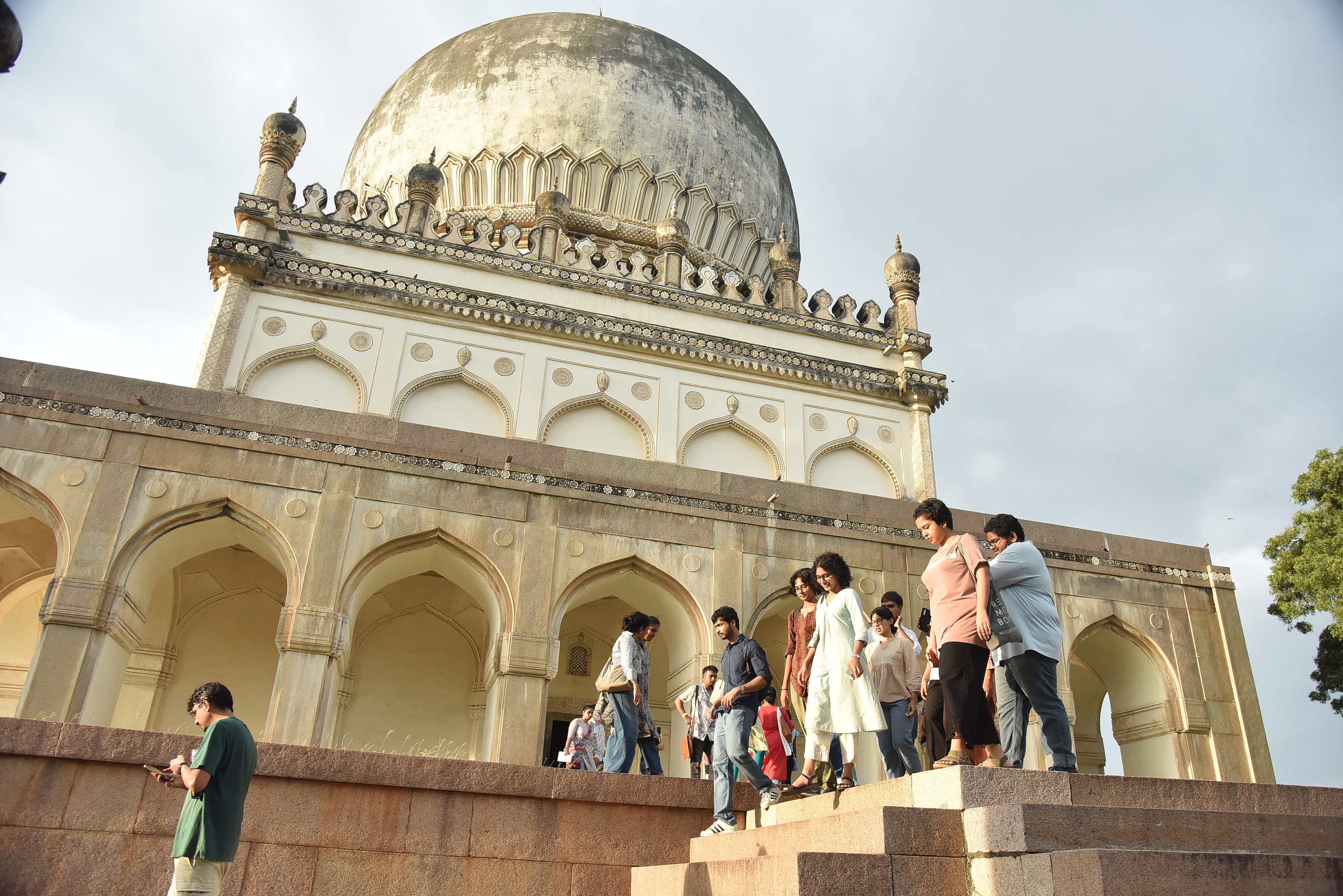
- The talk was held at Qutb Shahi Heritage Park in Hyderabad.
- When
- The talk took place on Sunday; the historical events discussed included 1565, 1636 and 1656.
- Why
- The discussion aimed to highlight women’s contributions, which were often overshadowed in royal chronicles.
Key facts
- Speaker
- Historian and museum professional Fatima Husna
- Talk
- ‘Hayat Aur Hookumat: The Women Who Built Golconda’
- Key figure
- Hayat Bakshi Begum
- Regency
- Hayat Bakshi Begum helped lead the regency council for Abdullah Qutb Shah, who became sultan at age 12
- Mughal encounters
- She advised submission to Shah Jahan in 1636 and offered Aurangzeb one crore rupees in 1656 as a war indemnity
- Public works
- She was associated with Bibi ka Allam, Hayathnagar, a sarai, a masjid and a bowli
- Other women mentioned
- Bibi Jamal, Khulsum Agha, Premamati and Taramati
Sources
Related news
Tunnel Excitement Overshadows Golconda Fort’s Declining Heritage
Neglect Pushes Qutb Shahi-Era Akkanna Sarai Towards Ruin
Why Hazrat Mahal Was Forgotten Despite Resisting British Rule
Historical Fiction Chronicles Queen Tarabai’s Resistance To Aurangzeb

Delhi Flyover Ruins May Reveal Lost Mughal-Era Sarai
Swara Bhasker’s Jauhar Remarks Revive Padmaavat’s Historical Debate
Book Review Reframes Aurangzeb and Mughal Imperial Power

Dharavi SSC Aspirant Wins Rs 25 Lakh on KBC 18