2 hrs ago
India’s Foreign Policy Faces a World of Situationships
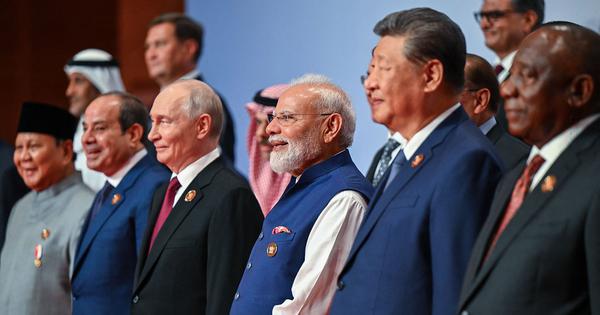
Countries do not always agree about how governments should behave.
The article says countries are increasingly working together when it helps them, even if they do not share the same values.
It calls this approach “values-based realism.”
India has often used practical diplomacy with nearby governments it disagrees with.
The article points to India’s engagement with Myanmar, Afghanistan, and Bangladesh as examples.
It says India wants to protect its security and influence without necessarily approving of those governments’ policies.
This approach can keep other countries from gaining influence when India steps away.
But it can also make it harder to demand accountability and can take a lot of diplomatic work.
The author argues that, in today’s divided world, staying engaged may be better for India than withdrawing.

The article argues that “values-based realism” is gaining traction as countries balance values with immediate interests through issue-by-issue cooperation.
It says India has long combined moral language with pragmatic engagement, especially when dealing with difficult governments in its neighborhood.
India’s current technical engagement with Afghanistan is described as a way to retain influence and pursue counter-terrorism goals without endorsing Taliban policies.
After Sheikh Hasina’s government was overthrown in 2024, India began rethinking its close reliance on the Awami League and seeking broader engagement in Bangladesh.
The article says flexible engagement can prevent strategic vacuums, but may weaken accountability and require constant diplomatic effort.
- Who
- India and its foreign-policy decision-makers; the article also discusses Canada’s Prime Minister Mark Carney and Finland’s President Alexander Stubb.
- What
- An analysis of how India may use values-based realism and flexible, issue-by-issue diplomacy in a changing international order.
- Where
- India’s neighborhood, particularly Afghanistan, Bangladesh, and Myanmar, as well as its ties with Washington and Moscow.
- When
- The article refers to developments including Bangladesh’s 2024 political upheaval and the United States’ departure from Afghanistan in 2021.
- Why
- The article argues that engagement can protect India’s security and influence and prevent regional rivals from filling diplomatic vacuums.
Case for flexible engagement
Risks of transactional diplomacy
Engaging difficult governments
Case for flexible engagement
Maintaining working ties can protect security and connectivity interests and keep rivals from filling a regional vacuum.
Risks of transactional diplomacy
Engagement without shared normative guardrails may weaken accountability and transparency.
Issue-by-issue cooperation
Case for flexible engagement
Flexible partnerships let India pursue immediate interests without requiring ideological alignment or exclusive alliances.
Risks of transactional diplomacy
Without durable arrangements, India may need to spend significant diplomatic effort continually renegotiating terms.
Withdrawing versus staying present
Case for flexible engagement
The article argues that diplomatic absence can cede strategic ground, citing India’s past experience in Kabul.
Risks of transactional diplomacy
The article cautions that transactional engagement carries strategic costs even as it preserves flexibility.
Key facts
- Framework discussed
- Values-based realism: engaging on particular issues while balancing values and national interests.
- Concept cited
- Mark Carney used the phrase “values-based realism” in a special address at Davos in January.
- Earlier proponent cited
- The article says the concept was first proposed by Finland’s President Alexander Stubb.
- Afghanistan
- India’s technical engagement is presented as a means of retaining a strategic presence, including on counter-terrorism.
- Bangladesh
- The 2024 upheaval and overthrow of Sheikh Hasina’s government prompted a rethink of India’s reliance on the Awami League, according to the article.
- Myanmar
- The article describes India’s functional ties with the military government as an example of engagement without moral endorsement.
- Potential costs
- The author warns of weaker accountability and transparency, as well as the ongoing work of renegotiating ties.
Sources
Related news
Pakistan’s SCO Presidency Highlights Limits of Global Isolation

Aiyar Says India Is Isolated and Foreign Policy Directionless
How India’s Taliban Approach Reflects Principled Pragmatism in Afghanistan
India Steps Up Ukraine Peace Efforts, Reconsidering Its Global Role

Nepal Says India Ties Excellent, Focusing on Pragmatic Opportunities
China Challenges Western International Relations; India Seeks Intellectual Autonomy

Gwalior Trafficking Probe May Be Referred to NIA
Seven Suspected Bangladeshi Nationals Detained in Nalasopara Police Raid
Bangladesh Minister Urges India to Restrain Sheikh Hasina

Kashmir Moves 150 Bangladeshis for Deportation After Probe