1 week ago
Analysis Challenges $8.8 Billion H-1B Fee Estimate
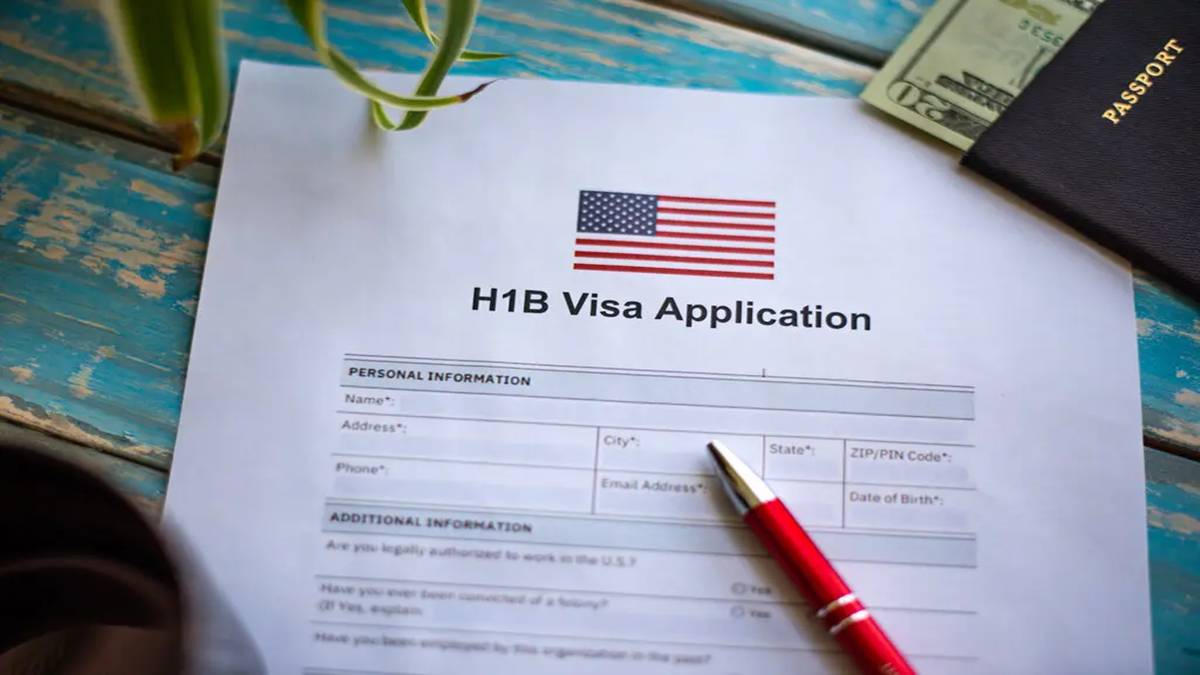
The government wants companies to pay $103,265 when they apply for certain H-1B worker visas.
Officials say this could bring in about $8.8 billion each year.
A policy group says that estimate assumes companies will keep filing as often as before.
The group says applications dropped sharply after a $100,000 fee was introduced in 2025.
Using that decline, it estimates the government would collect about $2.6 billion instead.
The group also says the fee is meant to discourage hiring foreign workers, not just pay for immigration services.
Supporters of the fee emphasize hiring and training American workers.
Critics warn that the policy could make it harder for companies to innovate and compete.

The Department of Homeland Security proposed a $103,265 fee for each new cap-subject H-1B petition.
DHS estimates the fee could generate about $8.8 billion annually from 85,000 petitions.
The National Foundation for American Policy estimates revenue at roughly $2.6 billion after a sharp filing decline.
NFAP says initial consular H-1B petitions fell 91.2% after a $100,000 fee began in September 2025.
The proposed fee is framed by DHS as cost recovery, while critics say it would restrict hiring and hurt innovation.
- Who
- The Department of Homeland Security proposed the fee; the National Foundation for American Policy analyzed and criticized the revenue estimate.
- What
- DHS proposed a $103,265 fee for every new cap-subject H-1B petition, while NFAP challenged DHS’s projection that it would raise $8.8 billion annually.
- Where
- The proposal concerns the United States’ H-1B immigration system.
- When
- The $100,000 fee began in September 2025; NFAP filed its comment on September 24, 2026, regarding the proposed rule.
- Why
- DHS says the fee would help recover immigration-system costs, while the administration says high fees prioritize hiring American workers; NFAP says the measure would restrict hiring and may reduce revenue.
Critics and Policy Analysts
Administration and DHS
Expected revenue
Critics and Policy Analysts
NFAP estimates the fee would raise about $2.6 billion because higher costs would sharply reduce filings.
Administration and DHS
DHS projects about $8.8 billion annually by applying the fee to 85,000 cap-subject petitions.
Purpose of the fee
Critics and Policy Analysts
NFAP argues the measure is primarily a restriction on H-1B hiring rather than a tool for recovering immigration-system costs.
Administration and DHS
DHS presents the fee as a way to recover part of the cost of operating the lawful immigration system, while the administration emphasizes hiring and training American workers.
Effect on wages and the economy
Critics and Policy Analysts
NFAP says the fee could damage American companies’ innovation and global competitiveness, and disputes the claim that H-1B workers earn 16% less than comparable U.S.-born workers.
Administration and DHS
DHS relies on a paper by George Borjas reporting a 16% pay gap and supports policies intended to prioritize American workers.
Key facts
- Proposed fee
- $103,265 for each new cap-subject H-1B petition
- DHS revenue estimate
- About $8.8 billion annually
- NFAP revenue estimate
- About $2.6 billion annually
- Annual cap
- 85,000 petitions: 65,000 regular petitions and 20,000 for advanced-degree recipients
- Reported filing decline
- Initial consular H-1B petitions fell 91.2%, from 13,823 to 1,212 over a comparable period
- NFAP petition estimate
- 30,270 petitions after applying the reported decline to 343,981 eligible FY 2026 registrations
- Additional revenue deduction
- NFAP deducted $476,687,835 in lost revenue from other fees
Quotes
National Foundation for American Policy
Nonpartisan policy research organization cited in the article
“Immigrants have founded or cofounded 59% (455 of 775) of America’s privately held startup companies valued at $1 billion or more,”
 financialexpress.com
“If an American corporation needs workers, it should hire and train Americans.”
financialexpress.com
Sources
Related news
Trump Extends $100,000 H-1B Fee Order Amid Legal Challenges
Second Federal Judge Blocks Trump’s $100,000 H-1B Fee
Trump Extends $100,000 H-1B Fee Through September 2027
H-1B Fee Extension Deepens Uncertainty for Indian Professionals and Students

Trump Extends $100,000 H-1B Fee, Tightens Visa Scrutiny

Trump Tightens H-1B Oversight and Renews $100,000 Visa Fee

Trump's $70,000 Barrier Threatens Indian Students' U.S. Work Options
Judge Blocks Trump Administration’s Migrant Self-Deportation Fines

Migrant caravan heads north as US issues border warning

ICE Actions Disrupt Kansas Meatpacking Amid Tight Beef Supplies