2 hrs ago
Second Federal Judge Blocks Trump’s $100,000 H-1B Fee
A US judge has stopped the government from collecting a new $100,000 charge on some H-1B work visas.
H-1B visas let US employers hire skilled workers from other countries.
Judge Haywood Gilliam said government agencies did not use the required public rulemaking process before applying the charge.
This is the second federal court decision blocking the fee.
An earlier Massachusetts judge stopped it in June, and an appeals court declined to pause that decision.
Indian professionals are especially affected because they received about 71% of approved H-1B petitions in fiscal 2024.
The administration says some employers use the program to replace American workers with cheaper foreign labor.
Employers, unions, nonprofits, and other plaintiffs say the fee was imposed unlawfully.

US District Judge Haywood Gilliam blocked agencies from enforcing Trump’s $100,000 fee on certain new H-1B petitions.
Gilliam ruled that USCIS and the State Department failed to follow required notice-and-comment rulemaking procedures.
The decision is the second federal court ruling blocking the fee after a Massachusetts judge halted it in June.
Trump extended the fee, introduced in September 2025, for another year after it was scheduled to expire September 21.
The administration says H-1B restrictions protect American workers, while employers and other plaintiffs challenge the fee’s legality and implementation.
- Who
- US District Judge Haywood Gilliam ruled in a case brought by employers, health care providers, educational institutions, manufacturers, labor organizations, individual workers, and nonprofits; the Trump administration is defending the fee.
- What
- A federal judge blocked agencies from enforcing or implementing the $100,000 fee on certain H-1B petitions.
- Where
- The ruling was issued in the Northern District of California in Oakland; a separate case was decided in Massachusetts.
- When
- The ruling was issued Wednesday and reported on October 1, 2026; the fee was introduced on September 19, 2025, and extended for another year.
- Why
- Gilliam found that federal agencies likely failed to follow required notice-and-comment procedures under federal administrative law.
Fee Challengers
Trump Administration
Legal authority and procedure
Fee Challengers
Employers, unions, nonprofits, and other plaintiffs argue that the fee is unlawful and that agencies failed to complete required notice-and-comment rulemaking.
Trump Administration
The administration relies on federal immigration law allowing restrictions on foreign nationals considered detrimental to US interests and is defending the policy in court.
Impact on workers and employers
Fee Challengers
Plaintiffs and supporters say the charge threatens employment opportunities, families’ futures, and employers’ ability to hire needed skilled workers.
Trump Administration
The administration says employers have abused the H-1B program by replacing American workers with cheaper foreign labor.
H-1B selection and oversight
Fee Challengers
Technology, health care, education, manufacturing, and other employers use H-1B visas to recruit specialized foreign workers, and challengers oppose measures that make the program more costly or restrictive.
Trump Administration
The administration has enhanced applicant vetting and proposed selection criteria favoring higher-skilled and better-paid workers.
Key facts
- Blocked fee
- $100,000 for certain new H-1B petitions
- Ruling judge
- US District Judge Haywood S. Gilliam Jr.
- Affected agencies
- US Citizenship and Immigration Services and the US Department of State
- Earlier ruling
- US District Judge Leo Sorokin in Massachusetts blocked implementation in June; the First Circuit declined to stay that decision on July 24.
- H-1B allocation
- 65,000 new visas annually, plus 20,000 for eligible applicants with advanced degrees from US institutions
- Typical previous fees
- Approximately $2,000 to $5,000, depending on various factors
- Indian share
- About 71% of approved H-1B petitions in fiscal 2024 were for beneficiaries born in India
- Separate proposal
- The Department of Homeland Security proposed a separate fee exceeding $103,000 in August.
Quotes

Haywood Gilliam
US District Judge for the Northern District of California who issued the ruling
“The Court DENIES the related provisional motion to certify the class without prejudice. Even assuming the requirements of Rule 23(a) and Rule 23(b)(2) are met, it is not clear to the Court why class certification is necessary under the current circumstances. Certification is not required for the Court to enter the requested preliminary injunction, which it has done.”
 financialexpress.com
“Today’s decision ... protects a system that was thrown into chaos overnight,”
 thehindubusinessline.com
Kalpana V. Peddibhotla
Executive director of the South Asian American Justice Collaborative
“Indian nationals bore a disproportionate share of the harm from this USD 100,000 fee, which put employment opportunities and families’ futures at risk and left employers unable to afford the workers they needed”
 thehansindia.com
Sources

Related news
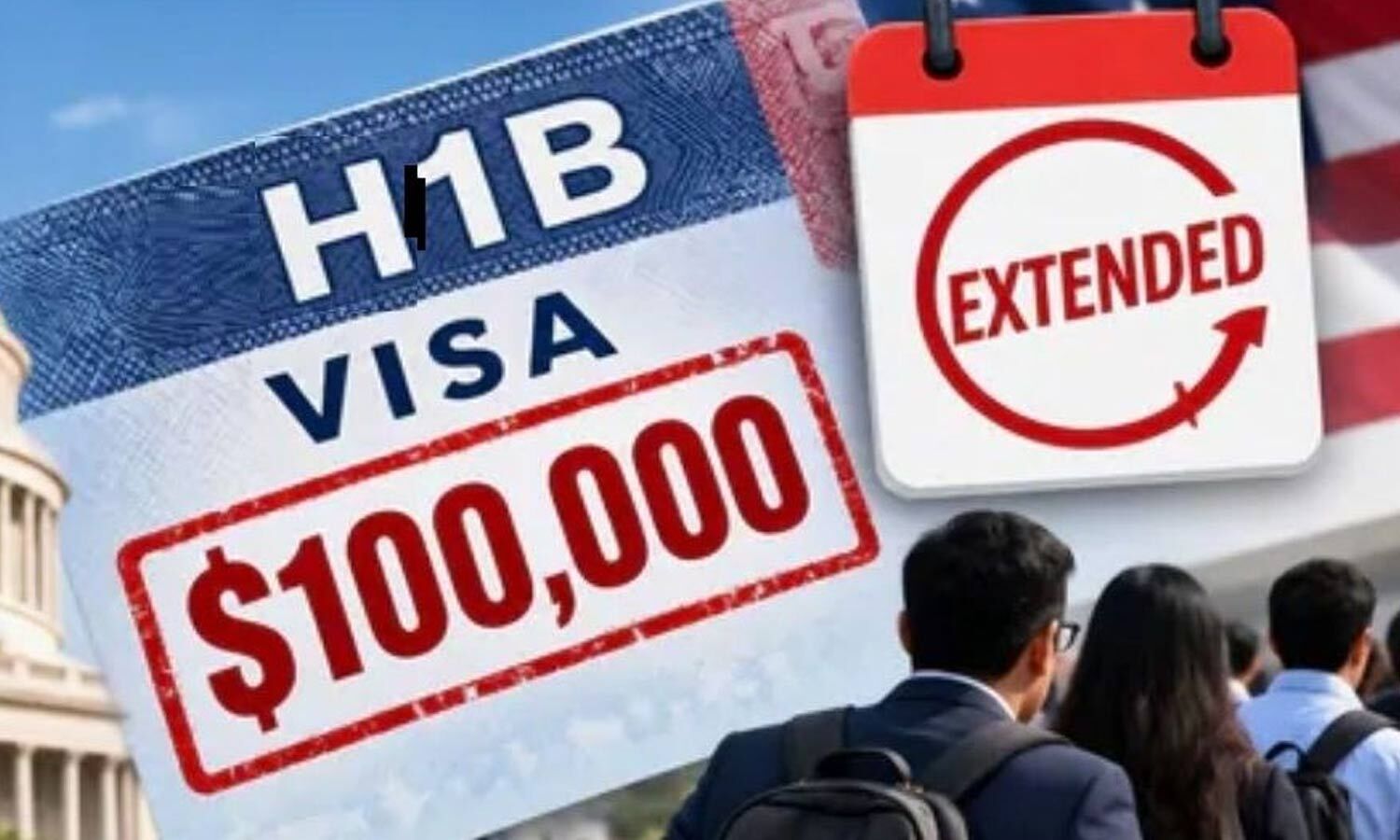
Trump Extends $100,000 H-1B Fee Order Amid Legal Challenges
Trump Extends $100,000 H-1B Fee Through September 2027

Trump Extends $100,000 H-1B Fee, Tightens Visa Scrutiny
Trump H-1B Fee Proposals Could Hit Indian Workers Hard
H-1B Fee Extension Deepens Uncertainty for Indian Professionals and Students
US Weighs $200,000 H-1B Visa Fee Amid Legal Fight
US Revokes More Than 250,000 Visas Under Trump
Senate Democrats Question Pentagon’s Proposed Venezuela Oil Investment
India-US Trade Talks Continue as Modi-Trump Call Omits Sanctions
US Revokes 250,000 Visas as India EB-2 Stalls