3 days ago
Two Gramophone Records Trace Vande Mataram’s Changing National Status
Vande Mataram was already an important song for the Indian National Congress before 1938.
At the Haripura session, Subhas Chandra Bose made the song central to the ceremony.
A large group of singers performed it while Congress leaders, including Mahatma Gandhi, stood in attention.
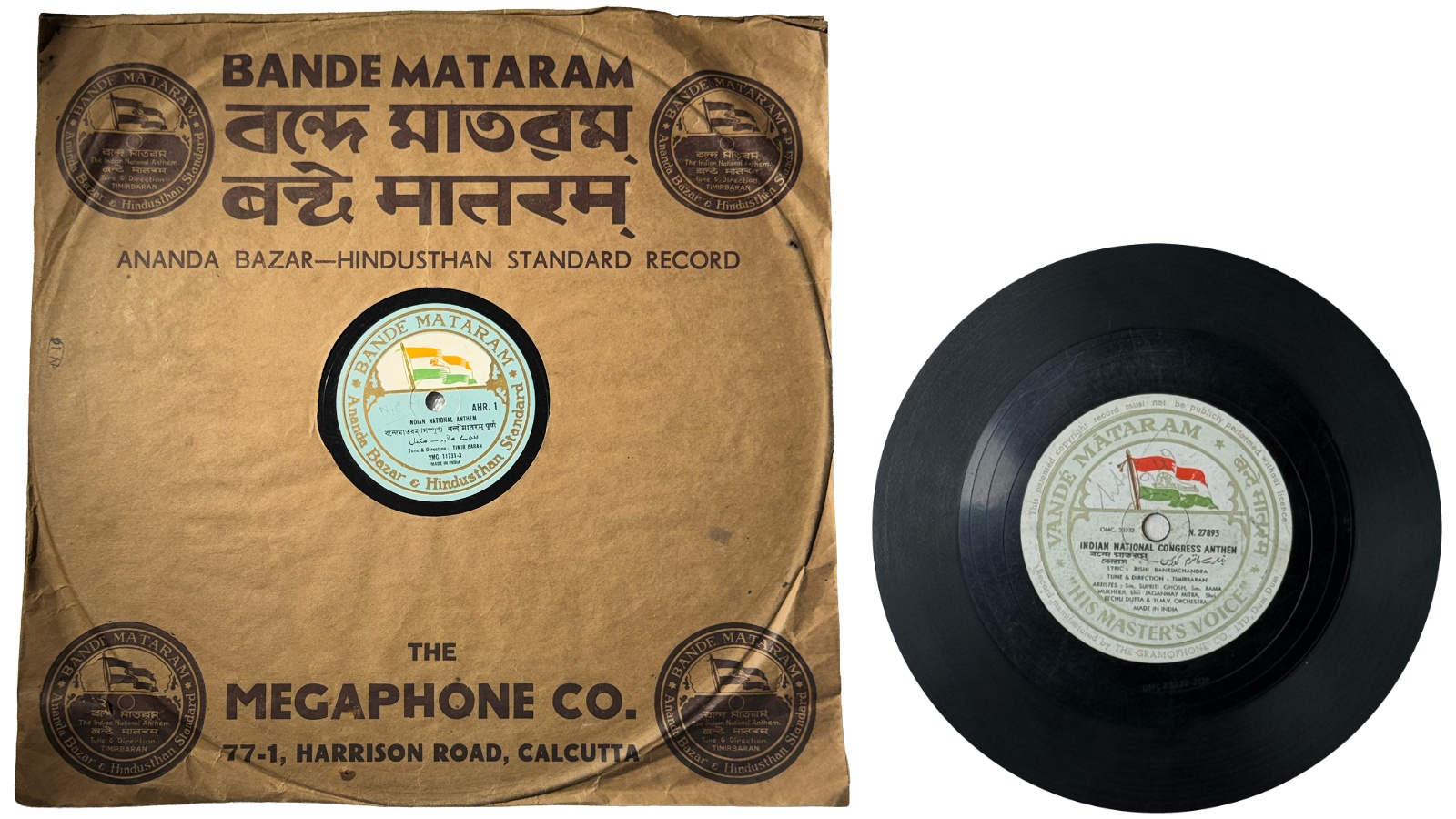
Bose also arranged for a special gramophone record containing all six stanzas.
The record called the complete version the Indian National Anthem.
A later record included only four stanzas and called it the Indian National Congress Anthem.
In 1950, the Constituent Assembly chose Jana Gana Mana as the National Anthem.
It also said Vande Mataram should be honored equally, although later government language described it as a National Song.

At the 1938 Haripura Congress session, Subhas Chandra Bose reaffirmed Vande Mataram through ceremonial music and symbolism.
Bose commissioned Timir Baran to arrange the complete six-stanza song in choral and instrumental versions.
The 1938 12-inch record was labeled “Bande Mataram-Sampoorn” and “Indian National Anthem.”
A later 10-inch HMV record reduced the song to four stanzas and labeled it the “Indian National Congress Anthem.”
The 1950 Constituent Assembly statement gave Vande Mataram equal status with Jana Gana Mana, while a 1955 note called it a “Special National Song.”
- Who
- Subhas Chandra Bose, the Indian National Congress, Timir Baran, and Congress leaders including Mahatma Gandhi were central to the events.
- What
- The status and presentation of Vande Mataram changed from a complete anthem-style recording in 1938 to a shorter Congress-labeled recording and later official distinctions.
- Where
- The 1938 events took place at Haripura in Gujarat, following the Congress Working Committee meeting in Calcutta.
- When
- The key events occurred at the Haripura session in 1938, in the Constituent Assembly statement of 24 January 1950, and in a Prime Minister’s Secretariat note dated 25 November 1955.
- Why
- Bose sought to restore Vande Mataram’s prominence after its position was compromised at the 1937 Calcutta meeting; later official language shaped its distinction from Jana Gana Mana.
Equal Status
Separate National Song
How Vande Mataram was officially described
Equal Status
The 24 January 1950 Constituent Assembly statement said Vande Mataram should be honored equally with Jana Gana Mana and have equal status; it did not use the term “National Song.”
Separate National Song
A 25 November 1955 Prime Minister’s Secretariat note called Vande Mataram a “Special National Song” and maintained a distinction between the National Anthem and National Song.
How the song was presented
Equal Status
The 1938 recording presented all six stanzas as “Bande Mataram-Sampoorn” and labeled it the “Indian National Anthem.”
Separate National Song
A later 10-inch HMV recording shortened the song to four stanzas and labeled it the “Indian National Congress Anthem,” suggesting a narrower institutional framing.
Key facts
- Haripura session
- The 51st Annual Session of the Indian National Congress, held in 1938 in Gujarat.
- Bose’s procession
- Subhas Chandra Bose traveled about four miles in a rath drawn by 51 decorated bullocks wearing Vande Mataram bells.
- 1938 recording
- A 12-inch record presented all six stanzas in choral and instrumental arrangements by Timir Baran.
- 1938 label
- The record was marked “Bande Mataram-Sampoorn” and “Indian National Anthem.”
- Later HMV record
- A 10-inch record contained four stanzas and was labeled “Indian National Congress Anthem.”
- 1950 statement
- Jana Gana Mana was declared the National Anthem, while Vande Mataram was to be honored equally and given equal status.
- 1955 note
- Jawaharlal Nehru referred to Vande Mataram as a “Special National Song” and suggested that, when both were performed, it should come first.
Sources
Related news
Congress Sticks to Two-Stanza Vande Mataram as BJP Attacks

Congress Backs Two-Stanza Vande Mataram, Drawing BJP Criticism

Amit Shah Says Modi Government Restored Vande Mataram Recognition
Congress, BJP Clash Over Two-Stanza Vande Mataram Dispute
Congress Vande Mataram Resolution Revives Debate Over National Song
BJP Claims Sonia Gandhi Objected to Vande Mataram; Congress Denies

Masaba Gupta Returns to the Ramp With Playful Bridal Couture

Gandhi's 1931 Passport Reveals His Last Overseas Journey
UPSC Daily History Quiz Tests Knowledge of India's Past

India Celebrates 80th Independence Day: Wishes, Quotes, and Messages