

1 week ago
Congress Vande Mataram Resolution Revives Debate Over National Song
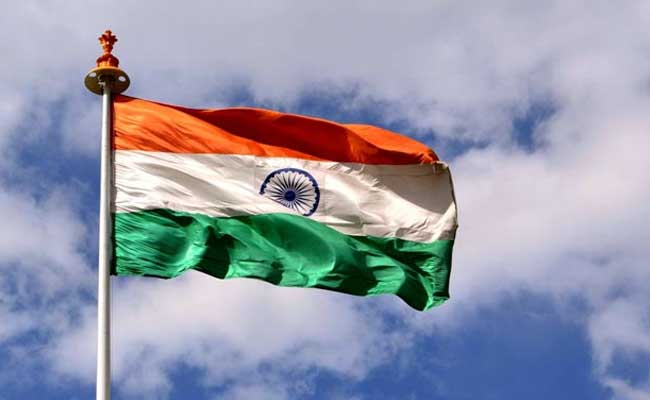
This article is about a disagreement over how much of the song Vande Mataram should be sung.
Congress has decided that its events should use only the first two stanzas.
The author says Congress first made this choice in 1937 because some political leaders objected to religious imagery in later verses.
The author argues that this old political compromise should not control India today.
In 1950, the Constituent Assembly gave Vande Mataram the same status as Jana Gana Mana.
The article also says Parliament gave the song legal protection in 2026.
It argues that official events should therefore follow the newer national rules, including the full version where prescribed.
The author says Congress should apply its concerns about religious imagery consistently to other state songs as well.

The article criticizes Congress's latest CWC resolution limiting Vande Mataram to its first two stanzas.
It says Congress adopted the restriction in 1937 amid objections from the Muslim League and concerns about religious imagery.
The author argues the 1937 decision was a political compromise, not a constitutional or permanent legal rule.
The Constituent Assembly gave Vande Mataram equal status with Jana Gana Mana on 24 January 1950, according to the article.
The article says Parliament extended statutory protection to Vande Mataram in July 2026 and that official protocol includes its full six-stanza version.
- Who
- The Indian National Congress and its Congress Working Committee are at the center of the dispute; the article is written by a BJP national executive member.
- What
- The dispute concerns Congress's decision to restrict Vande Mataram to its first two stanzas and whether that decision can take precedence over later national and legal decisions.
- Where
- The issue concerns India, including Congress gatherings and official events such as the Independence Day ceremony at the Red Fort.
- When
- The historical decisions discussed date from 1937 and 1950; the article says Parliament amended the relevant law in July 2026.
- Why
- Congress's restriction was linked to concerns about religious imagery and objections raised during the communal political tensions of the 1930s; the author rejects treating that compromise as permanent.
Congress Position
Author's Argument
How much of the song should be used
Congress Position
Congress's CWC resolution supports restricting Vande Mataram to its first two stanzas, continuing the approach adopted by Congress in 1937.
Author's Argument
The author argues that the 1937 restriction was a temporary political accommodation and should not govern independent India's national observances.
Religious imagery and secularism
Congress Position
The article associates Congress's concerns with the religious imagery in the later verses and the possibility that it could make some communities uncomfortable.
Author's Argument
The author says comparable civilisational or religious references appear in several state songs and argues that any objection should be applied consistently rather than directed only at Vande Mataram.
Authority of the 1937 decision
Congress Position
Congress is presented as treating its historical resolution as the basis for its current practice.
Author's Argument
The author says the 1950 Constituent Assembly settlement and the alleged 2026 parliamentary amendment have greater constitutional or statutory authority than a party resolution.
Key facts
- 1937 Congress decision
- Congress decided that only the first two stanzas of Vande Mataram would be sung at its national gatherings.
- 1950 Constituent Assembly decision
- On 24 January 1950, Rajendra Prasad declared that Vande Mataram would be honored equally with Jana Gana Mana.
- 2026 legal change
- The article says Parliament amended the Prevention of Insults to National Honour Act, 1971, in July 2026 to protect the National Song.
- Official protocol
- The article says the government prescribed a protocol including the full six-stanza version at specified official occasions.
- Historical association
- The song became associated with India's freedom struggle, including the use of its slogan by Bhikaji Cama and Madan Lal Dhingra, according to the article.
- Author's comparison
- The article compares Vande Mataram with Karnataka's Jaya Bharata Jananiya Tanujate, Tamil Nadu's Tamil Thai Vazhthu and Andhra Pradesh's Maa Telugu Talliki.
Quotes

C. Rajagopalachari
Congress leader who wrote to Sardar Vallabhbhai Patel in January 1939 about concessions concerning Vande Mataram.
“These concessions will not save the situation… If we set them forth as concessions they will only become points for further agitations and will make no gain for peace. On the other hand, the concessions may give rise to a weakening of Hindu psychology and produce depression all around.”
 NDTV
NDTV
Sources
Related news
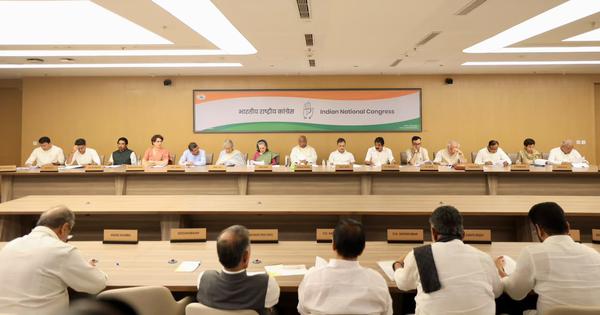
Congress Sticks to Two-Stanza Vande Mataram as BJP Attacks

Congress Backs Two-Stanza Vande Mataram, Drawing BJP Criticism

Congress, BJP Clash Over Two-Stanza Vande Mataram Dispute
Shah Attacks Congress Over Two-Stanza Vande Mataram Decision

Rajnath Singh Calls Congress Vande Mataram Stand Unconstitutional

Congress Two-Stanza Vande Mataram Policy Draws Sharp BJP Attack
BJP MLA Anil Sharma Dies After Prolonged Illness, Yogi Mourns
India’s Global Power Ambitions Face Economic and Democratic Setbacks
Sonia Gandhi Memoir Sparks Debate Over Politics, Publishing And Speech

Rajasthan BJP Promises Early Disturbed Area Law Enforcement

Punjab Police, ED Clash Over Alleged Transfer-Posting Network