1 day ago
Indore Plans Wider Turns, Smart Signals to Ease Traffic
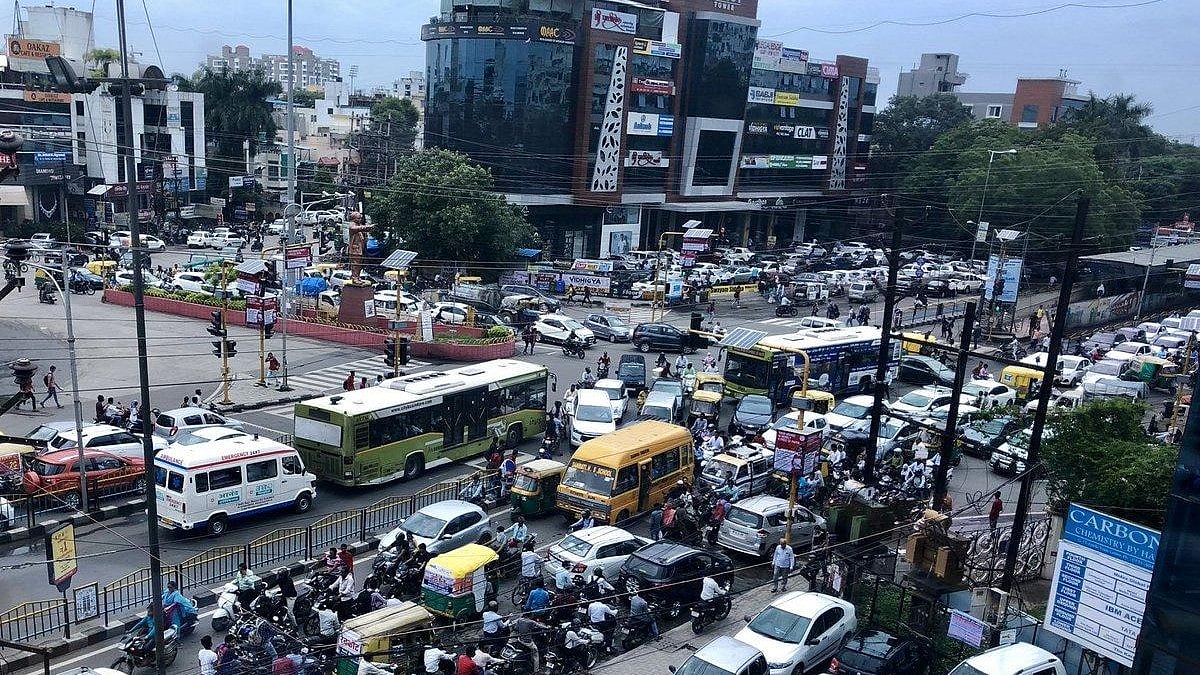
Indore officials have announced several changes to make roads safer and less crowded.
Left turns at city squares will be made wider.
Zebra crossings and painted road markings will be added.
Traffic signals will be connected so they work better with vehicle queues.
E-rickshaws will have movement rules to reduce traffic jams.
Officials will look for places where accidents happen often.
New road projects must provide alternative routes before construction begins.
Roadside parking and encroachments near schools will be removed.
Special steps will also be taken on the Ring Road and bypass to prevent congestion.

Left turns at all city squares will be widened, with zebra crossings and road markings added.
E-rickshaw movement will be regulated to reduce congestion on main roads.
Traffic signals will be synchronized through an automatic vehicle queue-based system.
Authorities will identify accident-prone black spots and improve safety measures in urban and rural areas.
Roadside parking, obstructive electricity poles, encroachments and heavy-vehicle violations at no-entry points will be addressed.
- Who
- Collector Shiv Verma and the District Road Safety Committee.
- What
- A set of traffic-management and road-safety measures was ordered, including wider left turns, synchronized signals, zebra crossings and stricter parking and vehicle controls.
- Where
- Indore and other urban and rural areas of the district, including city squares, main roads, the Ring Road and bypass.
- When
- The decisions were taken at a committee meeting on Monday.
- Why
- To ease congestion, streamline traffic and reduce accidents.
Key facts
- Main decision
- Left turns at all city squares will be widened.
- Road markings
- Zebra crossings and road markings will be provided on all roads.
- Signal system
- Signals will be synchronized using an automatic vehicle queue-based system.
- E-rickshaws
- Their movement will be regulated on main roads.
- Safety measures
- Accident-prone black spots will be identified and treated.
- Construction planning
- Alternative routes must be created before new projects begin.
- Traffic restrictions
- Roadside parking will be banned, and no-entry points for heavy vehicles will be continuously monitored.
Sources
Related news

Ujjain's Teen Batti Chauraha to Undergo Major Traffic Revamp
Indore Plans Traffic Overhaul With Flyovers And 1,500 Buses

Bhopal Polytechnic Crossing To Get Wider Roads, Smoother Traffic
Habsiguda, Uppal Junctions Plan Free-Left Traffic Improvements

Pune Collector Sets October Deadline to Eliminate 43 Black Spots

Pune's Chakan Bans Roadside Parking, Targets Encroachments With Zero Tolerance

Delhi High Court Orders Madhya Pradesh to Pay Advocate Dues
Delhi Police Bust Interstate Arms Racket, Arrest Two

Raisen Jail Guard Shot; Superintendent Suspended Amid Security Probe
Two Women Allegedly Assault Colleague In Gwalior Street Fight

MP High Court Orders SBI Account Unfrozen, Holds Disputed Funds