2 weeks ago
Where the 1857 Mutiny Left Its Mark on Delhi's Ridge

Long ago, in 1857, Indian soldiers called sepoys rose up against the British rulers.
The uprising started in a city called Meerut and then spread to Delhi.
Near Delhi there is a long, hilly park called the Ridge.
The British soldiers used this high ground to watch the city, plan their attacks and stay safe.
They used old buildings there, like a tower, a mosque and an old house, as lookout points and bases.
There is even a pond where people say the water once turned red from the fighting.
After the fighting, the British built a memorial in 1863 to remember their soldiers who died.
The British also planted fast-growing trees and plants on the Ridge to make their homes look greener.
Today, the Ridge is an important place for nature and for remembering the history of 1857.

Delhi's Ridge gave the British a crucial high-ground position to hold and eventually retake Delhi during the 1857 revolt.
Key military sites on the Ridge included the Flagstaff Tower, Chauburji Mosque, Hindu Rao's house and Pir Ghaib.
The Mutiny Memorial, built in 1863, commemorates British officers and soldiers of the Delhi Field Force killed in the conflict.
Khooni Jheel, a water-filled depression, is tied to local lore that its water turned red from the intense 1857 fighting.
Under British rule, fast-growing invasive plant species were introduced on the Ridge to create quick greenery around settlements in Civil Lines.
- Who
- British forces fighting rebel sepoys, who sought support from Mughal emperor Bahadur Shah Zafar; historians Swapna Liddle and Sohail Hashmi and ecologist Ekta Khurana provided details.
- What
- Delhi's Ridge served as a British military stronghold during the 1857 Revolt, with landmarks such as the Flagstaff Tower, Mutiny Memorial and Khooni Jheel marking the conflict.
- Where
- Delhi's Ridge (Kamla Nehru Ridge), near Delhi University, in Delhi, India.
- When
- The uprising reached Delhi on May 11, 1857; the Battle of Badli-ki-Serai was fought on June 8; British forces entered Delhi through Kashmiri Gate in September 1857.
- Why
- The Ridge's elevation and open views gave the British a tactical advantage to shelter refugees and mount the assault to retake Delhi.
Key facts
- Event
- Revolt of 1857 (Sepoy Mutiny)
- Key location
- Delhi's Ridge (Kamla Nehru Ridge), near Delhi University
- Uprising reaches Delhi
- May 11, 1857
- Battle of Badli-ki-Serai
- June 8, 1857
- British recapture of Delhi
- September 1857, entering through Kashmiri Gate
- Mutiny Memorial
- Built in 1863 for officers and soldiers of the Delhi Field Force
- Key historical sites
- Flagstaff Tower, Chauburji Mosque, Hindu Rao's house, Pir Ghaib, Khooni Jheel
- Hindu Rao's house
- Later became Hindu Rao Hospital
Quotes
Swapna Liddle
Historian specializing in the 1857 Revolt
“"The Flagstaff Tower stood at one of the highest points of the Ridge and was an important British position. The East India Company flag was unfurled there in the morning and lowered in the evening, while the tower was also used as a signal point for telegraph communications."”
 rediff.com
 theprint.in
“"Firoz Tughlaq had built this as an observatory. The British used that building as their command headquarters."”
rediff.com
Sources

Related news
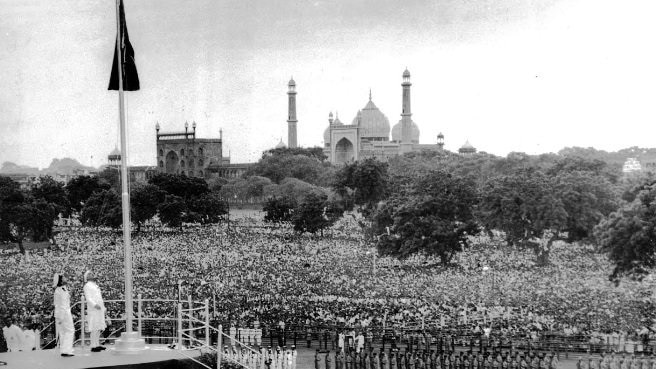
Why India's Prime Minister hoists the flag at Red Fort
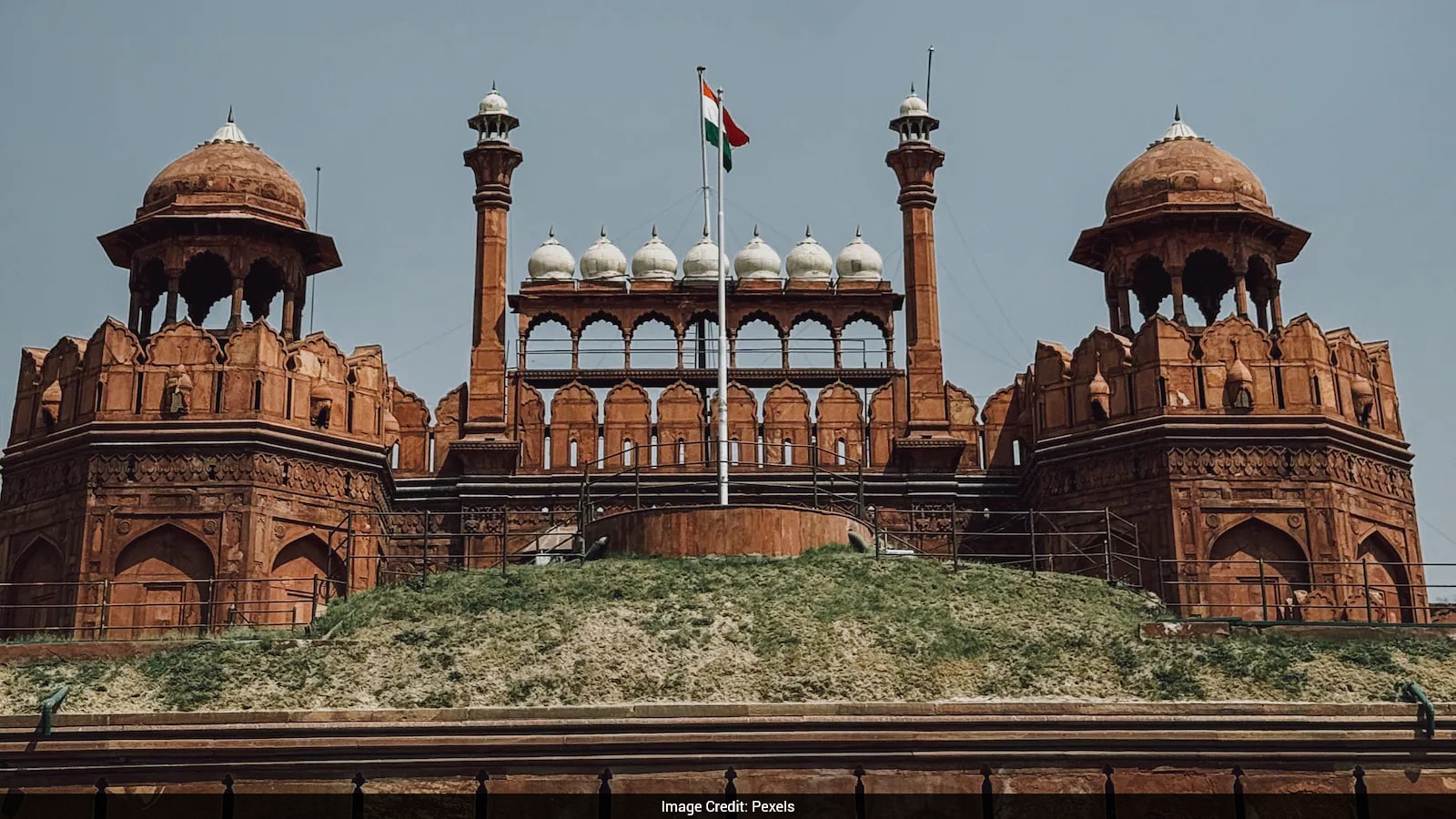
Why Independence Day Is Celebrated At The Red Fort
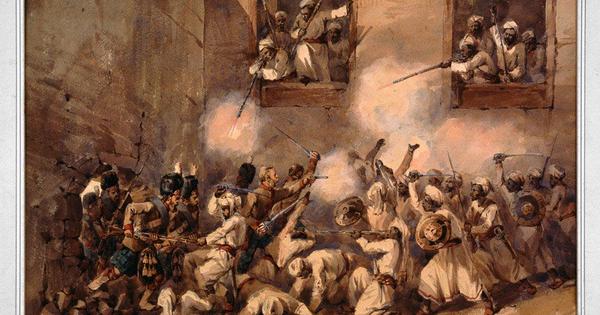
Peepul Tree Remembers the 1857 Battle at Sikandar Bagh
Tricolour hoisted on 108-foot mast at LoC in Jammu
British Draft Plans That Could Have Remade New Delhi
Rani Chennamma's 1824 Kittur Revolt Came Decades Before 1857 Uprising

Shikha Inn Leaseholder Arrested After Kolkata Hotel Fire

Kolkata Hotel Fire Linked to Air Conditioner Service Port

Kolkata Hotel Fire Leads to Arrest, Building Sealing