6 days ago
New Book Traces the Sari’s History, Skills and Livelihoods
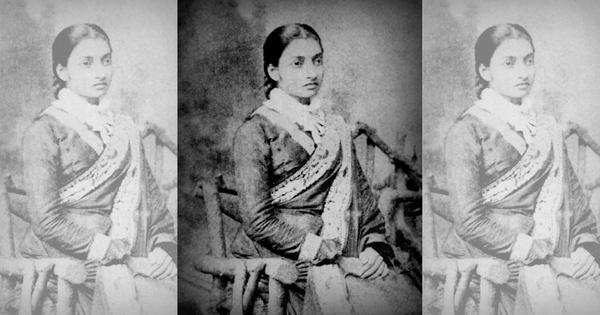
The sari is a long piece of cloth worn in many different ways across India.
Different regions give it different names, designs and wearing styles.
The cloth is carefully planned and made on a loom, where its borders and patterns help it hang properly.
A new book studies the sari and the people whose work makes it possible.
Researchers traveled through many Indian villages to learn from weavers, printers and dyers.
They found that some traditional skills are disappearing because of factories, power looms and changing clothing preferences.
Many women now wear stitched or Western clothes for everyday life, although the sari remains popular for special occasions.
The sari is also being worn by some professionals in workplaces and public institutions.
The book argues that better design, markets and support could help preserve handloom work and artisan livelihoods.

The sari reflects India’s regional cultures, weaving traditions and changing social identities.
Its design is created on the loom through variations in weave, pattern, structure and borders.
Research for the book documented weavers, printers and dyers across Indian states from 1984 to 2003.
The book records 108 sari drapes while emphasizing that personal variations remain possible.
The author warns that industrialization and declining demand are threatening handloom livelihoods.
- Who
- Rta Kapur Chishti, Amba Sanyal, research teams, and the weavers, printers and dyers documented in the book.
- What
- Saris: Tradition and Beyond examines the sari’s history, construction, regional variations, wearing styles and connections to textile livelihoods.
- Where
- Across Indian states, including villages and major textile production and trade centers.
- When
- The main field research took place from 1984 to 1991, with Andhra Pradesh completed in 1997 and verification tours conducted in 2002-03.
- Why
- The project sought to document endangered textile knowledge and explore ways to sustain handloom skills and artisan livelihoods.
Preservation and Handloom Support
Convenience and Industrial Change
The sari’s future
Preservation and Handloom Support
The sari and the skills behind it should be documented, supported through design and markets, and preserved as part of India’s textile culture.
Convenience and Industrial Change
The sari is increasingly disappearing from everyday wear as women choose stitched garments and easy-maintenance Western fabrics.
Production methods
Preservation and Handloom Support
Maintaining a broad base of spinning and weaving could protect artisan livelihoods and allow highly skilled weavers to develop further.
Convenience and Industrial Change
Power looms, mills, industrialization and globalization have expanded pressure on traditional handloom production.
Contemporary use
Preservation and Handloom Support
The sari remains adaptable and is gaining visibility in boardrooms, law chambers, courts and among professionals seeking cultural identity.
Convenience and Industrial Change
For many people, stitched clothing is more practical for everyday use, contributing to the sari’s decline as daily wear.
Key facts
- Book
- Saris: Tradition and Beyond
- Author
- Rta Kapur Chishti
- Publisher
- Roli Books
- Drape variations
- The book features 108 sari drapes and wearing styles.
- Research period
- Field travel primarily took place from 1984 to 1991.
- Later research
- Andhra Pradesh research was completed in 1997, followed by verification tours in 2002-03.
- Handloom challenge
- Weavers are described as losing high-skill livelihoods amid industrialization, power looms, mills and changing demand.
Quotes
Indian weavers
Weavers consulted during the book’s field research
“What use is the book to us now, when we need to make a living?”
 scroll.in
Sources
Related news
The Republic in 6 yards: how the sari binds India
Laila Tyabji recounts Dastkar's 45-year journey reviving India's handloom heritage

Handloom Doesn't Need Revival, It Needs Recognition, Designer Says
Indian Designers Turn Heritage Weaves Into Contemporary Luxury
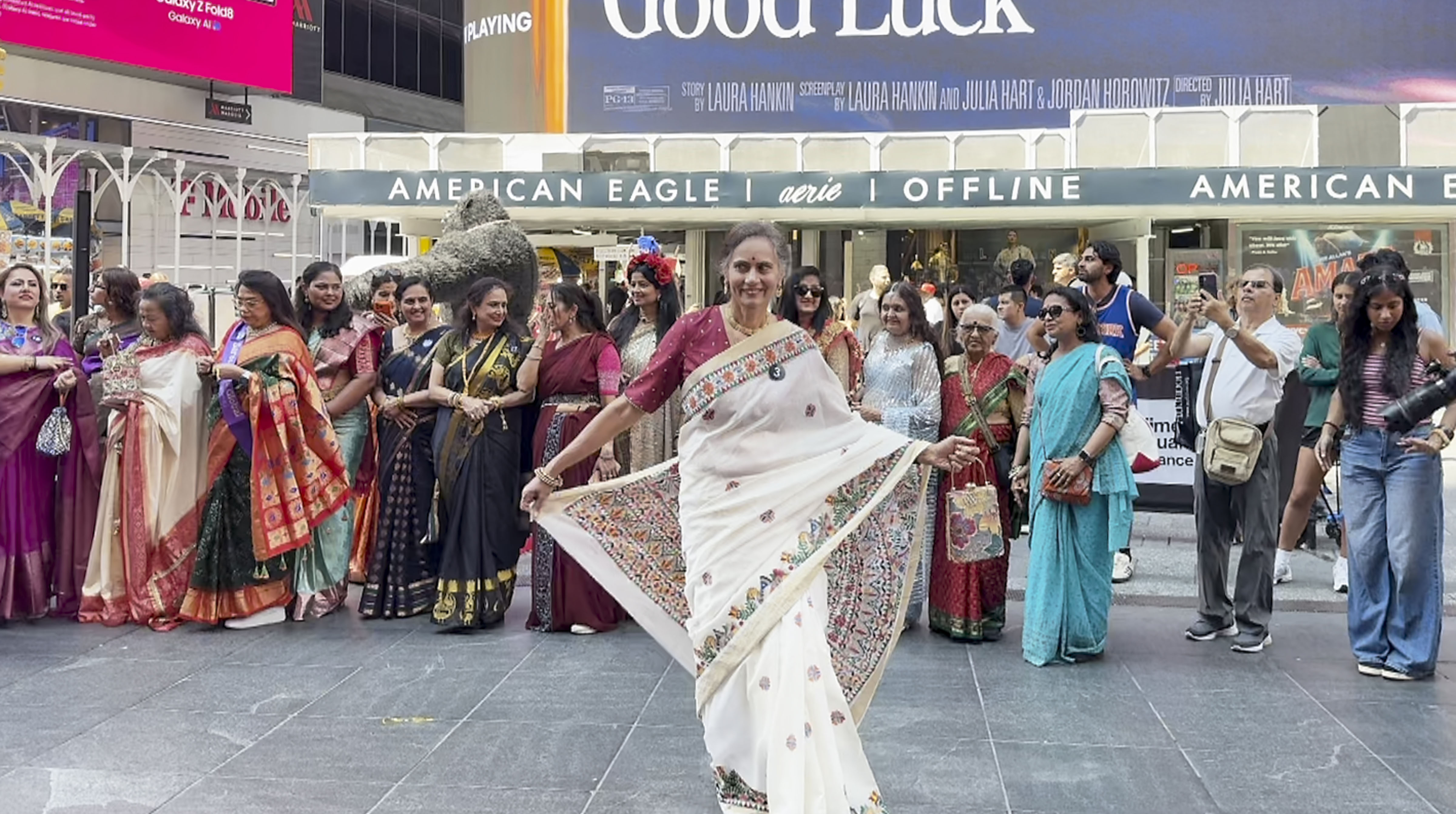
Indian Sarees Showcase Textile Heritage at New York Times Square