

2 weeks ago
The Republic in 6 yards: how the sari binds India
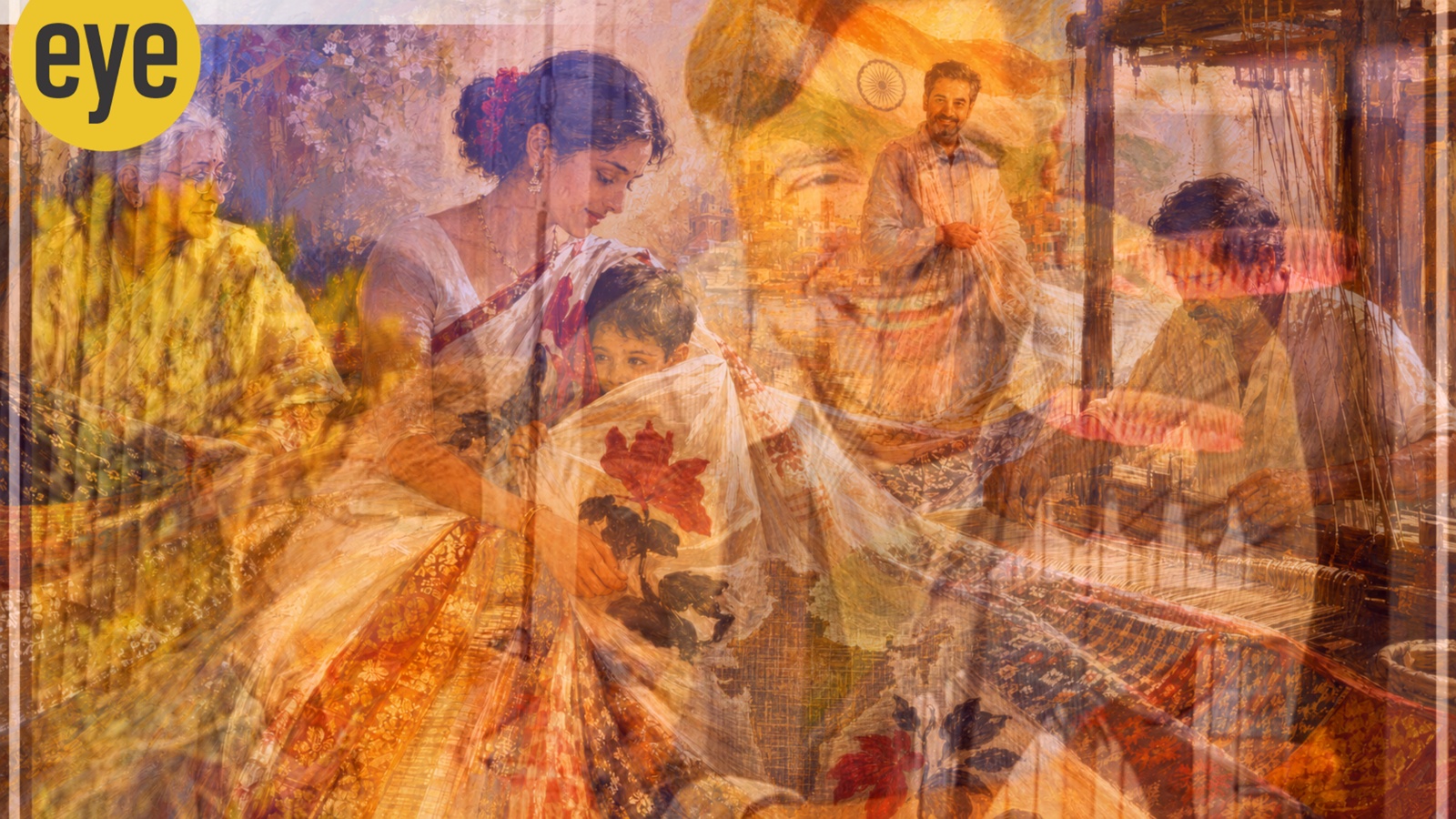
This story is about a special piece of clothing called a sari, which is a very long piece of cloth that women in India wrap around themselves.
The writer tells us that when she was a little girl, she learned about her country by looking at the beautiful saris her mother and grandmother wore.
Every sari came from a different part of India, and each one had its own colours, patterns and story.
She remembers helping to make a cotton sari crisp and fresh by dipping it in rice water and shaking it in the hot wind to dry.
Saris are made by hand, and a single masterpiece could take months or even a whole year to create.
The writer met many clever and powerful women who wore saris while doing important jobs like being doctors and writers.
She says saris are not just old-fashioned clothes but great works of art and design, just like famous paintings.
She hopes people will buy handwoven saris to help the weavers, because a sari can become curtains, quilts, clothes and even bedding.
In that way, a simple piece of cloth carries India's history and helps hold the whole country together.

The essay recounts how the author learned about India's geographies, histories and peoples through the saris in her mother's wardrobe.
Childhood rituals included starching a white cotton sari with rice water and drying it with Panditji in the hot Delhi wind.
Women such as Dr Prabha Manchanda, Dr Manjula Bansal, Joyce Arora, Sunita Kohli and Shobhaa De each wore saris while expressing authority, elegance and individuality.
The author argues that Chanderi, Patola, Banarasi, Kasavu and Paithani saris are among the world's great textile traditions and should not be dismissed as 'ethnic'.
The piece urges readers to choose handloom over haste and a weaver over a middleman, calling each such purchase a vote for India's living heritage.
A sari seen in Lahore reminded the author that borders drawn in 1947 could not erase conversations begun centuries earlier.
- Who
- The author, an Indian writer reflecting on her upbringing, and the women who taught her about saris: her mother, her grandmother Kamla Bhatnagar, Dr Prabha Manchanda, Dr Manjula Bansal, Joyce Arora, Sunita Kohli and Shobhaa De.
- What
- A personal essay celebrating the Indian sari as a carrier of history, culture and identity, and urging support for handwoven textiles and their weavers.
- Where
- India (notably Delhi, Maheshwar and Banaras), Lahore in Pakistan, and Manhattan in the United States.
- When
- Not specifically stated; the essay references Independence Day observances in India, childhood memories in Delhi, and travels to Lahore and America.
- Why
- To show that the sari has carried India's civilisation across millennia and borders, and to argue that choosing handloom over haste is a daily vote for the nation's living heritage.
Heritage Preservation
Market Pressures
Classifying Indian saris
Heritage Preservation
Saris are frequently labelled 'ethnic', which diminishes their standing as mere decorative craft.
Market Pressures
Traditions like Chanderi, Patola, Banarasi, Kasavu and Paithani are equal in sophistication and artistry to any of the world's great textile traditions.
Compensating weavers
Heritage Preservation
A civilisation capable of producing Patola, Jamdani and Kanchipuram silk should pay its weavers what their genius deserves.
Market Pressures
Hasty buying habits and middlemen keep handwoven textiles unaffordable or undervalued in everyday commerce.
Choosing handloom in daily life
Heritage Preservation
Buying handloom over machine-made goods is a democratic act, a daily vote for the kind of country one wishes to sustain.
Market Pressures
Disposable trends and cheaper alternatives remain the practical default for most shoppers.
Key facts
- Central garment
- Sari, described as 'six yards' of cloth and 'the Republic in 6 yards'
- Saris mentioned
- Maheshwari, Banarasi, Patola, Jamdani, Kanchipuram, Kasavu, Paithani, Chanderi
- Notable women featured
- Dr Prabha Manchanda, Dr Manjula Bansal, Joyce Arora, Sunita Kohli, Shobhaa De, Kamla Bhatnagar
- Key locations
- Delhi (Crafts Museum), Jio World Centre, Lahore, Manhattan (Hospital for Special Surgery)
- Author's siblings
- Seema and Samir
- Historical reference
- Partition of 1947 and Independence Day in India
Quotes
Grandmother Kamla Bhatnagar
Author’s grandmother who taught her about patience and craftsmanship
“She wore glamour as naturally as some people wear perfume, yet when she drapes a sari, it is never overwhelmed by her personality.”
 indianexpress.com
“You cannot hurry beauty that is made by hand.”
indianexpress.com
Sources
Related news
New Book Traces the Sari’s History, Skills and Livelihoods
India's 80th Independence Day: Sen and Chaterji reflect on freedom
Indian Sarees Showcase Textile Heritage at New York Times Square
Hyderabad’s Layered Heritage Meets Caste, Class, and Change

In Madanpura, Women's Hands Give Banarasi Sarees Their Final Touch
