

2 weeks ago
Payakaraopeta Handloom Saris Win Markets, But Weavers Lose Out
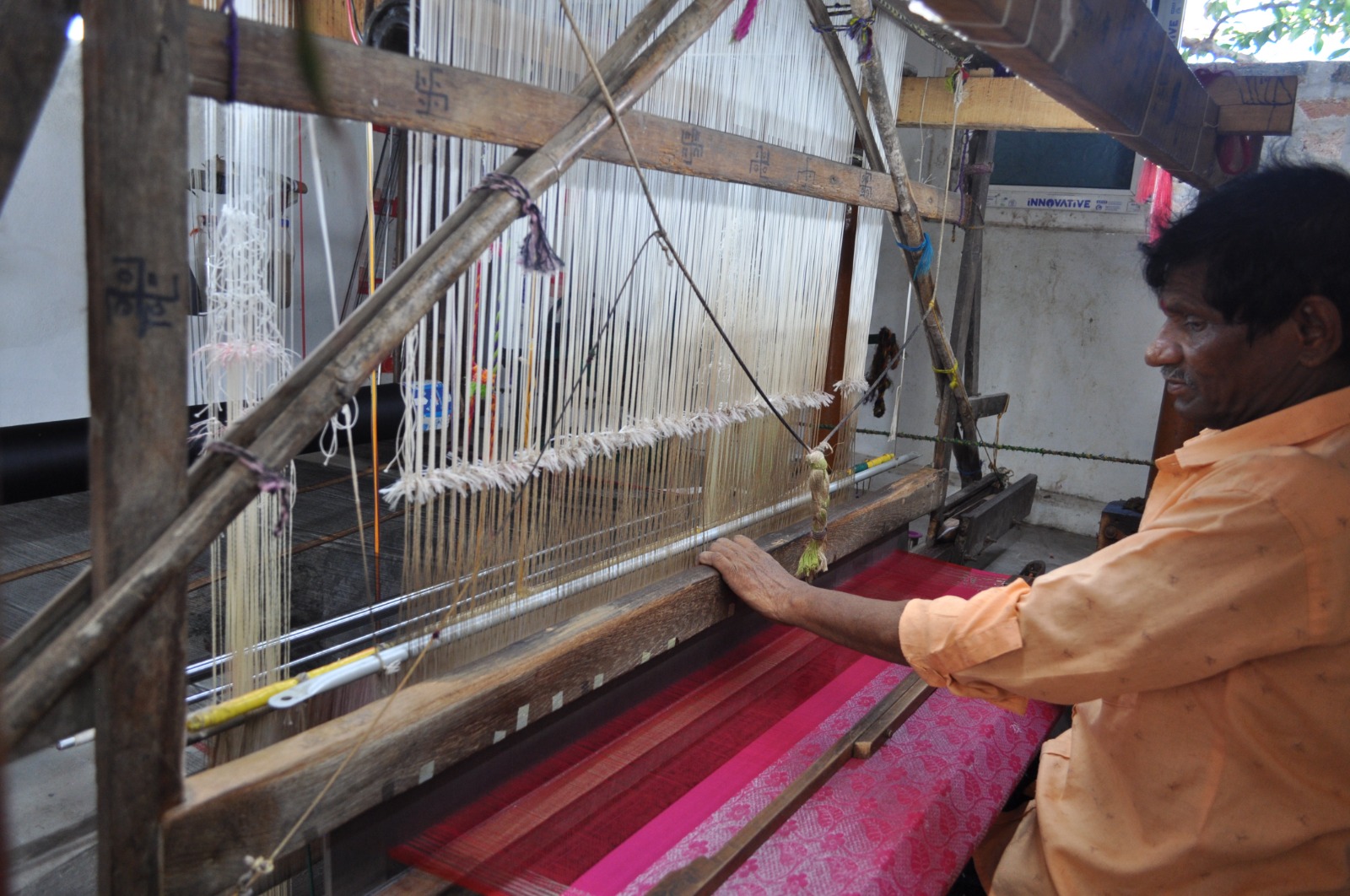
Long ago, in a town called Payakaraopeta in India, people made beautiful cotton and silk saris by hand.
These saris are very light, weighing only about 600 grams, and have pretty patterns that take a lot of skill.
Making just one sari takes more than ten days.
The saris are so famous that people in big cities like Hyderabad, Bengaluru and Chennai love to buy them.
But the people who weave the saris do not earn very much money.
Each weaver makes only about six saris a month and earns around ₹6,000 or less.
The weavers say there is no fair pricing, and traders who control the market take most of the profit.
The hot weather from climate change also makes it hard to work in the afternoon, because even a drop of sweat can stain the sari.
Because weaving is so hard and pays so little, young people do not want to learn it, so the old craft may slowly disappear.

Payakaraopeta handloom cotton and silk saris, weighing barely 600 grams, still win buyers with intricate designs and jamdani craftsmanship.
Only 24 women weave daily for the Payakaraopeta Handloom Weavers Cooperative Society, with 292 more members contributing intermittently.
Each sari takes more than 10 days to complete and sells for ₹3,500 to ₹20,000 in Hyderabad, Bengaluru and Chennai.
Weavers produce about six saris a month, earn around ₹6,000 or less, and blame unfair pricing, weak marketing and trader dominance.
Rising heat linked to climate change shortens working hours, and younger generations are abandoning the tradition.
- Who
- Weavers and members of the Payakaraopeta Handloom Weavers Cooperative Society, including artisans such as G. Trimurthulu, G. Naga Satti Babu and Bandaru Ramalakshmi, in Andhra Pradesh, India.
- What
- Traditional Payakaraopeta cotton and silk handloom saris still win buyers in major markets, but the weavers who make them face low incomes, lack of fair pricing, and inadequate branding and marketing support.
- Where
- Payakaraopeta, near Visakhapatnam in Andhra Pradesh, India.
- When
- The article does not give a specific date; the situation is described as ongoing.
- Why
- Weavers depend on traders who control the trade, face rising silk and yarn prices, lack branding for unique fabrics such as 'Nool Number', and contend with increasing heat from climate change, competition from power looms, and the departure of younger generations.
Key facts
- Sari weight
- About 600 grams
- Weaving workforce
- 24 daily weavers plus 292 intermittent members
- Price range
- ₹3,500 to ₹20,000 per sari
- Time per sari
- More than 10 days
- Monthly output and income
- About 6 saris per weaver; around ₹6,000 or less
- Jamdani craft introduced
- 1994
- Raw material sources
- Hyderabad, Vijayawada, Chirala
- Lost fabric
- 'Nool Number' disappeared due to lack of branding, unlike Uppada cotton
Quotes
Bandaru Ramalakshmi
Local weaver and advocate for the craft
““Our survival depends on recognition, support and renewed interest in preserving traditional weaving against the tide of mechanisation.””
 deccanchronicle.com
““Payakaraopeta’s handloom industry, once a symbol of artistry and pride, now stands at a crossroads.””
deccanchronicle.com
Sources
Related news
Laila Tyabji recounts Dastkar's 45-year journey reviving India's handloom heritage

Konaseema Collector Urges Handloom Societies to Tap Private Markets

Ramraj Cotton revives Santhali weave with new Panchaatm handloom line

Madhya Pradesh Handloom Sales Surge 165% in Five Years

J&K Handicraft Exports Rise as Artisans Report Stagnant Returns

Officials Encourage Youth to Revive Chundur’s Traditional Handloom Weaving

IIT Madras Backs Rs 323 Crore Uppada Coastal Protection Wall

Naidu launches Nethanna Sevalo welfare scheme for handloom weavers
