1 hr ago
Indian Stock Market Crash Wipes Out ₹7.4 Lakh Crore
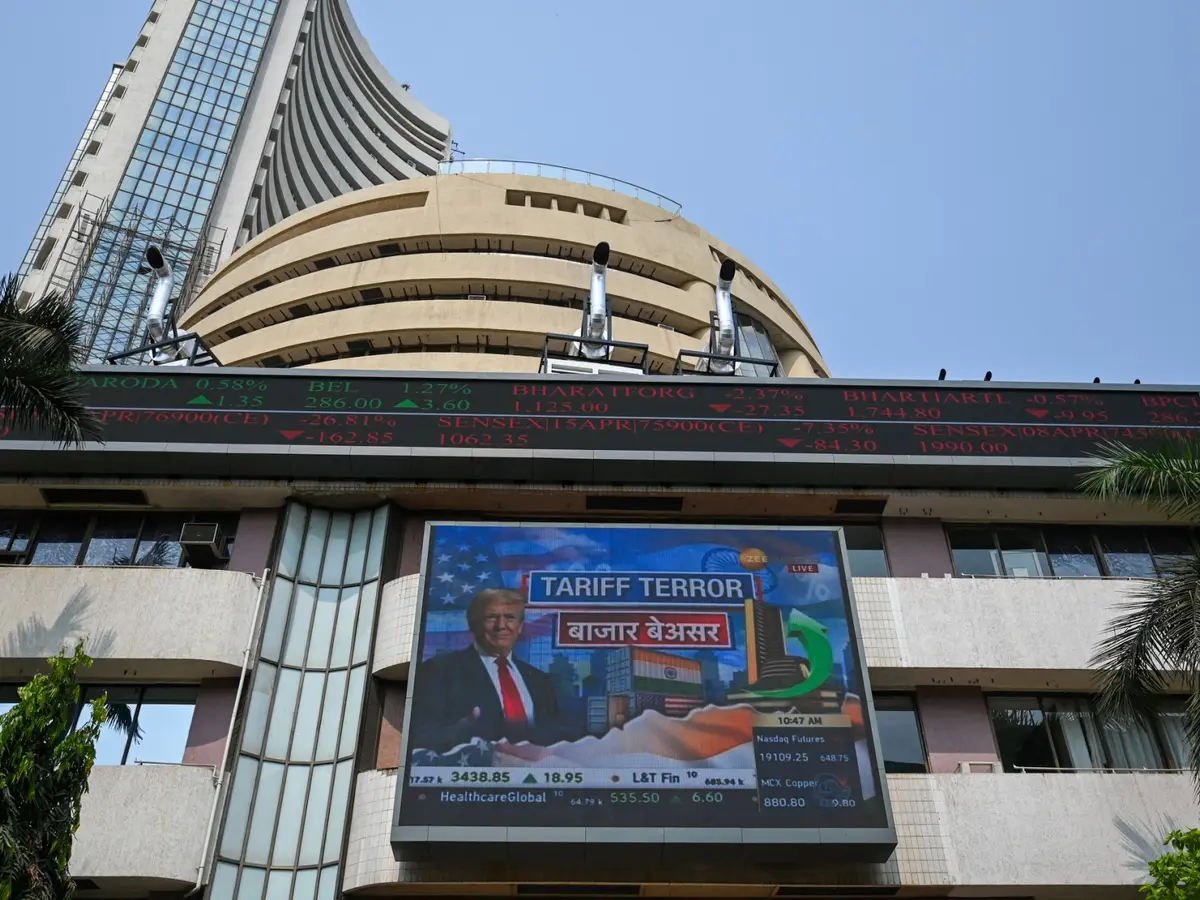
Indian shares fell sharply on September 28.
The Sensex and Nifty both reached six-month lows.
About ₹7.4 lakh crore in market value disappeared in one day.
Oil became more expensive because of concerns involving the Strait of Hormuz.
US interest rates and bond yields were also high, making investments outside the United States less attractive.
Foreign investors sold large amounts of Indian shares.
The rupee also weakened against the US dollar.
Experts said global problems and India's dependence on imported energy were both hurting the market.

The BSE Sensex fell 1,124.02 points, or 1.52%, to 72,771.72 on September 28.
The NSE Nifty 50 dropped 360.25 points, or 1.56%, to 22,780.25.
The sell-off erased approximately ₹7.4 lakh crore in market capitalization and took both indices to six-month lows.
Higher crude prices, elevated US Treasury yields and renewed foreign investor selling intensified pressure on Indian equities.
The rupee fell 28 paise to a record closing low of 96.03 per US dollar.
- Who
- Indian equity investors, foreign portfolio investors, domestic companies and market analysts were affected.
- What
- The Sensex and Nifty suffered a sharp one-day fall, erasing approximately ₹7.4 lakh crore in market value.
- Where
- India's BSE and NSE markets, commonly associated with Dalal Street.
- When
- September 28; the decline began the market's eighth consecutive week of weakness.
- Why
- Higher crude prices, elevated US 10-year yields, foreign investor selling, a weaker rupee and concerns about inflation and interest rates pressured stocks.
Global Triggers
Domestic Vulnerabilities
Primary cause of the sell-off
Global Triggers
The decline was driven mainly by external shocks, including higher Brent crude prices, elevated US Treasury yields and renewed foreign portfolio investor selling.
Domestic Vulnerabilities
India's imported-energy dependence, weakening rupee and potential inflation and interest-rate pressures made the market more vulnerable to those global shocks.
Near-term market outlook
Global Triggers
Higher US yields can make dollar-denominated assets more attractive and continue pulling money away from emerging-market equities.
Domestic Vulnerabilities
Prolonged energy costs could raise domestic inflation and pressure the Reserve Bank of India to tighten policy, adding to market weakness.
Key facts
- Sensex close
- 72,771.72, down 1,124.02 points or 1.52%
- Nifty 50 close
- 22,780.25, down 360.25 points or 1.56%
- Market value erased
- Approximately ₹7.4 lakh crore in one day
- Foreign investor selling
- ₹3,696 crore on Friday and about ₹18,500 crore through September 25
- Rupee
- Closed at a record low of 96.03 per US dollar after falling 28 paise
- Market performance
- The indices had declined for seven consecutive weeks, losing nearly 6%
- Commodity and yield pressures
- Brent crude rose above $107 per barrel while the US 10-year yield exceeded 5.2%
Quotes
Dr V K Vijayakumar
Chief Investment Strategist at Geojit Investments
“Brent crude at $106 and the US 10-year yield at 5.2 per cent are strong headwinds that are weighing on markets. FPIs, after turning buyers in July and August, have again turned sellers in September. This scenario will keep the market under pressure in the near term.”
 wionews.com
Sources
Related news

Indian Markets Lose Nearly Rs 5 Lakh Crore After Sell-Off

Indian Stocks Plunge as Oil, Yields and War Weigh

Indian Stocks Plunge as Yields, Oil and Regulation Weigh

Nifty 50 Suffers Sharpest Weekly Fall in Six Years

Indian Markets Slide as Oil, Yields and Selling Rise

Indian Stocks Slide as Oil, Conflict and Yields Rise

Iranian Leader Says US Will Be Forced From Middle East

Endless Wars Reshape Battlefields Through Drones, Missiles and Technology

Iran’s Mojtaba Khamenei Says Enemy Forces Pushed From Hormuz

Iran Offers Seven-Day Ceasefire Framework, Seeks India’s Peace Voice