

3 weeks ago
New Biography of 'Myriad-Minded Man' Reveals Fragile Human Tagore
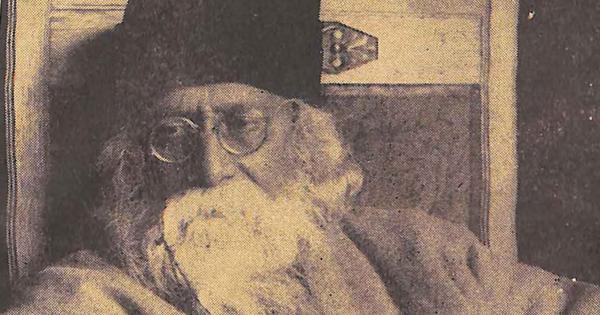
Rabindranath Tagore was a very famous Indian poet who wrote many poems, stories and plays.
A new book about his life, called 'Rabindranath Tagore: The Myriad-Minded Man,' shows that he was also a real person with worries, sadness and mistakes.
When Tagore died in August 1941, thousands of people came to his funeral, and the crowd became so wild that people even pulled at his hair.
Tagore started a university called Visva-Bharati in Santiniketan and spent much of his life traveling and giving speeches to find money to keep it running.
Even though many people loved him, some people in India and abroad were unkind to him, and he was treated unfairly because of racism.
The writer W.B. Yeats, who once praised Tagore, later said mean and racist things about him.
Tagore also had many sad moments, because people he loved died young.
The book tells both the good and the difficult parts of Tagore's life.
It helps us understand that even the most famous people can have hard and complicated lives.

A new edition of 'Rabindranath Tagore: The Myriad-Minded Man' by Krishna Dutta and Andrew Robinson portrays the Nobel laureate as more human, fragile and misunderstood.
Tagore, who died in August 1941 at the age of 80, spent much of his later life raising funds through lectures and donors to keep Visva-Bharati University in Santiniketan running.
In his lifetime he faced attacks from the press, questioning of his patriotism and racist treatment in the West, including sharply racist remarks from W.B. Yeats.
The biographers fault Tagore for arranging child marriages for his daughters Bela and Renuka, calling his belief that they were 'contented' 'a monumental piece of self-delusion.'
The book recounts his public disagreement with Gandhi over nationalism, his regretted meeting with Mussolini and his friendships with Helen Keller and Victoria Ocampo.
- Who
- Rabindranath Tagore, the Nobel Prize-winning Bengali poet, is the subject of the biography 'Rabindranath Tagore: The Myriad-Minded Man' by Krishna Dutta and Andrew Robinson.
- What
- A new edition of the biography presents Tagore as a human, fragile and often misunderstood figure, detailing his artistic triumphs along with personal griefs and setbacks.
- Where
- The story spans Santiniketan and Calcutta in Bengal, England, and Tagore's travels across Europe, the Americas and Asia.
- When
- The new edition has just been published; Tagore died in August 1941 at the age of 80 and received an honorary DLitt from Oxford University a year before his death.
- Why
- The book focuses on the man rather than his works, showing how he struggled to keep Visva-Bharati University alive while facing criticism, racism and personal loss.
Tagore's admirers
Tagore's critics
Tagore's character and legacy
Tagore's admirers
Many admirers put Tagore on an 'Olympian pedestal,' convinced that given his prodigious talent and output he was above criticism.
Tagore's critics
The biographers and critics see contradictions, exposing vanity, blind spots, poor judgment and sensitivity to criticism, describing him as an 'inextricable mixture of humility and vanity' whom people tended to either worship or debunk.
Meeting with Mussolini
Tagore's admirers
India's press and liberal public attacked Tagore for praising Mussolini in fascist media, accusing him of letting the Italian government use him as a pawn in its own scheme.
Tagore's critics
Tagore, 'blindly encouraged' by Mussolini's support, engaged with the dictator in hopes of funding for Visva-Bharati, and he was later anguished and embarrassed by his Italy visit.
Key facts
- Book title
- Rabindranath Tagore: The Myriad-Minded Man
- Authors
- Krishna Dutta and Andrew Robinson
- Publisher
- Rupa Publications
- Pages
- 494
- Tagore's death
- August 1941, aged 80
- Institution
- Visva-Bharati University, Santiniketan
- Oxford honour
- Honorary DLitt, awarded a year before his death
- Foreword
- Anita Desai; cover features Tagore's self-portrait
Quotes

George Bernard Shaw
English playwright and critic, contemporary of Tagore
“"Damn Tagore. We got out three good books… and then, because he thought it more important to see and know English than to be a great poet, he brought out sentimental rubbish and wrecked his reputation."”
 scroll.in
“"Old Bluebeard, how many wives has he got, I wonder!"”
scroll.in
Sources
Related news
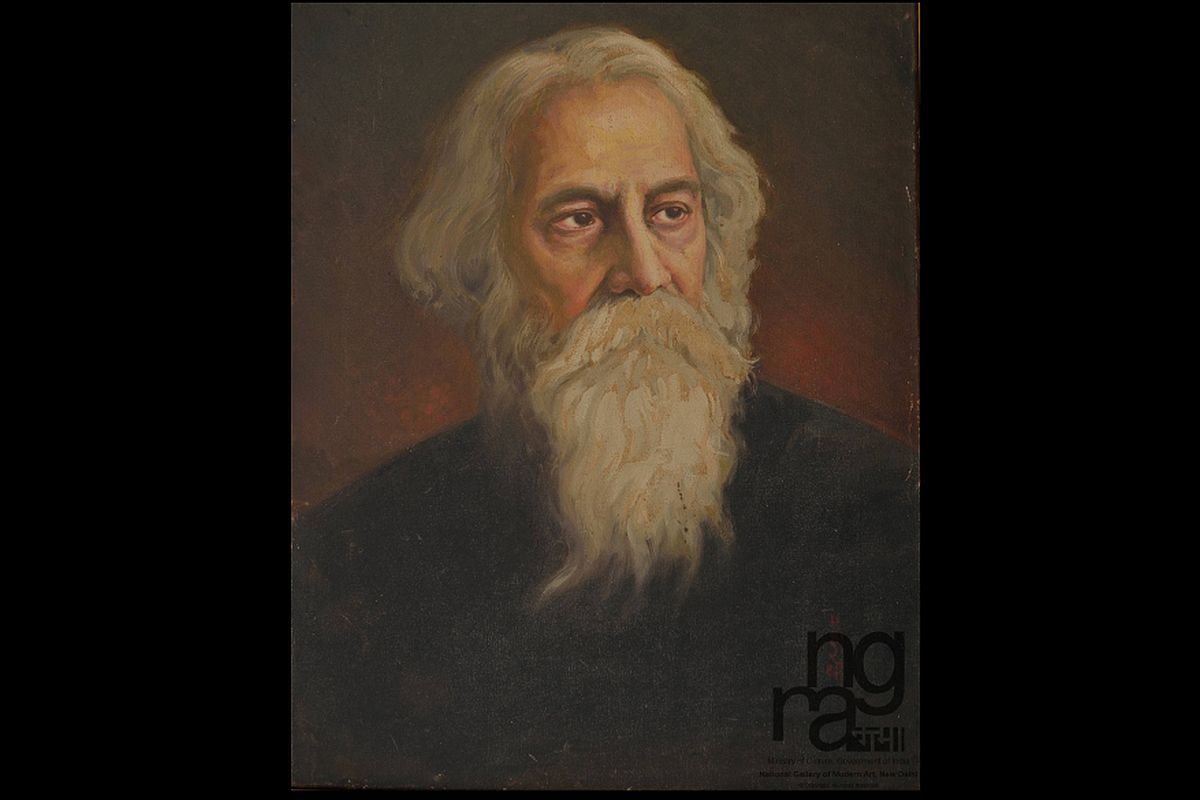
Rupa Reprints Krishna Dutta and Andrew Robinson's Biography of Tagore

Remembering Rabindranath Tagore, the Eternal Bard of Two Nations

Rabindranath Tagore's Boyhood Himalayan Journey with His Father
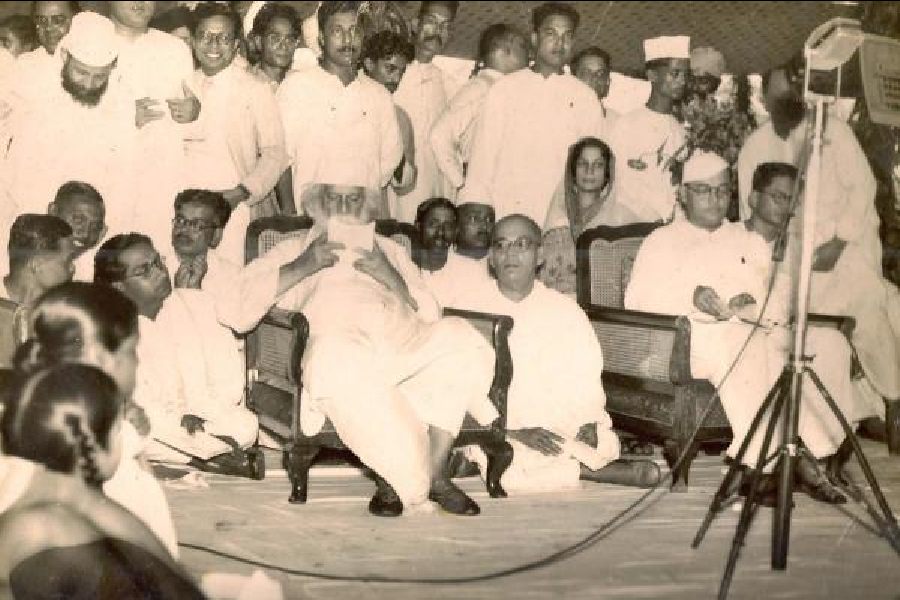
Why Tagore and Bose Matter in Troubled Times

Tagore’s 1938 Warning About Forest Destruction Still Resonates
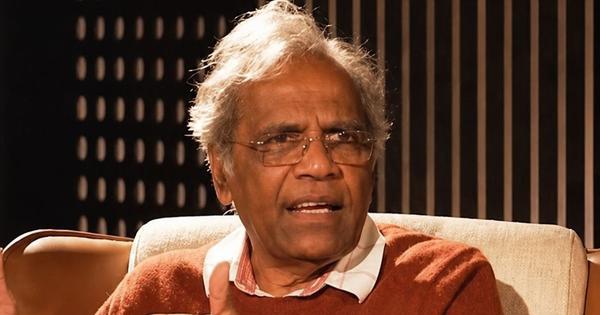
Udayan Vajpeyi on Literature, Science, Memory and the Eternal

Helen Keller Quote Highlights Resilience Amid Nepal Floods

Adventure Travel Insurance: Why Extra Coverage Matters
