3 hrs ago
Bathukamma’s Kakatiya Legacy Shapes Telangana’s Nine-Day Flower Festival

Bathukamma is a special flower festival from Telangana.
It lasts for nine days after the monsoon rains begin to end.
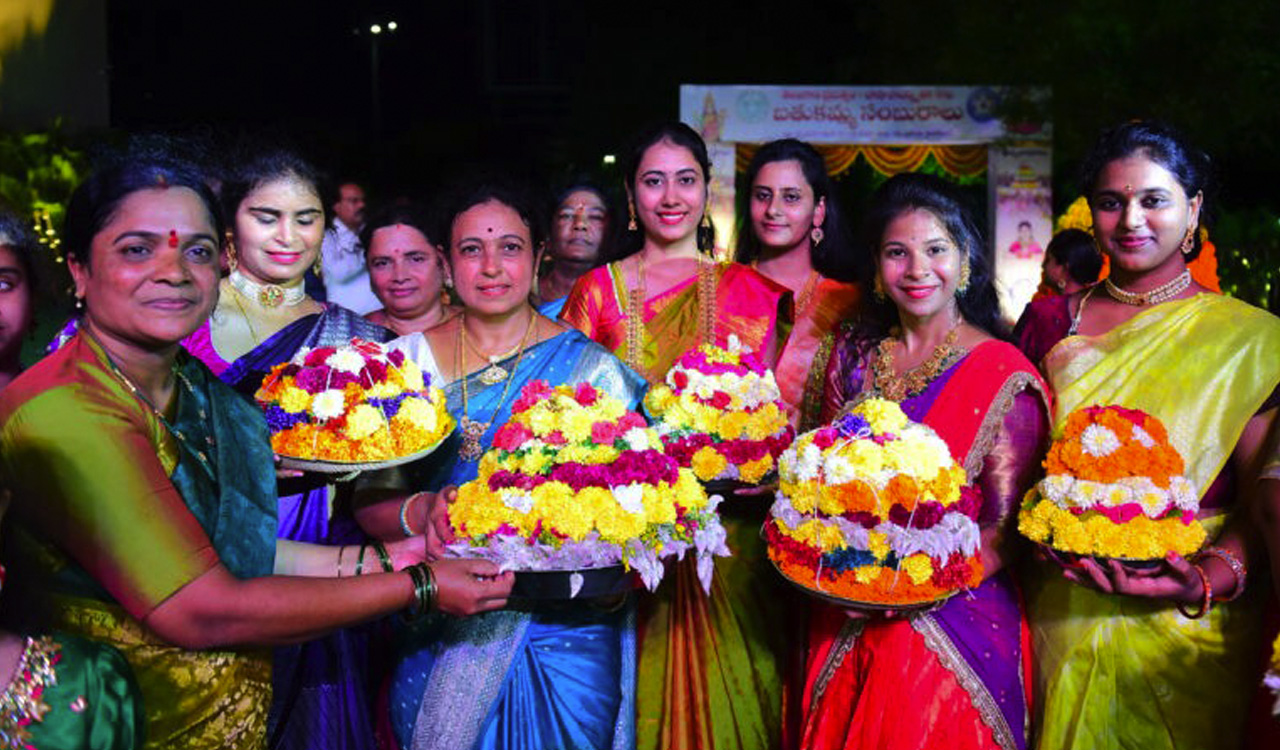
Women arrange colorful wildflowers into tall, round stacks that look like temple towers.
People sing songs around the flower stacks and later place them in ponds or lakes.
One story connects the festival to Rani Rudramadevi, a powerful queen who ruled the Kakatiya kingdom.
She is said to have supported worship of the goddess Kakatamma.
However, historians disagree about whether her time was the festival’s true beginning.
Some believe Bathukamma also grew from much older farming, seasonal and fertility customs.
Today, the festival is an important symbol of Telangana identity and is celebrated in several countries.

Bathukamma is a nine-day Telangana festival centered on flower towers, songs, food offerings and immersion in water.
Its traditional history is linked to Rani Rudramadevi, a Kakatiya ruler who governed Warangal in male attire.
Historians say the festival’s exact origins are contested and may also reflect older agricultural, seasonal and fertility traditions.
Women arrange flowers such as gunuka, tangedu, banti and chamanti into seven-layered structures topped with a turmeric figure of Gauramma.
Telangana declared Bathukamma an official state festival in 2014, and it is now celebrated by diaspora communities worldwide.
- Who
- Women and communities in Telangana celebrate Bathukamma; the festival’s historical memory is associated with Rani Rudramadevi and the Kakatiya dynasty.
- What
- Bathukamma is a nine-day festival involving layered flower arrangements, folk songs, food offerings and the immersion of flowers in water.
- Where
- The festival is rooted in Telangana, with Warangal regarded by many as its symbolic birthplace, and is also celebrated by diaspora communities abroad.
- When
- It begins on Mahalaya Amavasya and ends on Durga Ashtami; the article says this year’s observance runs from 11 October to 18 October.
- Why
- It marks the seasonal transition after the monsoon, honors local traditions and has become a symbol of Telangana’s cultural identity.
Kakatiya-Linked Account
Older-Traditions Account
Festival origins
Kakatiya-Linked Account
The tradition is linked to Rani Rudramadevi’s support for Kakatamma worship and processions at Mogilicharla during the Kakatiya period.
Older-Traditions Account
Historians say Bathukamma may have developed from older local agricultural, seasonal and feminine fertility traditions that predate the Kakatiyas.
Historical certainty
Kakatiya-Linked Account
The Kakatiya-Rudramadevi story is the version most often preserved in Bathukamma folk songs and helps explain why Warangal is considered its symbolic birthplace.
Older-Traditions Account
The Kakatiya connection is one historical memory within a layered tradition, not a definitive explanation of the festival’s origin; other stories, including those involving a Chola king’s daughter and Parvati, also circulate.
Key facts
- Festival duration
- Nine days, from Mahalaya Amavasya to Durga Ashtami
- Traditional flowers
- Gunuka, tangedu, banti and chamanti
- Flower arrangement
- Seven concentric layers shaped like a temple gopuram, topped with a turmeric Gauramma idol
- Historical association
- Rani Rudramadevi and the Kakatiya-era worship of Kakatamma
- Official state status
- Bathukamma was declared an official Telangana state festival on 26 June 2014
- Reported dates this year
- 11 October to 18 October
- International reach
- Celebrations are held among Telangana diaspora communities in Dubai, Qatar, the United Kingdom, the United States and Australia
Sources
Related news

Historic Kakatiya-Era Gollala Gudi Temple Declared National Monument
Historian Highlights Qutb Shahi Women’s Political and Cultural Influence
Kota Gullu’s Kakatiya Heritage Awaits Rediscovery Near Ramappa

Bhadrakali Ammavaru Appears as Lord Krishna in Warangal Temple
Inscription Reveals 1509 Origins of Tadipatri Temple’s Expansion

Tirumala Brahmotsavams Reflect More Than a Millennium of Change

Revanth Reddy Orders Foolproof Security for Hyderabad Ganesh Festivities

Sunnam Cheruvu Revitalization Wins Praise From Hyderabad Residents

University of Hyderabad Honours 25 Oggu Katha Artists for Heritage