

3 weeks ago
Gen Z's buy-now-pay-later habit fuels unsecured loans: RBI worried

Many young people in India are borrowing money to pay for fun things like concerts, trips and shopping, instead of saving up first.
Some start taking loans around age 22, much earlier than their parents or grandparents did.
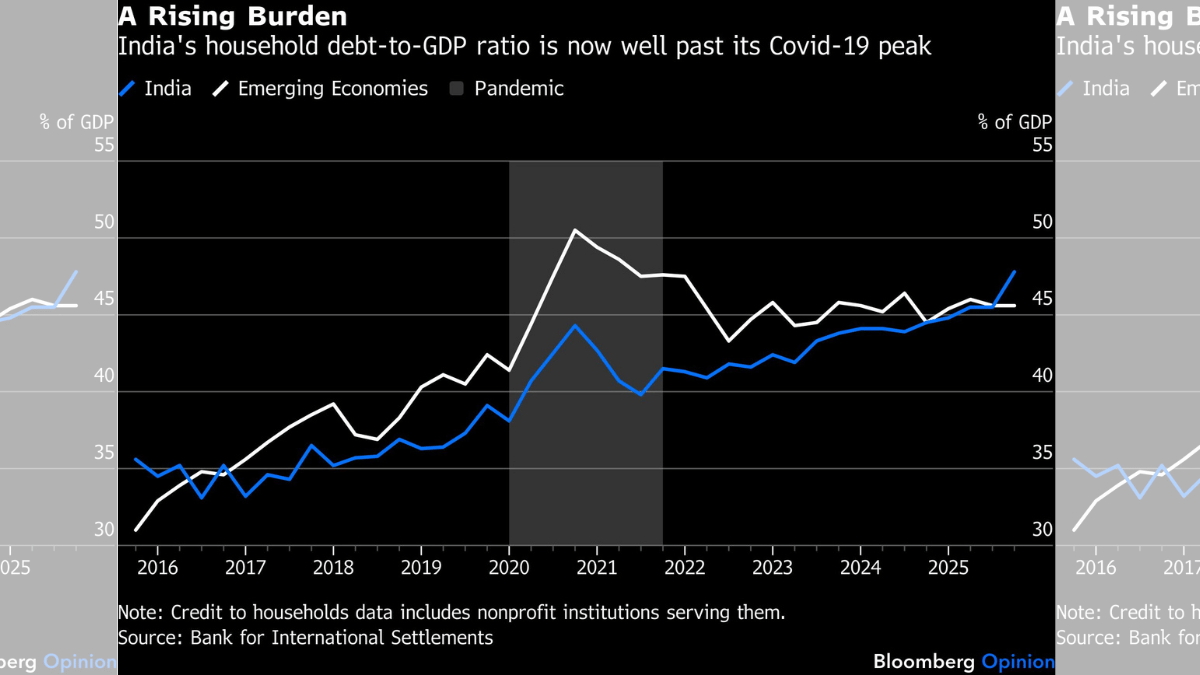
Because of this, loans used for everyday spending now make up more than half of all the money Indian families owe.
The Reserve Bank of India, the country's money guardian, is worried because some borrowers may not be able to pay the money back.
Lending apps give out many small loans to young customers, and a growing number of these loans are being paid back late.
At the same time, young people love going to concerts, like BTS shows, and traveling to new cities for fun.
One survey found that six in ten young travelers would spend 21 to 40 percent of their monthly income on music trips.
People born after 2000 get their first loan around age 22, often using buy-now-pay-later products.
Some experts say the debts are still small enough not to be a big problem, but the RBI wants to watch closely so people don't get into trouble.

Non-housing retail loans hit 58.4% of India's total household borrowings as of March 2026, up from 54.9% a year earlier, driven largely by consumption lending.
The RBI has flagged household debt accumulation, especially among younger, lower-rated borrowers, as needing 'close monitoring,' with unsecured retail loan gross NPAs at 1.7% at end-March 2026.
Fintechs now hold a 56.8% share of small-ticket personal loans under Rs 50,000, and about 70.5% of fintech loan books are unsecured, with roughly half extended to borrowers under 35.
Gen Z spending on concerts and travel is fueling credit use: concerts may have driven Rs 1,600-2,000 crore in spending over 24 months, and over 25% of personal loans in the first half of 2025 were for travel.
The share of over-leveraged consumers rose from 5% in FY17 to 18% in FY24 before easing to 15% in FY26, while credit-card delinquencies (90-360 days overdue) rose over 40% year-on-year.
- Who
- India's younger consumers (Gen Z and millennials) and fintech lenders, with the Reserve Bank of India (RBI) flagging risks.
- What
- Unsecured, consumption-driven household debt has surged - non-housing retail loans now make up 58.4% of total household borrowings - prompting regulator concern over over-leverage and weakening asset quality.
- Where
- India, including examples of a BTS concert trip to Busan, South Korea, and a couple's vacation to Thailand.
- When
- Data through March 2026, with comparisons to March 2022, March 2025 and the FY17-FY26 period.
- Why
- A 'live now, pay later' shift among millennials and Gen Z, who increasingly fund concerts, travel and lifestyle purchases with credit cards and small loans rather than savings.
Regulators urge caution
Market sees manageable risk
Risk from rising household debt
Regulators urge caution
The RBI says household debt accumulation, especially among lower-rated and younger borrowers, requires 'close monitoring'; unsecured retail NPA rose to 1.8% from 1.2% in March 2025 and credit-card delinquencies jumped over 40% year-on-year.
Market sees manageable risk
An economist notes the amounts involved are relatively smaller, so the scale is not yet being seen as worrisome, and the share of over-leveraged consumers eased from 18% in FY24 to 15% in FY26 after industry intervention.
Growth of consumption credit versus need-based credit
Regulators urge caution
A credit bureau executive says that while encouraging credit growth, lenders must ask whether they are incentivising need-based credit and must ensure borrowers - especially younger, highly leveraged consumers - have the ability to pay, since income cannot always be fully verified for consumption loans.
Market sees manageable risk
Credit access has expanded sharply, with the share of India's credit-eligible population that is credit-active rising from 11% about a decade ago to around 28%, and rising consumption-credit numbers, while discussed among policymakers, have so far been seen as manageable because the amounts involved are relatively small.
Key facts
- Non-housing retail loans share of household debt
- 58.4% as of March 2026, up from 54.9% in March 2025
- Average outstanding debt per borrower
- Rs 4.78 lakh as of March-end 2025
- Gold jewellery loans outstanding
- Rs 4.61 lakh crore as of March 2026, versus Rs 74,738 crore in March 2022
- Other personal loans outstanding
- Rs 17.32 lakh crore as of March 2026, versus Rs 9.02 lakh crore in March 2022
- Gross NPA ratios on retail loans
- 1.7% unsecured and 0.7% secured at end-March 2026
- Fintech small-ticket personal loan share
- 56.8% market share (loans under Rs 50,000); 6.4% delinquencies
- Credit-active population share
- About 28%, up from 11% about a decade ago
- Credit card debt and delinquencies
- Outstanding credit card debt crossed Rs 3 lakh crore; delinquencies up over 40% year-on-year
Quotes
Executive, Credit Bureau
An executive from a credit bureau
“What we need to continuously monitor is that while encouraging credit growth, are we incentivising need-based credit. The other thing is the ability to pay, especially in certain segments such as younger borrowers where the leverage has gone up.”
 indianexpress.com
Economist, Unnamed
An economist who did not wish to be named
“The rising credit growth for consumption keeps coming up during discussions among policymakers and the banking sector. It especially drew concern during 2022 and 2023. Even now it is seen as a concern in terms of the rising numbers.”
indianexpress.com
Sources
Related news
Lending Apps Are a Debt Trap for Indian Consumers

India's Credit Growth Spreads Beyond Big Cities as Inclusion Grows
Floating-Rate Home Loans May Turn Affordable EMIs Into Distress
Gen Z Credit Use Grows as Repayment Struggles Continue

India’s Gold Loans Could Drive Consumption Despite Import Risks

India's Banking Sector Grows Lending Faster Than Deposits

How to Correct Credit Report Errors Before They Hurt Loans

Five Consistent Habits Can Build a Stronger Credit Score

Using Personal Loans to Pay Credit Card Debt

Minimum CIBIL Score for Personal Loan Eligibility in India

Home Loan Interest Rates: Factors That Determine Borrowing Costs
