6 days ago
RBI Keeps Bank Leverage Floors Steady Amid Global Easing
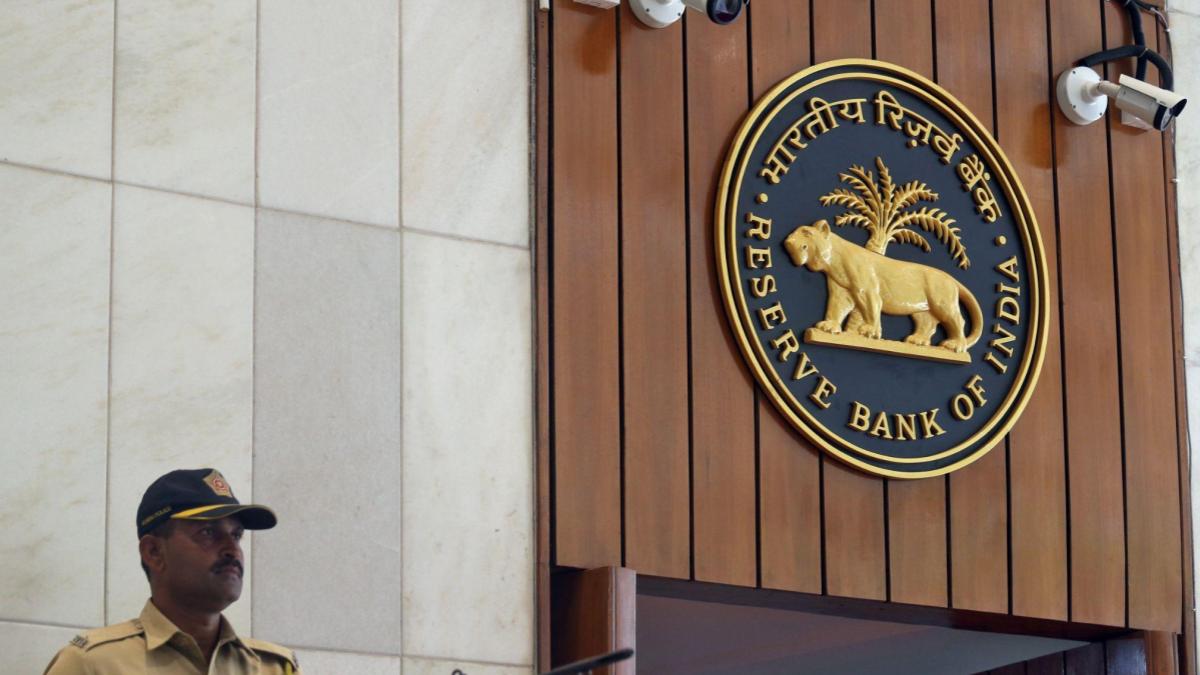
Banks borrow money and use it to make loans and investments.
Rules require banks to keep enough of their own money available in case they lose money.
The RBI plans to keep India’s leverage limits higher than the global minimum.
It also wants banks to show both their end-of-quarter numbers and their average daily numbers.
This is meant to stop banks from temporarily making their finances look safer before reporting dates.
The rules would allow some central-bank reserves to be left out during an emergency.
However, government bonds would still count fully, even though banks may need to buy more of them during a crisis.
The article also worries that foreign branches could face requirements influenced by weaker rules in their home countries.
Overall, it says the RBI’s approach is strong but still needs improvements.

The RBI’s August 2026 consultation paper proposes implementing Basel III leverage-ratio rules from April 2027.
Leverage floors would remain 4% for the largest banks and 3.5% for other banks, above the 3% global minimum.
The draft would require banks to disclose quarter-end figures, daily averages and explanations for significant differences.
The paper provides an emergency exclusion for reserves held at the RBI but not for government securities.
The analysis supports the RBI’s Basel III alignment while questioning foreign-branch rules and the lack of flexibility during financial stress.
- Who
- The Reserve Bank of India, Indian banks, public-sector banks and branches of foreign banks.
- What
- The RBI has proposed Eleventh Amendment Directions concerning bank leverage-ratio calculations and related disclosures.
- Where
- The rules apply in India, including foreign-bank branches operating in places such as Mumbai.
- When
- The consultation paper was issued in August 2026, with the changes due to take effect in April 2027.
- Why
- The proposal aims to implement Basel III standards, limit excessive leverage and reduce financial-reporting window dressing.
RBI’s Approach
Concerns Raised
Following global standards
RBI’s Approach
The RBI is preserving a higher-than-global leverage floor and closely following Basel III rules while other jurisdictions have introduced exemptions or eased requirements.
Concerns Raised
Strict alignment may leave Indian banks with less flexibility than banks in other major markets.
Treatment of government securities
RBI’s Approach
Keeping government bonds fully in the leverage-ratio denominator prevents banks from exploiting an exception for assets treated as safe.
Concerns Raised
Public-sector banks with large government-bond holdings could be constrained, especially during a crisis when banks may need to purchase more sovereign securities.
Foreign-bank branches
RBI’s Approach
Requiring a branch to meet the 3.5% Indian floor plus any home-regulator buffer is intended to preserve capital safeguards.
Concerns Raised
Because the requirement depends partly on home-country rules, easing abroad could reduce the effective floor in India without an Indian regulatory decision; the draft also does not address profit-remittance and tax complications.
Key facts
- Consultation paper
- Eleventh Amendment Directions
- Effective date
- April 2027
- Largest-bank leverage floor
- 4%
- Other-bank leverage floor
- 3.5%
- Global Basel III minimum
- 3%
- Disclosure requirement
- Quarter-end figures, daily averages and explanations for differences
- Emergency exclusion
- Certain reserves held at the RBI may be excluded, with compensating safeguards
Quotes

Archimedes
Ancient Greek mathematician cited at the beginning and end of the article
“Give me a lever long enough and a fulcrum on which to place it, and I shall move the world”
 financialexpress.com
Sources
Related news
RBI proposes tighter leverage norms for banks, aligns with Basel

RBI Governor Defends Calibrated Swaps, Regulation and Policy Hold

RBI Model Risk Rules Face Calls for Innovation Safeguards

RBI to standardize lending rate rules for transparency, consumer protection
RBI Proposes Revised Credit Valuation Adjustment Framework for Banks

RBI regulatory reset could unlock $50 billion in capital

Bank of England Chief Warns AI Cyber Risk Threatens Finance

Bank of England Warns AI Boom Could Trigger Market Shock

UK Business Confidence Reaches Highest Level Since March

Dollar Steady as Markets Await Warsh’s Jackson Hole Speech