

2 weeks ago
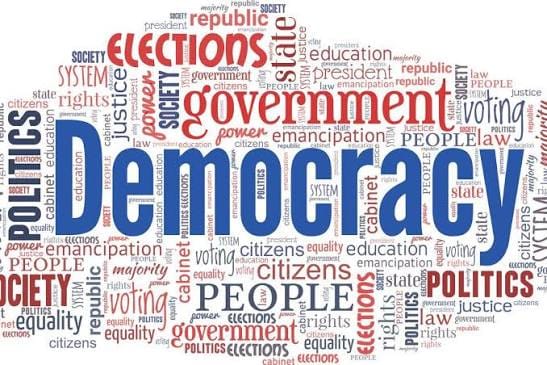
Democracy Struggles to Keep Pace in an Impatient Age
People can now order food, medicine, and rides very quickly.
Because of this, many expect governments to solve problems just as fast.
Governments usually move more slowly because they must follow laws, consult people, and pass through checks.
The article says this gap is making many citizens impatient and unhappy.
It also says social media spreads complaints and government mistakes very quickly.
Countries including Britain, France, Germany, the United States, India, Japan, and South Korea are described as facing political uncertainty or dissatisfaction.
Some leaders promise to bypass delays, but they often meet the same limits after taking office.
Faster systems may build things quickly, but democracies have safeguards that can prevent abuse.
The author says democracies must become more effective without giving up those safeguards.

Generation Z and other citizens increasingly expect governments to match the speed of on-demand private services.
The article links political instability across democracies to dissatisfaction, economic pressures, and declining public confidence.
It argues that social media makes government mistakes and public frustrations visible and mobilizes people almost instantly.
Democratic safeguards make policymaking slower than systems such as China’s, but they allow governments to correct mistakes without repression.
The central challenge is delivering faster, more effective governance without weakening elections, courts, legislatures, and independent institutions.
- Who
- Citizens, especially Generation Z, and democratic governments are the main subjects; the article was submitted by Col KL Viswanathan (Retd).
- What
- The article examines why democracies are losing public confidence and struggling to govern as quickly as citizens expect.
- Where
- The trend is described across democracies worldwide, including Britain, France, Germany, the United States, India, Japan, South Korea, and Taiwan.
- When
- The discussion concerns the current period; it cites Britain installing its seventh prime minister in barely a decade and recent political turbulence in several countries.
- Why
- On-demand technology, social media, economic pressures, and dissatisfaction with government performance have raised expectations and political frustration.
Faster Government Delivery
Democratic Checks and Safeguards
Speed versus procedure
Faster Government Delivery
Governments should respond more quickly because citizens are accustomed to rapid, on-demand private services and want visible improvements in daily life.
Democratic Checks and Safeguards
Democracies need slower procedures, including legislative, judicial, constitutional, media, and institutional checks, to protect against arbitrary power.
Institutional constraints
Faster Government Delivery
Political leaders such as Donald Trump, Jair Bolsonaro, and Javier Milei gained support by promising to overcome gridlock and deliver faster results.
Democratic Checks and Safeguards
Once in office, leaders generally encounter the institutional constraints that limited their predecessors, while those constraints help democracies correct mistakes without repression.
Key facts
- Main tension
- Citizens want faster policy and public-service delivery, while democratic procedures require consultation, legal constraints, and institutional checks.
- Political instability
- The article says Britain has installed seven prime ministers in barely a decade and France has experienced nearly as many governments in a few years.
- Economic pressures
- Expensive housing, rising living costs, high fuel prices, stagnant incomes, and widening inequality are identified as sources of public anger.
- Technology’s role
- Computers, the internet, smartphones, social media, and artificial intelligence are described as driving a major technological transformation.
- Democratic safeguards
- Legislatures, courts, constitutions, a free media, and independent institutions are presented as checks on power.
- Comparison with China
- The article says China can implement infrastructure and industrial projects years faster than democracies such as India.
- Source status
- The piece is a subscriber-submitted opinion article and states that it was published as received without editing or fact-checking.
Sources
Related news
India’s Frayed Social Contract Tests Trust in Democratic Institutions

Readers Debate Democratic Accountability and Revanth Reddy’s US Visit

India at 80: Youth, Technology and a Nation in Transition
New political mood takes shape in India amid calls for accountability

Tharoor Says India's Democracy Bent, Didn't Break After Protests

Bangladesh’s Revolution Exposed the Challenge of Rebuilding the State

France’s Far Right Warns Left Could Undermine Civil Peace

Poll Shows Melenchon Near French Presidential Runoff Against Le Pen

Melenchon Debt-Cancellation Plan Triggers French Political Backlash

Glucksmann Enters France’s 2027 Race, Challenging Mélenchon and Le Pen
Poll Puts Melenchon in France’s Presidential Runoff Path