4 hrs ago
Farooq Abdullah Calls for Review of Jammu and Kashmir Reservation Policy
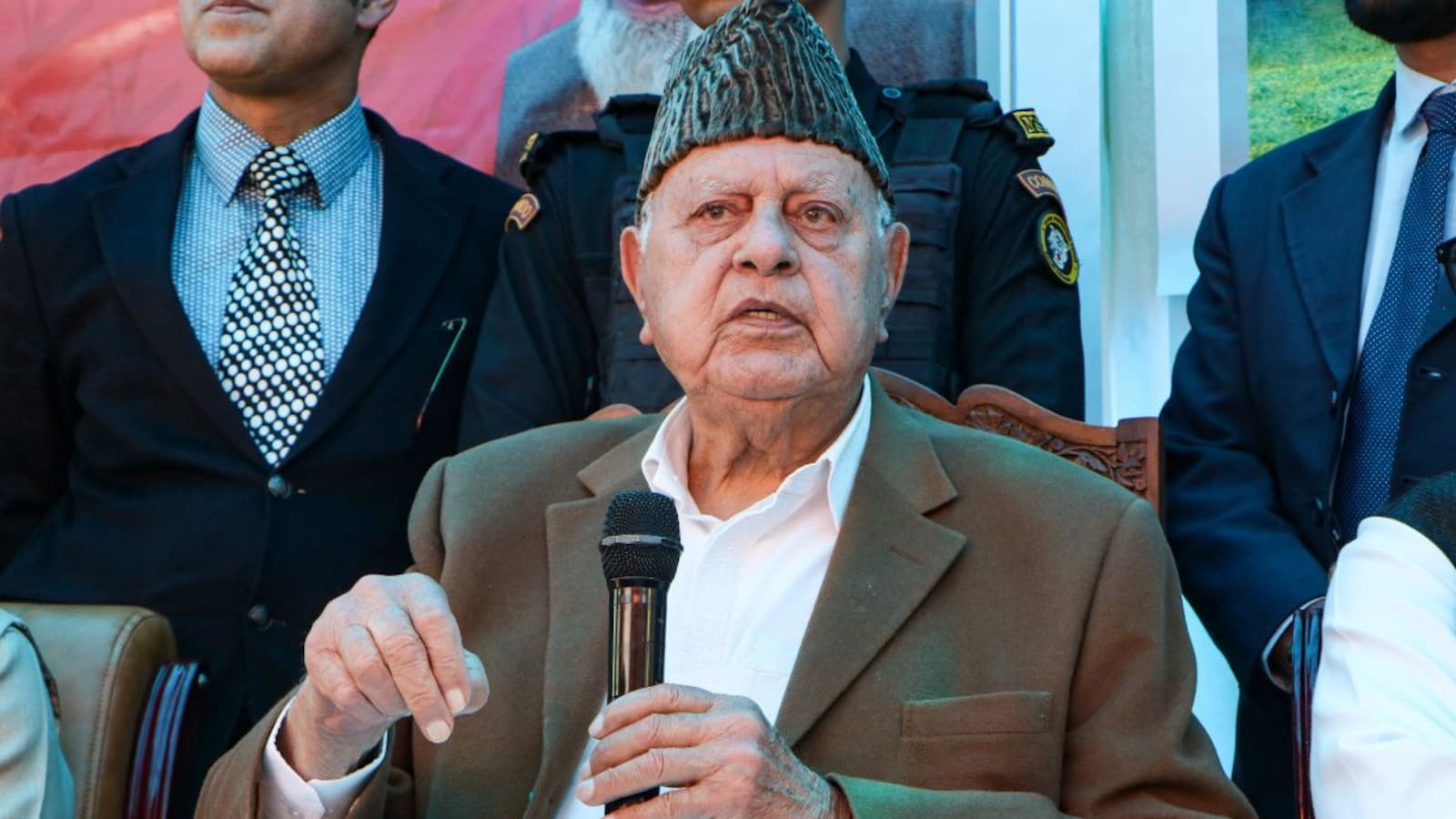
Farooq Abdullah says the rules for sharing reserved places in jobs and colleges need attention.
He says some students with high marks are still missing out on courses and jobs.
The article says people in the general category make up about 70% of Jammu and Kashmir’s population but get less than 40% of jobs.
Several groups have received reserved status, increasing the share of jobs set aside for reserved categories.
A policy approved by Omar Abdullah’s government would keep half of jobs open for Open Merit.
That policy has not yet taken effect because it is awaiting clearance from the Centre.
Some leaders also say poor people in Kashmir Valley receive too few EWS certificates compared with people in Jammu.
Assembly Speaker Abdul Rahim Rather asked the government to examine this regional difference.

Farooq Abdullah said expanding reservations risks leaving open-merit applicants without fair access to jobs and professional courses.
The article says the general category makes up about 70% of Jammu and Kashmir’s population but receives less than 40% of jobs.
Scheduled Tribe reservations rose from 10% to 20% after Pahari-speaking people and several other groups gained ST status in March 2024.
Omar Abdullah’s government approved a policy reserving 50% of jobs for Open Merit, but the policy has not been implemented pending clearance by the BJP-led Centre.
Assembly Speaker Abdul Rahim Rather directed the government to examine regional differences in EWS certificates; figures cited show far more certificates issued in Jammu than in Kashmir Valley.
- Who
- Farooq Abdullah, Jammu and Kashmir government officials, and political leaders including Sajad Lone.
- What
- Debate over job and education reservations, Open Merit access, and regional differences in EWS certificates.
- Where
- Jammu and Kashmir, including Jammu and Kashmir Valley.
- When
- The remarks and assembly discussion were reported today; the article also refers to changes made in March 2024 and a policy approved in December last year.
- Why
- Leaders are raising concerns about access to jobs and professional courses, the share of posts reserved, and the regional distribution of EWS certificates.
Concerns About Open Merit and Regional Fairness
Reservation Representation and Existing Policy
Reservation levels and Open Merit access
Concerns About Open Merit and Regional Fairness
Farooq Abdullah argues that increasing quotas can disadvantage general-category applicants, including students with high marks, and calls for the issue to be addressed.
Reservation Representation and Existing Policy
The article describes reserved places for multiple categories and the addition of groups to Scheduled Tribe status; it does not include a direct response from supporters of the current quota levels.
Regional distribution of EWS certificates
Concerns About Open Merit and Regional Fairness
Sajad Lone and other political leaders allege that Kashmir Valley’s poor are being denied EWS certificates and point to the large gap in certificates issued between Kashmir and Jammu.
Reservation Representation and Existing Policy
The article does not provide a government defense of the certificate distribution; Speaker Abdul Rahim Rather said the government should examine regional imbalance and identify scope for improvement.
Key facts
- General-category population
- About 70% of Jammu and Kashmir’s population, according to the article.
- General-category share of jobs
- Less than 40%, according to the article.
- Scheduled Tribe quota
- Increased from 10% to 20% after additional groups gained ST status.
- Open Merit policy
- Approved by Omar Abdullah’s government; 50% of jobs would remain available for Open Merit.
- Policy status
- Not implemented, pending clearance by the BJP-ruled Centre, according to the article.
- EWS certificates
- More than 26,000 issued in Jammu and Kashmir over two years; 24,000 in Jammu and 2,000 in Kashmir Valley, according to the figures cited.
- BPL and EWS figures cited by Sajad Lone
- He said Kashmir has a 55% BPL population and received 8% of EWS certificates; Jammu has a 45% BPL population and received 92%.
Quotes
Abdul Rahim Rather
Speaker of the Jammu and Kashmir Assembly
“We have to make an effort to address this injustice somehow. If we keep on increasing reservations, then the people (general category) who are outside the reservation system will be pushed to the same position as Scheduled Castes were in 1947.”
 NDTV
NDTV
“I have directed the government to examine the issue and see wherever there is scope for improvement to avoid injustice to any section of society.”
NDTV
Sources
Related news
J&K EWS Figures Raise Questions Over Poverty and Reservations
Sajad Lone Challenges NC Over Jobs and Reservation Promises

Farooq Abdullah Says Centre Lacks Seriousness on J-K Statehood Restoration
Reservation Reform Movement Faces Criticism Over Anti-Quota Demands

Reserved Students’ MBBS Open-Category Seats Allegedly Denied Admission
Why Critics Embrace Creamy Layer Exclusion in Caste Quotas
Jammu Demolishes Rohingya-Occupied Structures on Forest Land
33 Bengal Tourists Injured After Bus Overturns In Ramban
140 Spiked Bits Seized From Tourist Horses in Katra