2 hrs ago
Reservation Reform Movement Faces Criticism Over Anti-Quota Demands
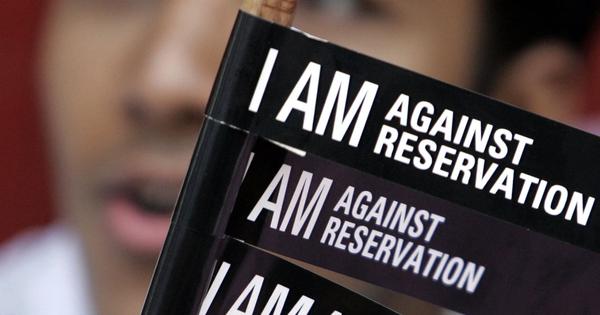
A group protesting caste-based reservations in India has changed its name and presented itself as a reform movement.
It wants a commission for people in the general category and changes to reservation rules.
It also wants more safeguards before arrests and bail under a law protecting Scheduled Castes and Scheduled Tribes.
The article says these demands would weaken protections for groups that have faced discrimination for a long time.
The movement argues that people should receive help mainly because of their income, not their caste.
The article responds that caste still affects marriage, wealth, jobs and social treatment.
It points to the small number of Dalit and Adivasi judges compared with the large share of forward-caste judges.
It says real reform should fill reserved jobs that remain vacant and improve representation in private employment.
The article concludes that the movement presents the interests of dominant castes as a fight for fairness.

The Reservation Hatao Andolan has rebranded itself as the RHA Reservation Reforms Movement.
Its charter calls for a General Category commission, changes to the University Grants Commission’s 2026 caste-equity rules, and dilution of the Scheduled Castes and Scheduled Tribes Atrocities Act.
The article argues that dominant-caste groups remain overrepresented in influential institutions despite claiming that reservations discriminate against them.
The movement says income should matter more than caste, while the article cites continuing caste endogamy, wealth inequality and social discrimination.
The article supports filling vacant reserved posts, extending affirmative action into private-sector employment and strengthening, rather than weakening, legal protections.
- Who
- The Reservation Hatao Andolan, now calling itself the RHA Reservation Reforms Movement, and its critics.
- What
- A movement is demanding changes to reservation policy, the University Grants Commission’s caste-equity rules and the Scheduled Castes and Scheduled Tribes Atrocities Act.
- Where
- Jantar Mantar in Delhi; the article also discusses a purification ritual at a rally ground in Haldwani.
- When
- The movement demonstrated at Jantar Mantar in August 2026; the article also cites judicial appointments from January 2021 to January 2026.
- Why
- The movement says the general category faces discrimination and that income should have greater importance, while critics say the demands would weaken protections against continuing caste inequality.
Movement’s Position
Article’s Critique
Basis for affirmative action
Movement’s Position
The movement argues that caste has become less important and that income should determine who receives affirmative action.
Article’s Critique
The article says reservation addresses historical social and educational exclusion and inadequate representation, not only individual poverty.
Reservations and fairness
Movement’s Position
The movement presents reservations as discrimination against the general category and seeks a National Commission for that group.
Article’s Critique
The article argues that forward-caste groups remain highly represented in the judiciary, bureaucracy, academia, media and corporate leadership.
Atrocities Act
Movement’s Position
The movement seeks expanded provisions for preliminary inquiry and bail under the Scheduled Castes and Scheduled Tribes Atrocities Act.
Article’s Critique
The article says low conviction rates indicate underenforcement is a larger problem than misuse and that weakening the law would reduce protection against caste-based violence.
Key facts
- New name
- RHA Reservation Reforms Movement
- Main demands
- A National Commission for the General Category, rollback of the University Grants Commission’s 2026 caste-equity rules, and changes to the Scheduled Castes and Scheduled Tribes Atrocities Act.
- High Court appointments
- Of 593 judges appointed between January 2021 and January 2026, about 4% were from Scheduled Castes, about 2% from Scheduled Tribes, and nearly 80% from forward castes, according to government data cited in the article.
- Supreme Court representation
- Independent tracking cited by the article found that 12 of 33 sitting judges came from Brahmin communities.
- Inter-caste marriage
- The article says large surveys find that fewer than 6% of Indian marriages cross caste lines.
- Vacant reserved posts
- Hundreds of thousands of reserved posts in central ministries and universities remain vacant, according to the article.
- Proposed alternative reforms
- The article advocates filling backlog vacancies, extending affirmative action into the private sector and strengthening legal protections against caste-based violence.
Sources
Related news
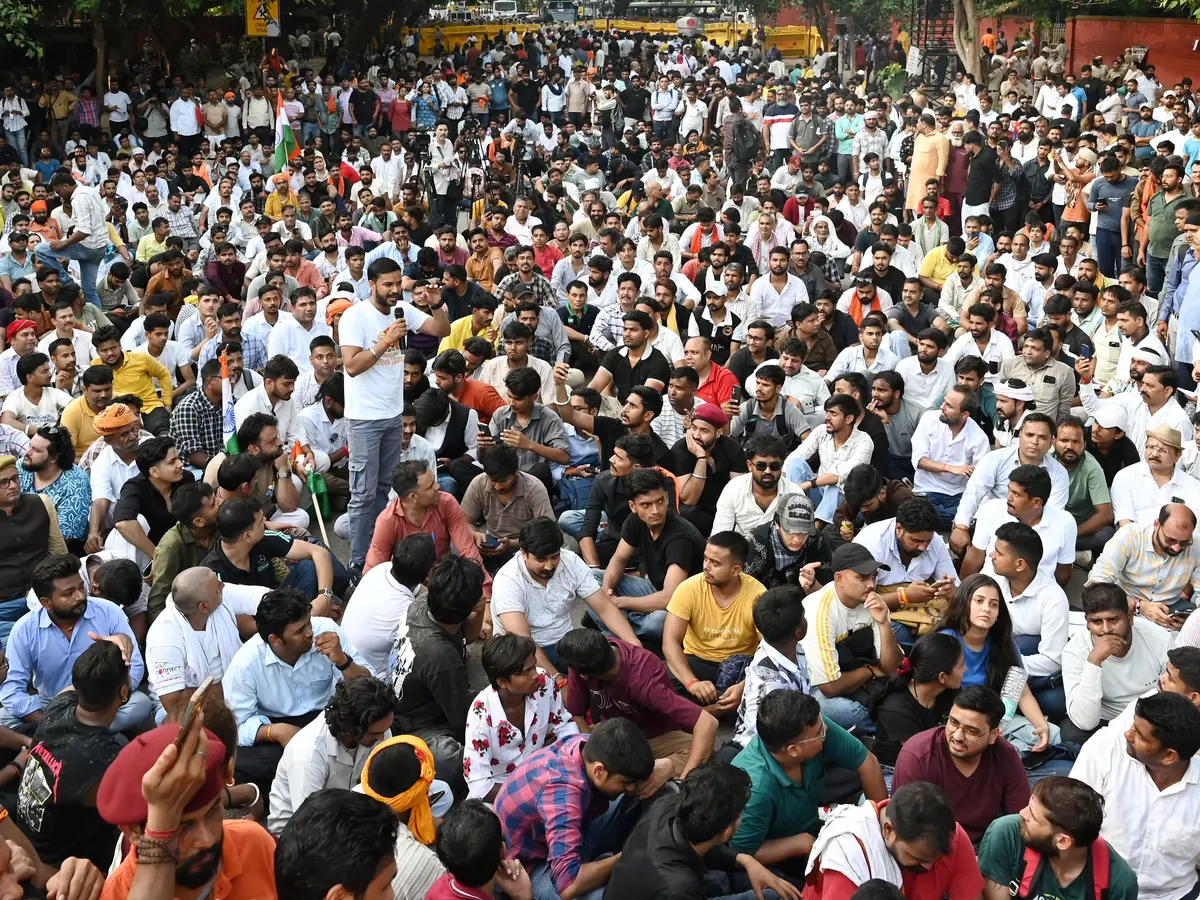
Over 20 Detained as 300 Protest Reservation Reforms in Delhi
Nadda Engages Anti-Reservation Protesters Amid BJP’s Upper-Caste Dilemma

Merit Protests Intensify as Athawale Demands Sedition Charges
Athawale Calls Anti-Reservation Protesters Traitors as Quota Debate Intensifies
Rajasthan Dalit, Tribal Groups Push for Quota Sub-Categorisation

Ajeet Bharti Unveils Reservation Reform Demands At Delhi Protest

NHRC Orders Action on Delhi University Hostel Shortage After Collapse
Supreme Court Bars Fresh Assam Teacher Appointments, Absorption
Himachal Court Cancels Disputed University Vice-Chancellor Appointment Process
Longer Allied Health Degrees Raise Faculty, Infrastructure Concerns