2 hrs ago
MNRE and Exim Bank Explore Financing to Broaden Solar Exports
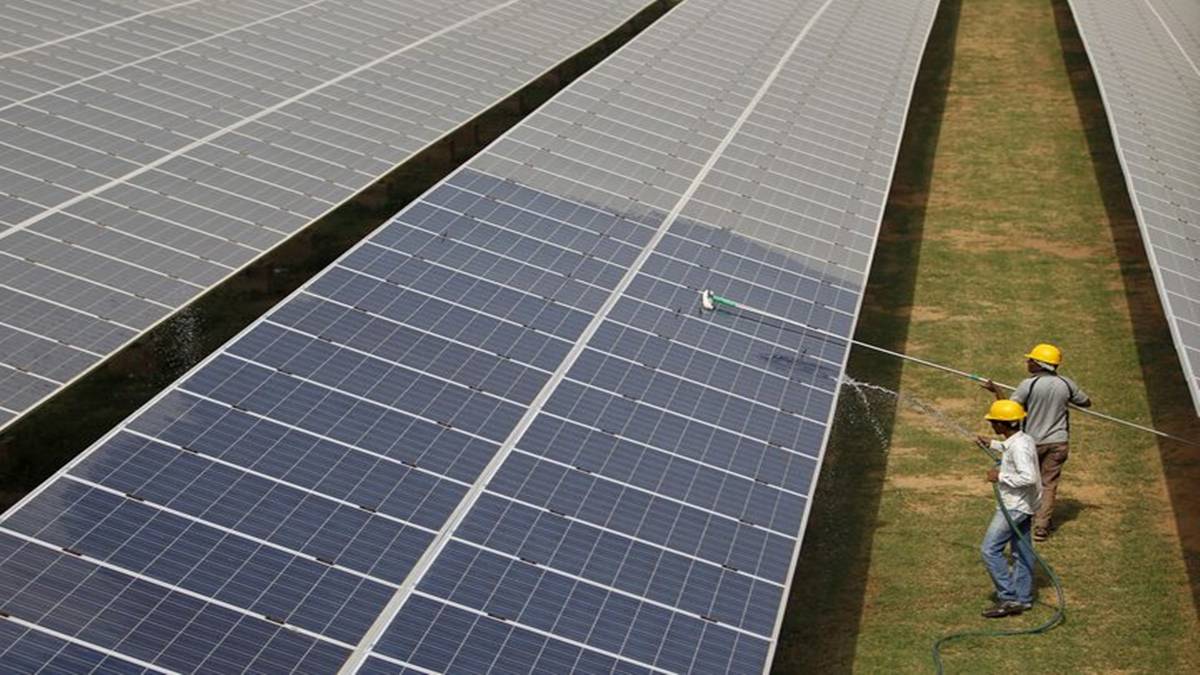
India sells solar panels to other countries, but most of its solar-module exports went to the United States last fiscal year.
New US trade duties could make Indian products more expensive there.
India’s renewable-energy ministry is helping exporters talk with Exim Bank about financing that could help overseas customers buy Indian products.
The bank already offers ways to finance purchases from India.
Exporters are also looking at Europe, Africa and Latin America.
Competing with China on price may be difficult.
Analysts say the US trade measures could hurt sales, but other factors also affect exports.
More products sold at home could increase competition among Indian manufacturers.

The Ministry of New and Renewable Energy is facilitating discussions between Indian renewable manufacturers and Exim Bank on export financing.
Potential support includes lines of credit and buyer financing for overseas purchases of Indian solar modules and wind turbines.
About 97% of India’s solar-module exports in FY2025-26 went to the United States, according to TERI’s Alekhya Datta.
The US Commerce Department set a 123.04% weighted-average dumping margin and a 126.09% subsidy rate in its investigations of Indian solar cells; a US injury investigation is continuing.
Exporters are exploring Europe, Africa and Latin America, while officials and analysts note that China’s price advantage and US trade measures pose challenges.
- Who
- India’s Ministry of New and Renewable Energy, Exim Bank, and Indian solar and wind manufacturers; MNRE Secretary Santosh Kumar Sarangi and TERI’s Alekhya Datta commented.
- What
- MNRE is facilitating discussions on export financing to help renewable-energy manufacturers reach more overseas markets.
- Where
- India, with exporters exploring the EU, Africa and Latin America as well as the US market.
- When
- The discussions are underway; the US Commerce Department issued its final affirmative determinations on September 11.
- Why
- To broaden export markets and reduce reliance on the US, which received 97% of India’s solar-module exports in FY2025-26, amid US trade duties.
Risks and concerns
Potential benefits and qualifications
Reliance on the US market
Risks and concerns
Datta said that sending 97% of solar-module exports to the US makes the industry vulnerable to US trade policies, tariffs and demand changes.
Potential benefits and qualifications
MNRE is facilitating discussions with Exim Bank, while manufacturers explore markets in Europe, Africa and Latin America.
Impact of US duties
Risks and concerns
Datta said higher tariffs and trade-remedy duties can raise landed costs and lead to renegotiated prices, lower margins, deferred orders or lost business.
Potential benefits and qualifications
Datta cautioned that the reported $70 million decline in US-bound exports cannot be attributed entirely to tariffs; prices, product mix, US demand and procurement decisions also matter.
Domestic market effects
Risks and concerns
Datta said continued US restrictions could redirect modules to India, increasing price competition and pressuring plant utilisation and profitability.
Potential benefits and qualifications
The article does not present a specific counterargument on domestic-market effects; the financing and market-diversification effort is intended to widen export opportunities.
Key facts
- Potential financing
- Discussions include Exim Bank lines of credit and other export-financing facilities.
- Existing Exim Bank instruments
- The bank offers Lines of Credit and Buyer’s Credit for overseas purchases of Indian goods and services.
- Solar-module exports
- India exported approximately $1.05 billion worth of solar modules in FY2025-26.
- US export share
- Approximately $1.02 billion, or 97%, of those exports went to the US, according to TERI’s Alekhya Datta.
- Export change
- Total module exports fell 6.19%, from $1.12 billion in FY25 to $1.05 billion in FY2025-26.
- US investigation rates
- The US Commerce Department assigned Indian producers a 123.04% weighted-average dumping margin and a 126.09% subsidy rate.
- Continuing US process
- The US International Trade Commission’s concurrent injury investigation is continuing.
Quotes
Santosh Kumar Sarangi
Secretary of India’s Ministry of New and Renewable Energy.
“The exporters are actually in discussion with Exim Bank as to what kind of facilities Exim Bank can provide for export of wind turbines, for solar modules. We are working with Exim Bank to identify how they can also facilitate and help our exporters.”
 financialexpress.com
“This concentration makes India’s solar module export industry highly vulnerable to US trade policies, tariff changes and demand fluctuations.”
financialexpress.com
Sources
Related news

India Plans Exim Bank Credit Lines to Rescue Solar Exports
US sanctions bill threatens India's textile exports, CITI urges talks

Niti Aayog Urges Export Diversification Amid External Headwinds
Indian Exporters Warn US Tariffs Could Halt Shipments
US Probe Into EU Carbon Border Tax Could Open India Concessions
Tiruppur Adapts as New US Tariff Threat Revives

Uttar Pradesh Approves SAF Policy to Attract Investment and Jobs

Odisha Wins Wind Energy Award, Seeks New Investments

Solex Energy and Subsidiary Secure ₹194.14 Crore Solar Orders
IREDA Signs Performance MoU With MNRE, Setting FY27 Targets