5 hrs ago
Anganwadi Pay Hike Leaves Workers Without Employment Rights
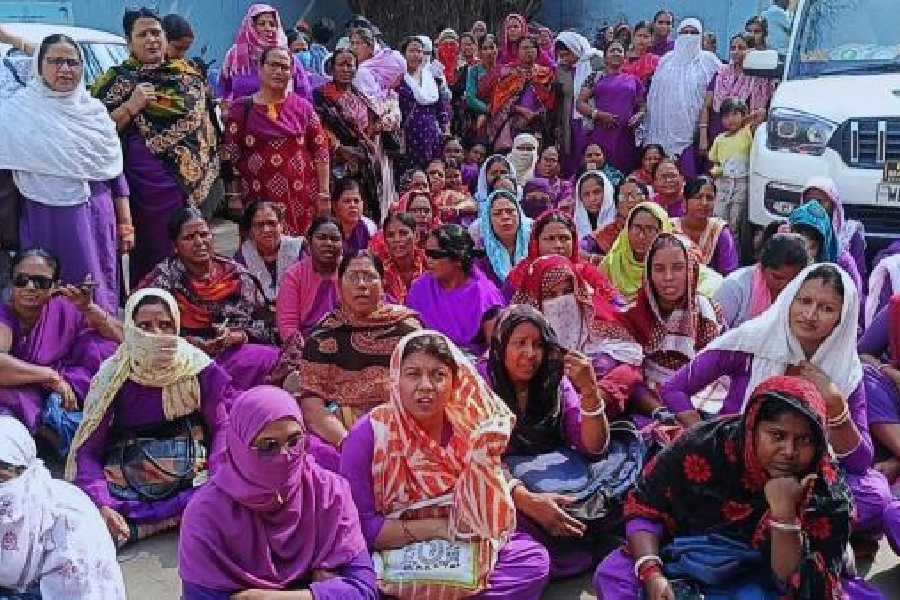
Anganwadi and ASHA workers help families with food, health, babies, and young children.
The West Bengal government increased the monthly payment for anganwadi workers by Rs 5,000.
However, the payment is called an honorarium instead of a salary.
An honorarium is usually a payment given as a gesture of thanks, not money owed under an employment contract.
This means the workers may still not receive protections such as minimum wages, job security, or social benefits.
The article says these workers do full-time and important jobs.
It also says that nearly all of this frontline care work is done by women.
A 2022 Supreme Court observation described the workers’ duties as full-time rather than merely voluntary.
The article argues that workers need recognition as employees, not only higher payments.

West Bengal’s budget increased anganwadi workers’ monthly honorarium by Rs 5,000.
The article argues that calling payments an honorarium treats essential work as voluntary rather than as employment.
India has approximately 34 lakh anganwadi and ASHA workers, all of whom are women according to the article.
These workers provide vaccinations, breastfeeding guidance, nutrition records, and early-childhood education.
Despite the pay increase, workers remain without guaranteed minimum wages, job security, social protection, or clear legal recourse.
- Who
- Anganwadi workers, anganwadi helpers, and ASHA workers, who are described as predominantly or entirely women.
- What
- West Bengal raised anganwadi workers’ monthly honorarium by Rs 5,000, while the article argues that they still lack formal employment rights.
- Where
- West Bengal and India, including villages and city slums.
- When
- The pay increase was announced in this year’s West Bengal budget; cited government workforce data is from December 2023, and the Supreme Court observation was made in 2022.
- Why
- The government classifies the workers’ payments as honorariums rather than salaries, which the article says allows it to avoid obligations linked to formal employment.
Pay Increase and Public Recognition
Formal Employment and Legal Rights
Meaning of the budget increase
Pay Increase and Public Recognition
The Rs 5,000 increase provides anganwadi workers with more monthly income and reflects recognition that their services are vital.
Formal Employment and Legal Rights
The article argues that a higher honorarium is insufficient because it leaves the workers outside formal employment protections.
Worker classification
Pay Increase and Public Recognition
The government continues to describe the payments as honorariums, presenting them as compensation or recognition rather than regular wages.
Formal Employment and Legal Rights
The article says the workers perform full-time duties and should be treated as employees entitled to wages and related rights.
Care work and gender
Pay Increase and Public Recognition
The existing system relies on women to deliver frontline nutrition, health, and childcare services.
Formal Employment and Legal Rights
The article and economist Reetika Khera characterize this as a gendered arrangement in which women’s care work is undervalued and treated as voluntary.
Key facts
- West Bengal pay increase
- The monthly honorarium for anganwadi workers was raised by Rs 5,000.
- Total workforce
- The article cites approximately 34 lakh anganwadi and ASHA workers nationwide.
- Anganwadi workers
- There were 13.48 lakh anganwadi workers as of December 2023.
- Anganwadi helpers
- There were 10.23 lakh anganwadi helpers as of December 2023.
- ASHA workers
- There were 10.47 lakh ASHA workers as of December 2023.
- Work performed
- The workers administer vaccinations, guide breastfeeding mothers, maintain nutrition records, and provide early-childhood schooling.
- Rights identified as missing
- The article says workers lack minimum-wage protection, job security, social protection, EPF, ESI, and the right to challenge dismissal before a labour tribunal.
Sources
Related news

BRTU Demands Rs. 18,000 Monthly Pay for Telangana ASHA Workers

Bombay High Court Rules BMC Health Volunteers Get Minimum Wages
Anakapalli Panchayat Workers Sweep Roads in Wage Protest

Readers Urge Action on Gig Workers, Pollution, and Safety

Telangana Gram Panchayat Workers Protest Wage Revision, Job Security

Supreme Court Rejects Centre’s ₹363 Crore Vodafone Idea GST Challenge

Supreme Court Says Accused Politicians Must Not Roam Freely
Tamil Nadu Plans Technology-Led Expansion to Boost Mining Revenue

Maharashtra Nominees Do Not Automatically Own Cooperative Society Flats