2 hrs ago
China Launches Four Rockets in 45-Hour Satellite Blitz
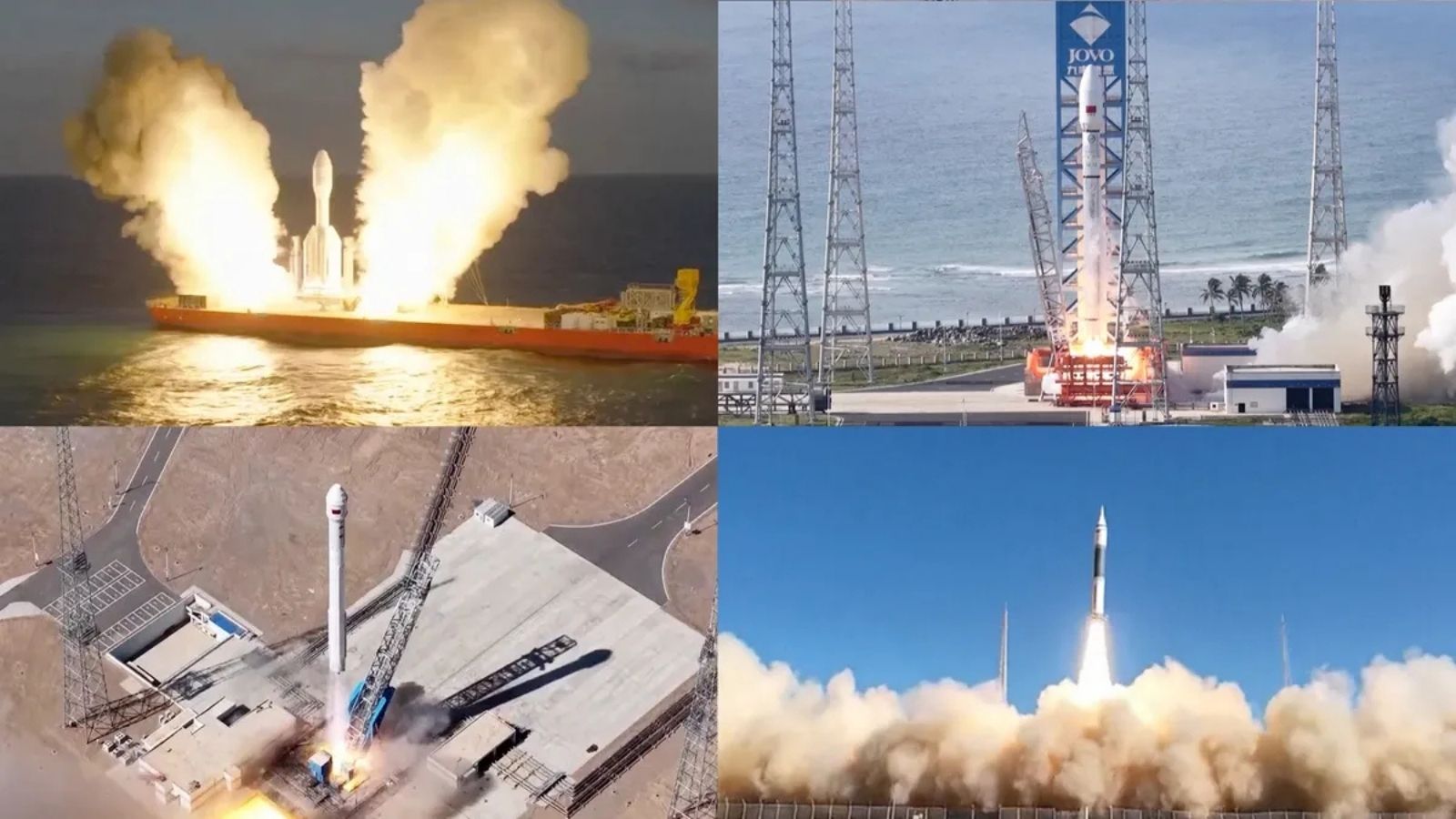
China launched four rockets in about 45 hours.
The rockets took off from three different places.
All four launches worked successfully.
Some satellites will watch Earth from space.
Others will help build a large Chinese internet satellite network called Qianfan.
LandSpace launched 10 Qianfan satellites using its Zhuque-2E rocket.
Orienspace launched nine more using its Gravity-1 rocket.
The launches show that China’s space industry is growing quickly.
Both government-linked organizations and private companies are taking part.

China launched four different orbital rockets from three launch sites between September 15 and 16.
All four missions succeeded and carried Earth-observation or broadband-constellation satellites.
LandSpace launched a Zhuque-2E rocket from Jiuquan with 10 Qianfan satellites.
Orienspace launched its Gravity-1 rocket from a sea-based platform near Shanghai with nine Qianfan satellites.
The rapid sequence reflects China’s expanding space sector and mix of state-owned and private launch providers.
- Who
- China, including LandSpace and Orienspace, conducted the launches.
- What
- Four orbital rockets successfully launched satellites, including Earth-observation satellites and Qianfan broadband-constellation satellites.
- Where
- From three Chinese launch sites, including the Jiuquan Satellite Launch Center and a sea-based platform off Shanghai.
- When
- Between September 15 and 16, over roughly 45 hours.
- Why
- The launches supported Earth observation and the Qianfan broadband megaconstellation, while demonstrating China’s expanding space sector.
Key facts
- Launches
- Four different orbital rockets were launched.
- Time span
- Roughly 45 hours between September 15 and 16.
- Launch sites
- Three separate launch sites in China.
- First mission
- LandSpace’s Zhuque-2E launched at 2:26 a.m. EDT on September 15.
- First payload
- The Zhuque-2E carried 10 Qianfan satellites into low Earth orbit.
- Second mission
- Orienspace’s Gravity-1 launched at 6 p.m. EDT on September 15.
- Second payload
- Gravity-1 carried nine Qianfan satellites into orbit.
- Qianfan goal
- The megaconstellation is expected to eventually have around 15,000 active satellites if the program proceeds as planned.
Sources
Related news
SpaceX Launches 27 Starlink Satellites on 100th Falcon Mission
Isar Aerospace Rocket Reaches Orbit, Boosting Europe’s Space Ambitions

Skyroot Targets Second Vikram-1 Rocket Launch by 2026-End

India Marks Space Sector Growth With 548 Satellites in Orbit

India Approves Satellite Spectrum Rules, Clearing Starlink Launch

India’s Space Sector Expands With 440 Startups After Reforms

Xi-Trump Washington Meeting Focuses on Trade, Energy and Agriculture
Humanoid Robot Sales Reach 7,000 as Industry Boom Looms

Katrina Kaif’s Body-Shaming Debate Exposes India’s Beauty Obsession

Backrooms Becomes A24’s First Film To Reach $400 Million

Xi Jinping to Visit United States for Trade Talks