1 year ago
Distant Radio Burst Detected, Traveled Billions of Years to Earth
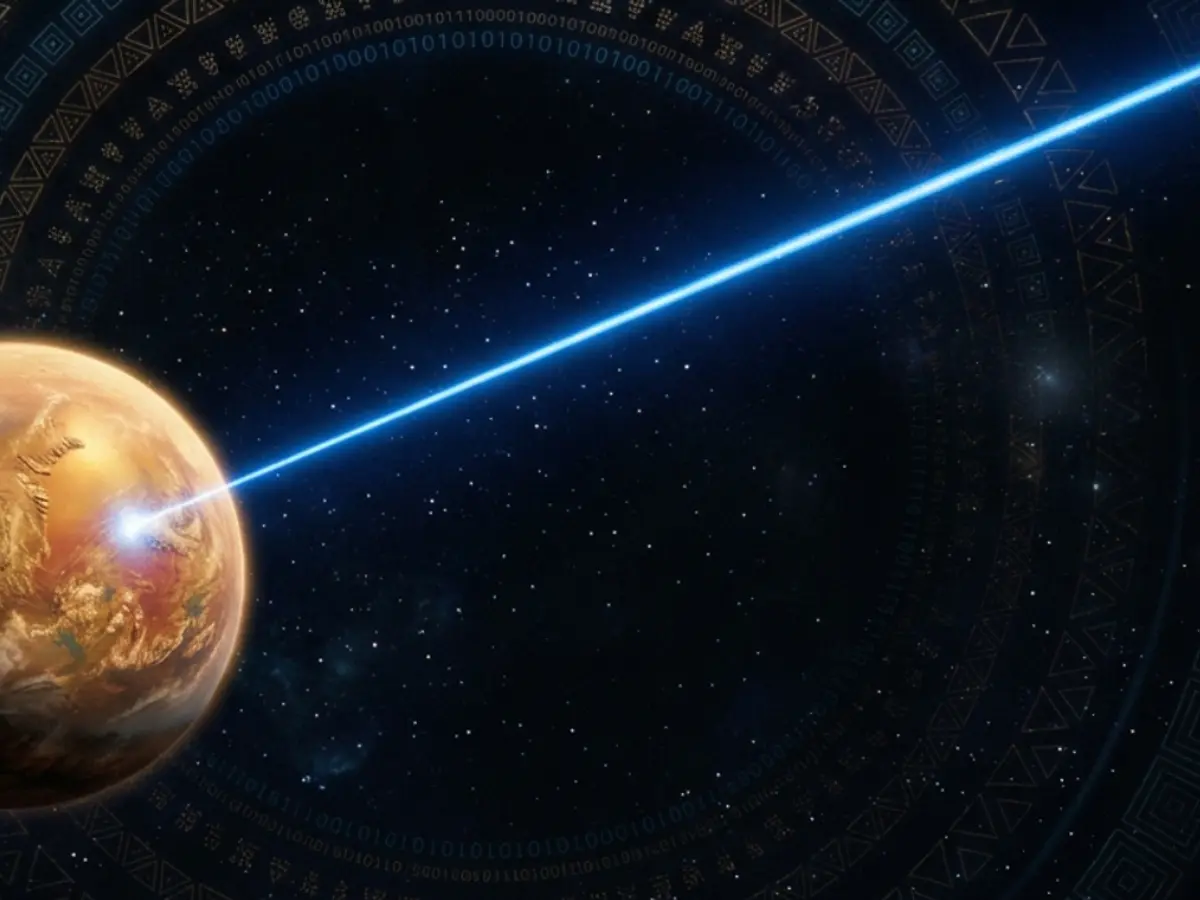
Scientists detected a radio signal, called a fast radio burst (FRB), that traveled a very long distance to reach Earth.
This signal started its journey about 10 billion years ago, from a galaxy where new stars were being born.
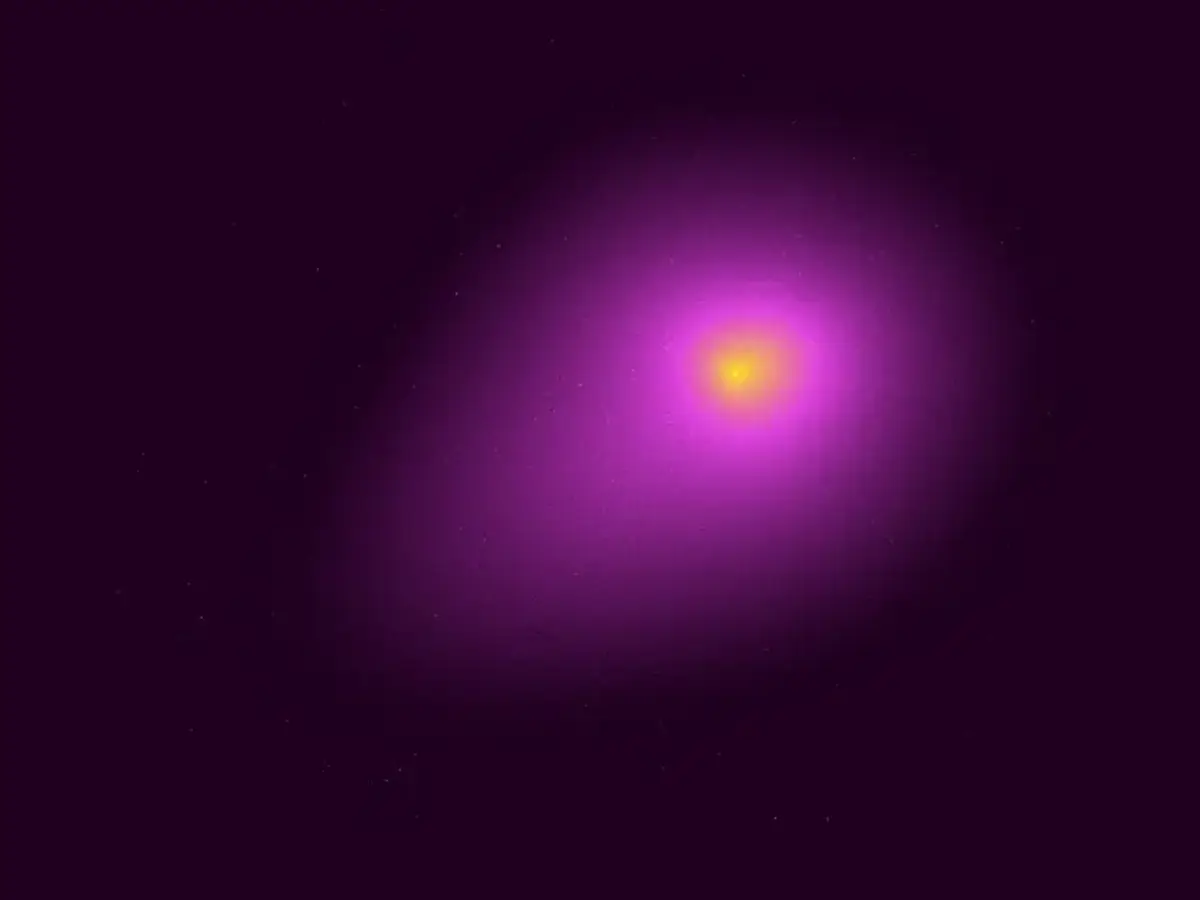
The scientists used the South African MeerKAT observatory to find the signal, and the James Webb Space Telescope to pinpoint its origin.
By studying the light from this distant galaxy, they found out when the signal started its journey.
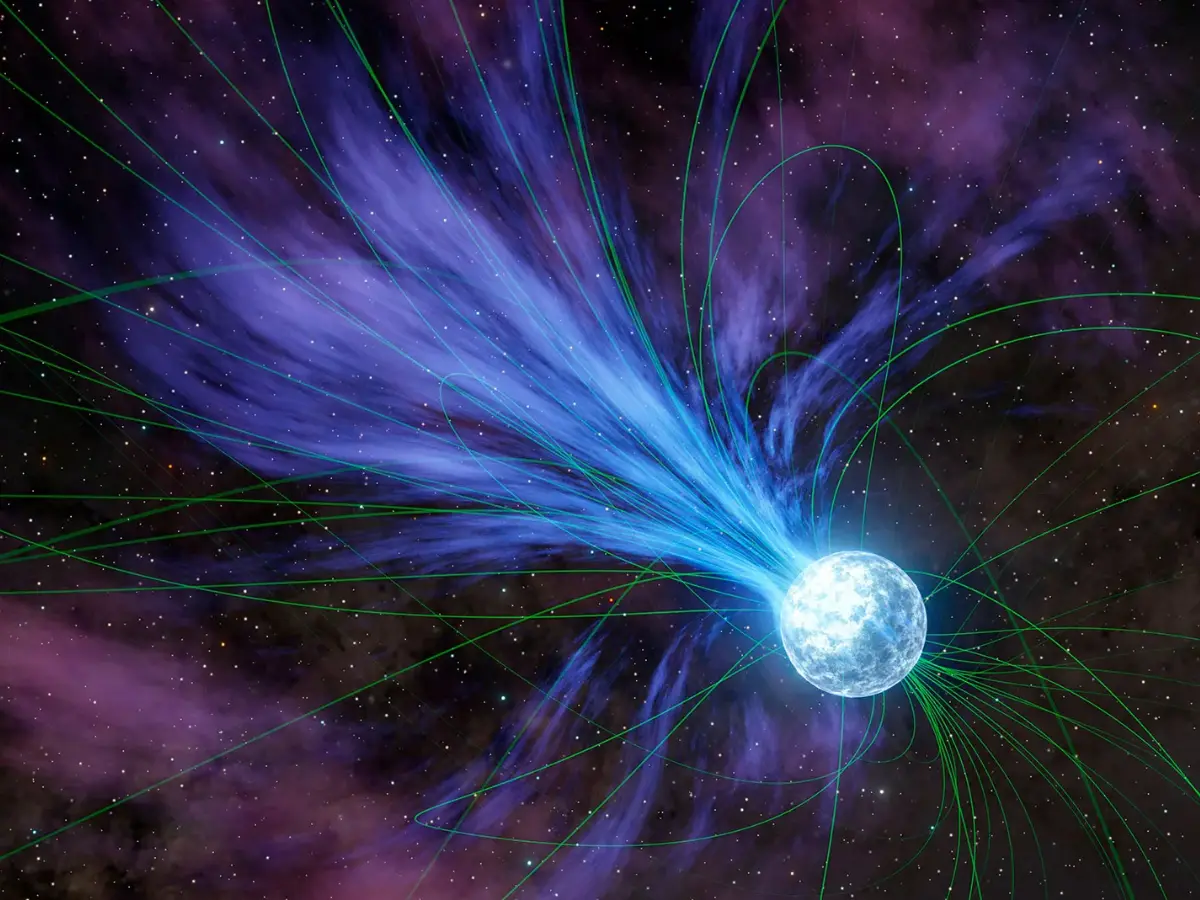
This discovery may help us understand magnetars, which are super-magnetic stars that might create these radio bursts.
The signal helped scientists understand a bit more about the very early universe.

A fast radio burst (FRB) was detected by the MeerKAT observatory in South Africa on March 4, 2024.
The FRB originated from a dwarf galaxy undergoing a burst of star formation.
The radio signal traveled approximately 10 billion years to reach Earth.
The James Webb Space Telescope (JWST) helped locate the faint light source of the burst.
Scientists believe the observation may shed light on the origins of magnetars, which are strongly magnetized neutron stars.
- Who
- Scientists, including a team led by Manisha Caleb, discovered and analyzed the signal.
- What
- A fast radio burst (FRB) was detected.
- Where
- The signal was detected by the MeerKAT observatory in South Africa and originated from a dwarf galaxy.
- When
- March 4, 2024, when it was recorded by the MeerKAT observatory; the radio signal originated when the universe was around 3 billion years old.
- Why
- To understand the origins of fast radio bursts and potentially learn more about magnetars.
Magnetar Formation Theories
Magnetar Formation Theories
Magnetar Origins
Magnetar Formation Theories
Merger in older galaxies
Magnetar Formation Theories
Stellar explosion in young galaxies
Key facts
- FRB Detection Date
- March 4, 2024
- Observatory
- MeerKAT (South Africa)
- Origin
- Dwarf galaxy
- Age of Signal
- Approximately 10 billion years old
- Telescopes Used
- Keck, MMT, James Webb Space Telescope (JWST)
- Research Lead
- Manisha Caleb