1 month ago
Salar de Uyuni: Bolivia’s Giant Salt Flat Explained
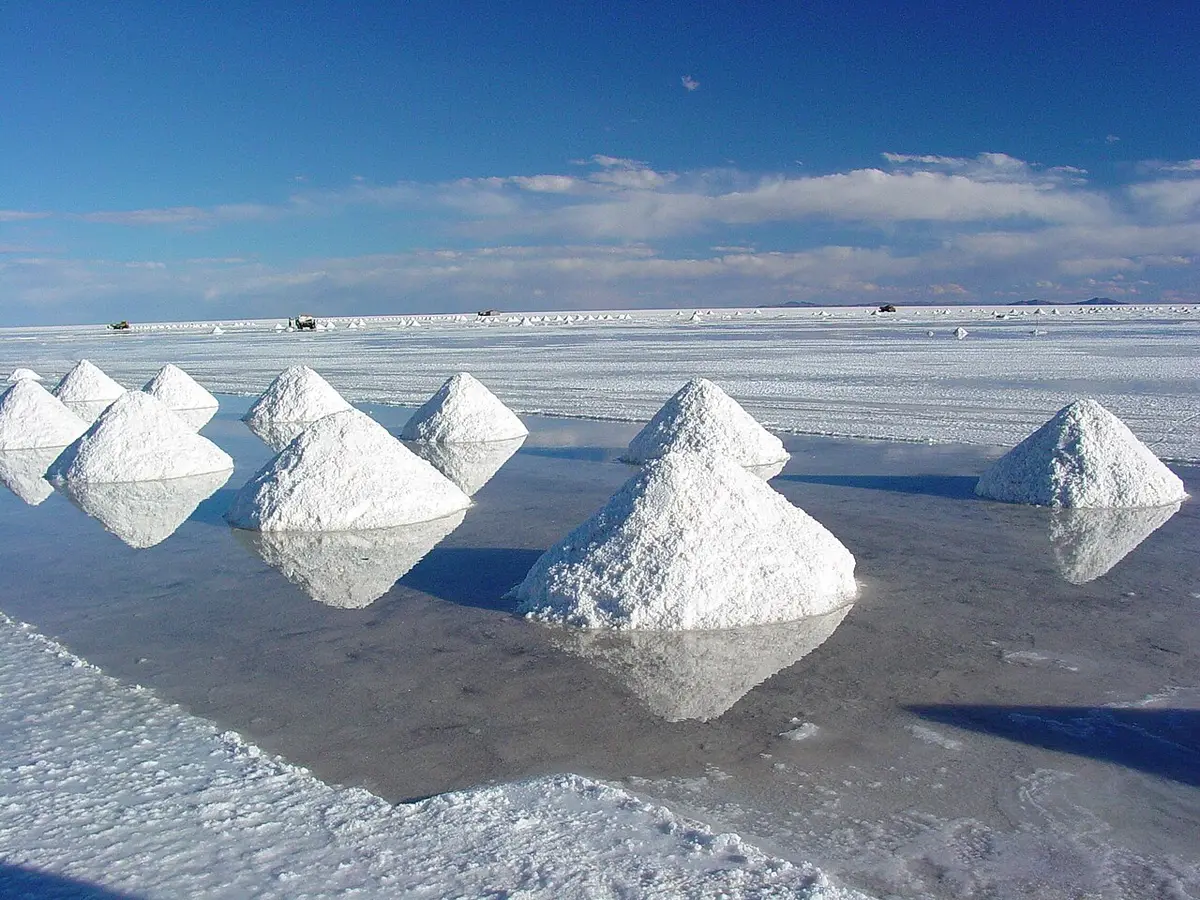
Salar de Uyuni is a huge flat in Bolivia that looks like a giant white desert.
It isn’t made of sand; it’s made of salt that was left behind when a big lake dried up.
The lake, called Lake Minchin, existed a long time ago and slowly shrank until it disappeared about 10,000 years ago.
The water that was left behind evaporated, and the salt stayed on the ground.
Under the salt, there is a thick layer of salty water that contains a lot of lithium, a metal used in batteries.
The salt flat sits very high in the Andes mountains, about 3,656 meters above sea level.
Because the climate is very dry, the water keeps evaporating, so the salt keeps building up.
That’s why the desert looks so white and flat.
It’s the biggest salt flat in the world, covering more than 10,000 square kilometers.

Salar de Uyuni is the world’s largest salt flat, covering 10,582 km² in Bolivia.
The salt crust formed when the prehistoric Lake Minchin dried up about 10,000 years ago.
Closed desert basins trap water that evaporates, leaving behind concentrated minerals.
The underlying brine contains 50‑70% of the world’s known lithium reserves.
The salt flat sits at 3,656 meters elevation in the Andes.
- Who
- What
- The geological formation and features of Salar de Uyuni, the world’s largest salt flat
- Where
- Salar de Uyuni, Bolivia, in the Andes
- When
- Lake Minchin dried up about 10,000 years ago; the article was published in 2024
- Why
- Evaporation of water in a closed basin left behind concentrated minerals, forming a salt crust
Key facts
- Location
- Bolivia
- Area
- 10,582 km²
- Elevation
- 3,656 m
- Formation
- Lake Minchin dried 10,000 years ago
- Lithium content
- 50‑70% of world reserves
Sources
Related news
Environment Geography Quiz Covers Lakes, Passes, Birds and Solar Power
Egyptian Shark Graveyard Reveals Ancient Cretaceous Marine Ecosystem
Ancient Landscape Beneath Great Barrier Reef Reveals Human Past
Egypt’s Desert Reveals Ancient Shark Graveyard From Cretaceous Sea
Satellite Images Show Nepal Towns Buried After Flash Flood