1 hr ago
Supreme Court Challenges Bar Council of India’s Authority
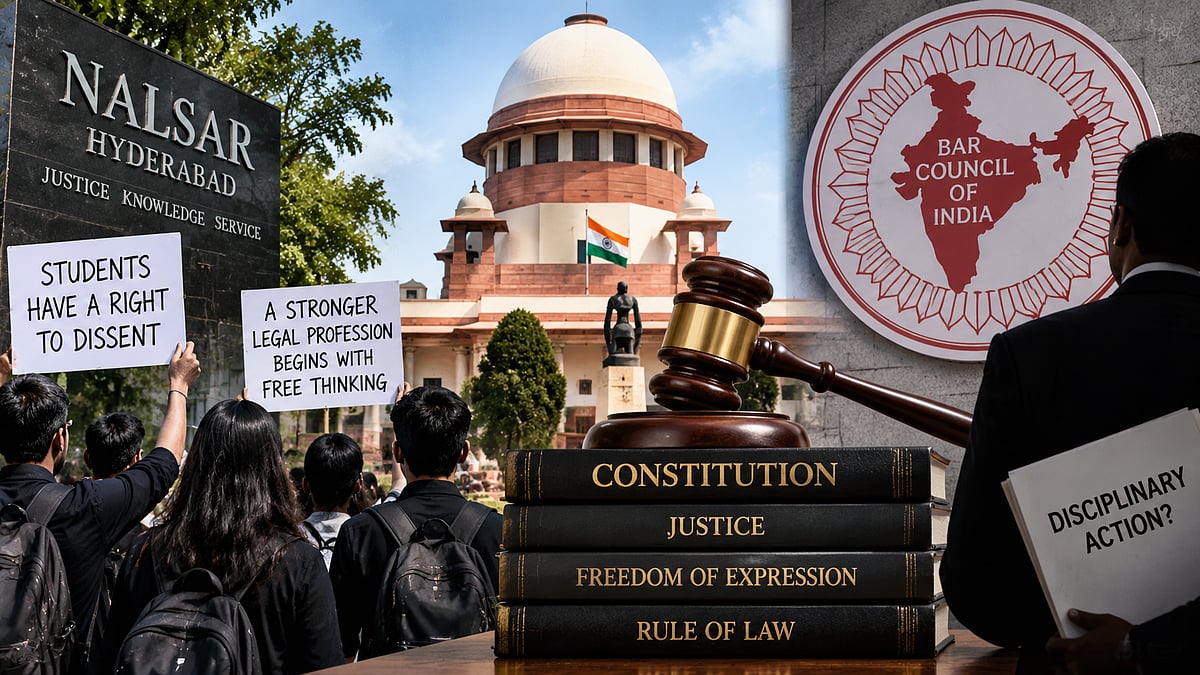
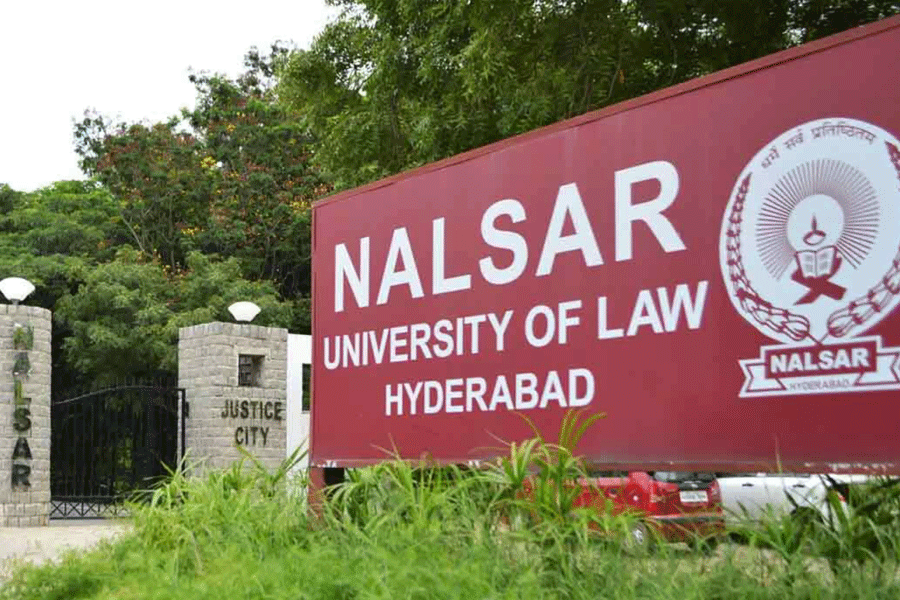
Students at a law school in Hyderabad protested the choice of a speaker for their graduation ceremony.
They were unhappy about something the Chief Justice of India had previously said.
The Bar Council of India wanted the students punished for protesting.
It also wanted their future entry into the legal profession made more difficult.
The Supreme Court said the Council did not have disciplinary power over them because they were not yet advocates.
The court also questioned whether the BCI chairman had enough authority to make certain policy decisions.
The article says peaceful disagreement should not be treated as wrongdoing.
It worries that political influence could weaken the legal profession.
Lawyers may need to defend people and challenge governments, so their independence is important.

The Supreme Court criticized the Bar Council of India on two consecutive days over its conduct and authority.
The BCI urged NALSAR to discipline students who protested Chief Justice Surya Kant’s convocation invitation.
The Council also sought to create obstacles to the students’ enrolment as advocates.
The Supreme Court ruled that the BCI’s disciplinary authority begins only after a person becomes an advocate.
The article argues that political affiliations, including BCI chairman Manan Kumar Mishra’s BJP role, threaten the profession’s independence.
- Who
- The Bar Council of India, NALSAR students, the Supreme Court, Chief Justice of India Surya Kant, and BCI chairman Manan Kumar Mishra.
- What
- The Supreme Court questioned the BCI’s authority and rejected its effort to pursue disciplinary action against protesting law students.
- Where
- The dispute involved the National Academy of Legal Studies and Research in Hyderabad; the article also cites a separate student incident in Kerala.
- When
- The Supreme Court issued the relevant criticism and orders on two consecutive days, according to the article.
- Why
- The BCI sought action against students who protested the invitation of Surya Kant to deliver NALSAR’s convocation address.
BCI’s Disciplinary Approach
Students’ and Court’s Objections
Response to the protest
BCI’s Disciplinary Approach
The BCI sought disciplinary proceedings against NALSAR students after they objected to Surya Kant’s convocation invitation.
Students’ and Court’s Objections
The students’ protest may have been disagreeable, but the article says peaceful disagreement should not automatically be treated as a disciplinary offence.
Authority over students
BCI’s Disciplinary Approach
The BCI attempted to influence the students’ future enrolment as advocates.
Students’ and Court’s Objections
The Supreme Court said the BCI’s disciplinary authority starts only after a person becomes an advocate, limiting the Council’s power over current students.
Political influence
BCI’s Disciplinary Approach
The article associates the BCI chairman’s actions with his role as a BJP leader.
Students’ and Court’s Objections
The article argues that professional institutions lose credibility if political affiliations influence their functioning and decisions.
Key facts
- Institution criticized
- The Bar Council of India was criticized by the Supreme Court on two consecutive days.
- Students involved
- NALSAR students objected to Chief Justice of India Surya Kant being invited to speak at their convocation.
- BCI request
- The BCI wanted NALSAR to initiate disciplinary proceedings against the students.
- Proposed consequence
- The BCI sought to create roadblocks to the students’ enrolment as advocates.
- Court’s ruling
- The Supreme Court said the BCI’s disciplinary authority begins only when a person enters the legal profession as an advocate.
- Leadership issue
- The court questioned the authority of Manan Kumar Mishra, saying he was only a pro tem chief and should consult the Attorney-General and Solicitor-General before policy decisions.
Sources
Related news
Supreme Court Bars Bar Councils From Disciplining Law Students
CJI Slams Bar Council's NALSAR Enrolment Suspension As 'Uncalled For'
Student Body Demands Apology After BCI Withdraws NALSAR Enrolment Ban
Bar Council's bid to curb NALSAR students raises autonomy questions

NLSIU students demand BCI apology over revoked NALSAR enrolment order
Bar Council's NALSAR ban over student dissent sparks political backlash
Bengaluru Police Register FIR Against Uttarakhand BJP Over Kharge Ritual
Yogi Adityanath’s Distinctive Political Image Challenges Uttar Pradesh’s Conventional Equations

Congress Stages Statewide Protest Over Sugar Prices, PDS Shortages
Congress Women Empowerment Claims Face Questions Over Representation