

1 week ago
Sri Sathya Sai District Expands Farmer Support Amid El Niño
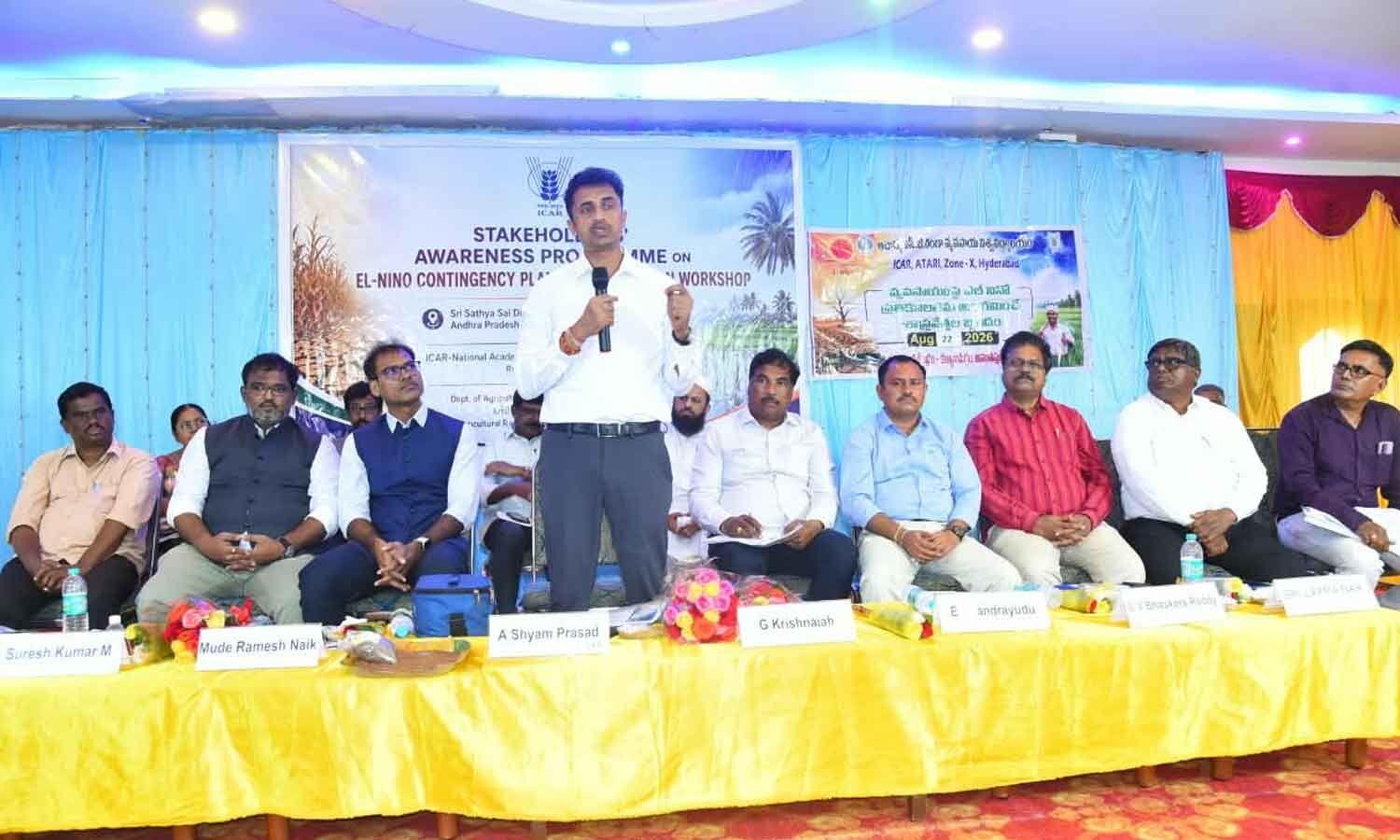
Sri Sathya Sai District is facing drought because it has received much less rain than usual.
The district recorded 57 percent less rainfall, so farmers planted crops on only 45 percent of the usual area.
Collector A Shyam Prasad said the government would support farmers.
Farmers were asked to save water and try crops that need less water.
The government has stored alternative seeds and will sell them with an 80 percent subsidy.
Farmers are also being encouraged to build ponds and use drip irrigation.
A natural farming method called Pre-Monsoon Dry Sowing will be expanded.
Officials will also grow fodder so farm animals have enough food.

Sri Sathya Sai District recorded a 57 percent rainfall deficit, reducing seasonal cultivation to 45 percent of normal.
Collector A Shyam Prasad urged farmers to use protective irrigation, water-efficient technology and alternative crops.
The district has stocked 16,000 quintals of alternative crop seeds for distribution at an 80 percent subsidy.
Officials plan to expand Pre-Monsoon Dry Sowing from 94,000 acres to 2 lakh acres.
Community fodder cultivation will begin across 1,000 acres to help prevent livestock feed shortages.
- Who
- Sri Sathya Sai District Collector A Shyam Prasad, district officials, agricultural scientists, NGOs and farmers.
- What
- The district reviewed its El Niño action plan and announced measures to support farming and livestock during drought conditions.
- Where
- Sai Aaramam premises in Puttaparthi.
- When
- The review meeting was held on Friday.
- Why
- A 57 percent rainfall deficit has reduced cultivation and increased risks to crops, groundwater and livestock fodder.
Key facts
- Rainfall deficit
- 57 percent
- Seasonal cultivation
- 45 percent of the normal area
- Alternative crop seeds
- 16,000 quintals stocked
- Seed subsidy
- 80 percent
- Pre-Monsoon Dry Sowing expansion
- From 94,000 acres to 2 lakh acres
- Community fodder cultivation
- 1,000 acres
- Crop insurance
- All eligible farmers have been covered
Sources
Related news

Kadapa Collector assures farmers amid El Niño rainfall deficit

Telangana Officials Unite to Protect Farmers Amid El Niño Threat

Don't plant paddy in haste, Wanaparthy DC warns farmers

Andhra Pradesh Adopts Four-Pillar Plan Against El Niño Impact
Farmers Urged to Diversify Crops Amid El Niño Conditions

Andhra Pradesh Takes Kharif Measures Despite El Niño Drought

Jana Sena Plans Rallies and Service Activities for Pawan’s Birthday

Three People Killed After Motorcycle Crashes Into Tree

Collector Urges Telugu Preservation and Sports Promotion

Collector Shyam Prasad Inspects Puttaparthi SIR Voter Verification Drive

Puttaparthi Orders Joint Action Plan to Prevent Road Accidents
