2 hrs ago
India’s Rules for Turning Residential Flats Into Short-Term Rentals

India does not have one nationwide law that automatically allows people to run short-term rentals in residential flats.
Owners must follow tourism, land-use and housing-society rules.
In Uttar Pradesh, eligible homestays need registration and approvals from local authorities.
The owner or the owner’s family must live in an urban homestay.
A service apartment must have a caretaker living in the unit.
Both types can have no more than eight rooms under the policy.
A vacant flat with constantly changing guests is not covered by these routes.
A protest alone does not stop an operation, but a housing society can use its bylaws and seek legal action.
Owners may also need municipal licences, fire-safety compliance, foreign-guest registration and tax compliance.

India has no central law specifically governing short-term residential rentals, but other legal restrictions may apply.
Uttar Pradesh’s 2025 policy requires tourism registration and local-authority no-objection certificates for eligible homestays and bed-and-breakfast units.
An urban homestay requires the owner or the owner’s family to live there, while a service-apartment unit requires a live-in caretaker.
Both categories are limited to eight rooms and do not cover vacant flats receiving changing guests.
Housing societies may challenge short-term rentals through bylaws, written notices, resolutions and court injunctions.
- Who
- Residents of Windsor Park Society, short-term rental operators, housing societies, government authorities and legal experts.
- What
- Residents protested the alleged conversion of residential flats into Airbnb-style short-term rentals, prompting a review of the legal requirements for bed-and-breakfast and service-apartment operations.
- Where
- Windsor Park Society in Vaibhav Khand, Ghaziabad, Uttar Pradesh, India.
- When
- Residents protested last Sunday; the relevant Uttar Pradesh policy was issued in 2025, with amendments announced in June 2026.
- Why
- Residents cited frequent outsider movement, effects on the residential environment and security concerns; the legal framework is being examined because residential ownership alone may not authorize short-stay accommodation.
Residents and housing societies
Flat owners and short-term operators
Effect on residential living
Residents and housing societies
Residents say frequent outsider movement affects the residential environment and creates security concerns for families.
Flat owners and short-term operators
Operators may argue that residential flats can be used for short stays when the applicable tourism, planning and society requirements are satisfied.
Role of resident protests
Residents and housing societies
Residents have approached the District Magistrate, Police Commissioner, Ghaziabad Development Authority, Nagar Nigam and Tourism Department for an independent investigation.
Flat owners and short-term operators
Legal experts say a protest alone has no legal force, although a society or RWA can act through its bylaws, formal resolutions, notices and court proceedings.
Eligibility of rental units
Residents and housing societies
Residents’ concerns focus on alleged flats being used by a changing stream of visitors, including units where nobody lives.
Flat owners and short-term operators
The Uttar Pradesh framework allows eligible homestays and service apartments subject to registration, occupancy or caretaker requirements and a maximum of eight rooms; it does not cover a vacant flat operating in the described manner.
Key facts
- Central law
- India has no central law specifically governing short-term rentals.
- Applicable rules
- Operators must consider state tourism rules, planning or land-use law, and housing-society documents.
- Uttar Pradesh registration
- The state’s Homestay and Bed and Breakfast Policy, 2025 provides for Tourism Department registration after local-authority no-objection certificates.
- Residence requirement
- An urban homestay requires the owner or the owner’s family to physically live there; a service apartment requires a live-in caretaker.
- Room limit
- Both categories are capped at eight rooms under the policy.
- Vacant flats
- A flat in which nobody lives and which receives a changing stream of guests is not covered by the stated routes.
- Additional compliance
- Possible requirements include housing-society consent, municipal licensing, fire-safety compliance, FRRO registration, Form C filings for foreign guests and applicable GST obligations.
Quotes
Jai Dhanani
Counsel at SKV Law Offices who explained the applicable tourism-policy requirements.
“Both categories are capped at eight rooms, and hotels, motels and guest houses are excluded from the scheme altogether. Neither route covers a flat in which no one lives and which simply receives a changing stream of guests.”
 livemint.com
“So the real question isn't whether the neighbors are upset, it is whether the society or RWA has the paperwork and the resolve to act on it.”
livemint.com
Sources
Related news

West Bengal Tightens Rules for Hotels in Residential Buildings

Ajay Devgn’s Juhu Bungalow Lease Sparks Housing Society Dispute

Uorfi Javed Seeks Police Help Over Society’s Guest Restrictions
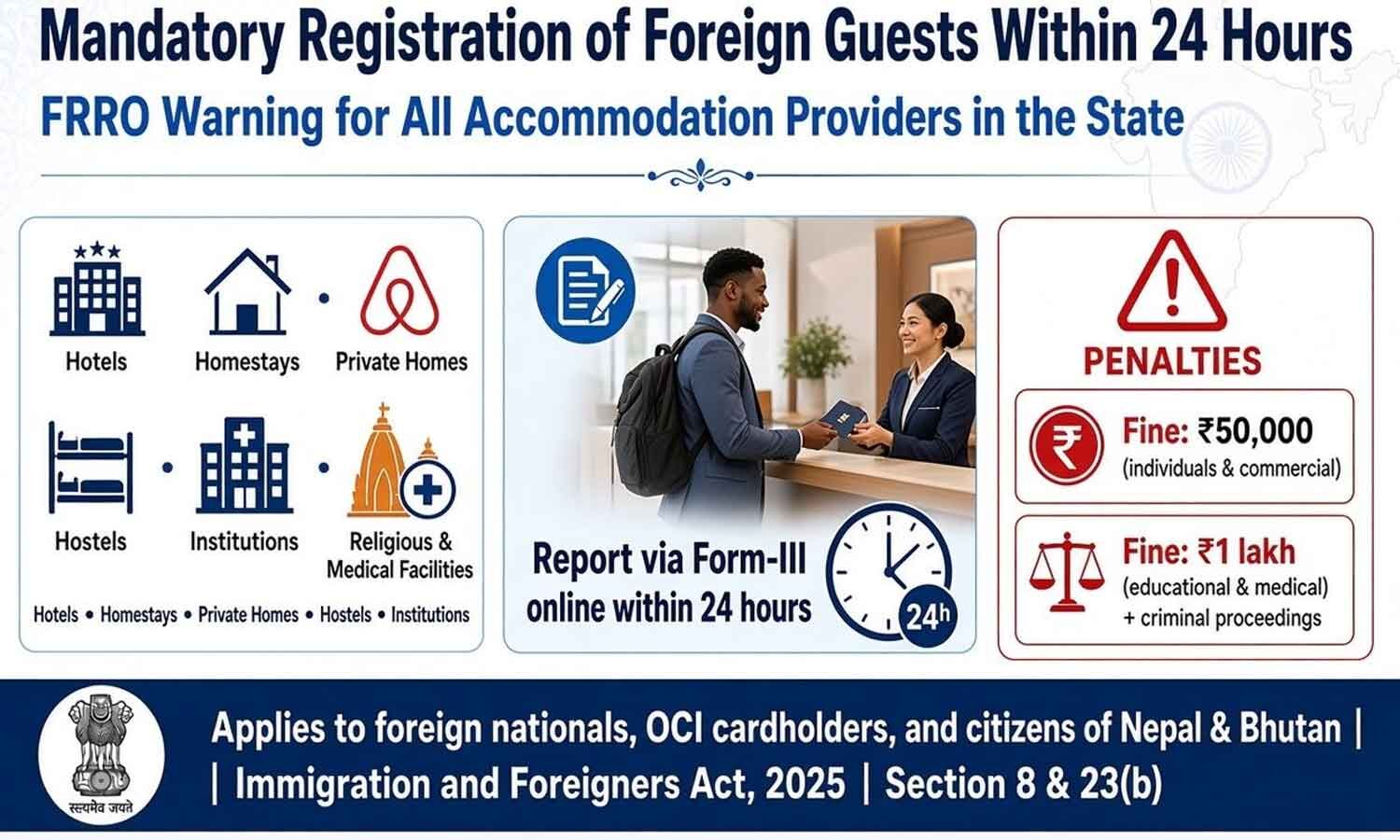
Foreign Guest Reporting Rules Bring Fines for Accommodation Providers
Karnataka High Court Told 2,500 Bengaluru East PGs Illegal

High Court Orders BMC to Reconsider Commercial Property Sealing

UP Police Constable PET Schedule Released for October 2026
Brajesh Pathak Urges Doctors to Use Hindi in Prescriptions
New Bhuj-Barauni Train Approved as Jhansi-Mathura Route Extended

Bhuj-Barauni Amrit Bharat Express Approved for Rail Connectivity

Bengaluru CEO Faces Backlash Over Regional Hiring Ban