2 weeks ago
Foundation Stone Set for Second Amaravati Flood Pumping Station
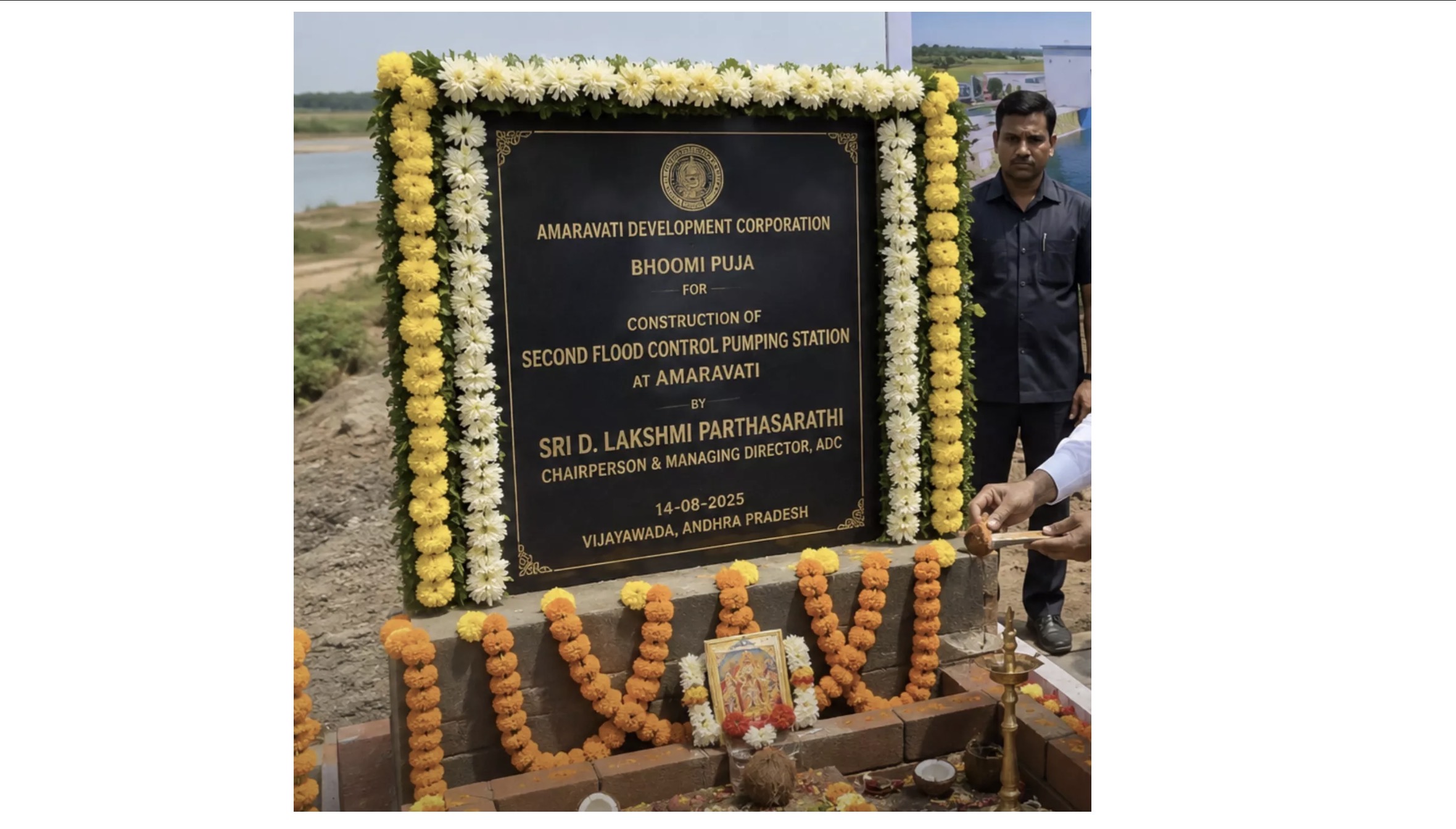
Amaravati is a city in India that sometimes faces flood problems.
The government is building a big machine, called a pumping station, to help stop floods.
This machine will suck up extra water from a small waterway called Kondaveeti Vagu.
Then it will push the water into the big Krishna River.
This helps keep the city dry when there is too much rain.
The building work started with a special ceremony on Friday.
This will be the city's second pumping station, so it will have a stronger defence against floods.
The new station is expected to be ready by February 2028.
The government also talked about building a new bridge over the railway line near a hospital called AIIMS.
That bridge will make it easier for cars to reach Amaravati.

The Andhra Pradesh government performed bhoomi puja for a second flood-control pumping station at Amaravati.
ADC chairperson D. Lakshmi Parthasarathi set the foundation stone for the new facility.
The station will have 13 vertical-lift pumps (12+1) and can lift 8,400 cusecs of flood water from Kondaveeti Vagu into the Krishna River.
The pumping station is expected to become operational by February 2028.
Officials also discussed extending the E-13 road, including a 609-metre railway over bridge near AIIMS Mangalagiri.
- Who
- The Andhra Pradesh government, led by Amaravati Development Corporation (ADC) chairperson D. Lakshmi Parthasarathi
- What
- Foundation stone laid for a second flood-control pumping station to strengthen Amaravati's flood-defence infrastructure
- Where
- Amaravati, along the Kondaveeti Vagu on the Krishna river bund
- When
- Friday, with the station expected to be operational by February 2028
- Why
- To provide a stronger flood-management mechanism as the capital region expands
Key facts
- Project
- Second flood-control pumping station, Amaravati
- Pumps
- 13 vertical-lift pumps (12+1)
- Capacity
- 8,400 cusecs of flood water
- Water source
- Kondaveeti Vagu
- Discharge point
- Krishna River
- Expected operational date
- February 2028
- E-13 road
- Current 6.3 km, to be extended to 9.82 km with a 3.52-km elevated corridor
- Railway over bridge
- 609 metres long, requiring about 3.34 acres of AIIMS land
Sources
Related news
Government Accelerates Amaravati Infrastructure Projects, Honoring Farmers’ Sacrifices

Naidu Inaugurates E3 Seed Access Road, Bridge Connecting Amaravati

Andhra Pradesh Plans Multiple New Road Links to Amaravati

APCRDA clears Amaravati projects; L&T bags quantum facility contract
El Nino Raises Drought Risk in Andhra Pradesh, Minister Warns

Harish Rao Questions Revanth Reddy Silence Over Veligonda Water Diversion
IMD Forecasts Poor, Below-Normal September Rains for Telangana

BRS MLA Accuses Telangana CM Over Krishna Water Diversion

MLA Assures Guntur Residents Over Safety Of Drinking Water