2 hrs ago
NCERT Sengol Claim Rekindles Debate Over 1947 Power Transfer
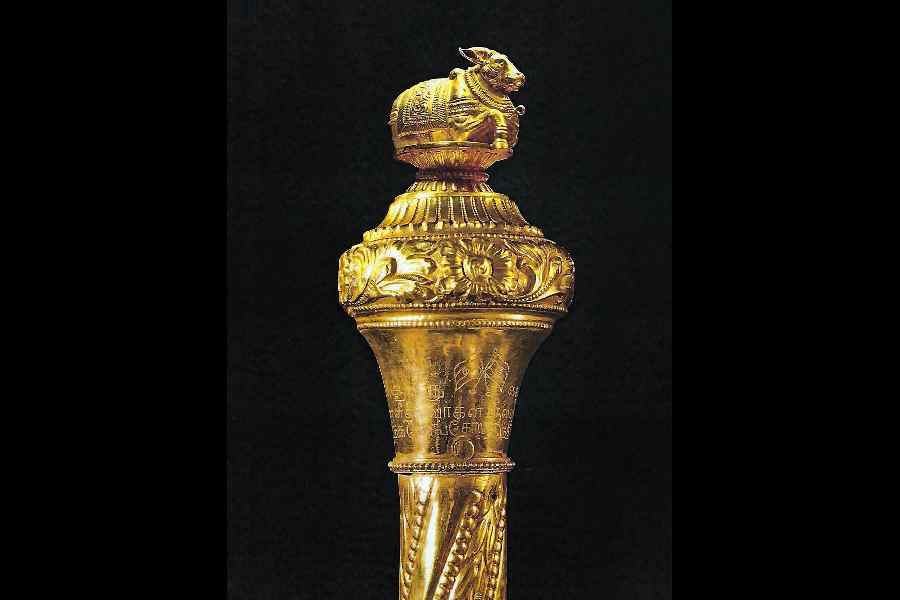
A new schoolbook says Jawaharlal Nehru received a special sceptre called a Sengol when India became independent.
It says the sceptre showed that power was moving from British rule to India.
The book also says the Sengol represents good governance and was placed in Parliament in 2023.
Amit Shah had made a similar claim in 2023.
But Congress and some historians say there is no evidence that the sceptre was part of the official transfer of power.
Historian Aditya Mukherjee said it may have been a gift from a religious institution instead.
Educationist Ashok Agrawal also disagreed with calling it a symbol of good governance.
The disagreement is about what the Sengol meant in 1947 and what it represents today.

A new NCERT Class 9 textbook says Jawaharlal Nehru received a Sengol from Tamil Nadu religious leaders at midnight on August 15, 1947.
The textbook describes the Sengol as a marker of rulership and good governance, and says it was placed in Parliament in 2023.
In 2023, Amit Shah said the sceptre symbolised the transfer of power from British rule to India, with C. Rajagopalachari advising on the matter.
Congress, Rajmohan Gandhi and historians disputed that account, saying they knew of no evidence that the Sengol marked the transfer of power.
Educationist Ashok Agrawal criticised the textbook’s description, arguing the Sengol represented monarchy rather than democratic governance.
- Who
- The NCERT textbook, Jawaharlal Nehru, Amit Shah, and critics including Congress, historians and educationist Ashok Agrawal.
- What
- A Class 9 textbook says Nehru received a Sengol at independence as a symbol of the transfer of power; critics dispute that interpretation.
- Where
- The account concerns India, Tamil Nadu religious leaders, and the Parliament building in New Delhi.
- When
- The textbook claim concerns August 14–15, 1947; the Sengol was installed in Parliament in 2023, and the claim has resurfaced in a new textbook.
- Why
- The textbook presents the Sengol as a symbol of rulership and good governance, while critics say there is no evidence it marked the transfer of power and question its association with democratic governance.
Claim of symbolic transfer
Historical and democratic objections
Meaning in 1947
Claim of symbolic transfer
The textbook and Amit Shah say Nehru received the Sengol from Tamil Nadu religious leaders as a symbol of the transfer of power from British rule to India.
Historical and democratic objections
Critics including Aditya Mukherjee said there was no evidence in contemporary newspapers or leaders’ writings that it symbolised the transfer; Mukherjee said it may have been a gift from a religious institution.
Symbol of governance
Claim of symbolic transfer
The textbook describes the Sengol as a cultural marker of rulership and good governance.
Historical and democratic objections
Ashok Agrawal argued it symbolised monarchy and authoritarian rule, not democratic governance.
Rajagopalachari's role
Claim of symbolic transfer
Amit Shah said C. Rajagopalachari advised on the Sengol and its presentation to Nehru.
Historical and democratic objections
Rajmohan Gandhi said he had never heard of Rajagopalachari’s purported role.
Key facts
- Textbook
- NCERT Class 9 social science textbook, Understanding Society: India and Beyond, Part 2
- Claimed event
- Nehru received the Sengol from Adheenam saints on August 14–15, 1947
- Sengol described as
- A Tamil royal sceptre and a marker of rulership and good governance
- 2023 installation
- The Sengol was placed in the new Parliament building near the Speaker’s chair
- Amit Shah's account
- He said the Sengol symbolised the transfer of power from foreign rule to India
- Historical dispute
- Critics said they found no evidence that the Sengol was an official symbol of the transfer of power
Quotes
Aditya Mukherjee
Former JNU professor of contemporary history and historian of India’s freedom struggle.
“There is absolutely no evidence either in the newspapers of the time or in the writings of the leaders in question, that this was a symbol of the transfer of power…. There is no reference to Rajaji being consulted.... There is nothing to suggest that it was so either in the Constitution or in (Nehru’s) ‘Tryst with Destiny’ speech.”
 telegraphindia.com
“After Independence, the transfer of power from foreign rule to India was accomplished through a spiritual process, which has been a strong tradition of ancient India. The Sengol is the sacred symbol of this transfer of power.”
telegraphindia.com
Sources
Related news
New NCERT Textbook Links Governance Mottos to Ancient Traditions
NCERT Class 9 Textbook Highlights Ram Rajya, NEP and Sengol
India’s Bizarre Headlines Span Textbooks, Towers, SUVs and Fake Officials

India's Intellectual Swaraj Faces Questions Over Government Control
NCERT Class 9 Textbook Connects Ram Rajya With Good Governance

Amit Shah Urges Asiatic Society to Spread Indian Knowledge

Gujarat’s ₹1,200-Crore Sabarmati Ashram Redevelopment Recasts Gandhi’s Legacy
Young Women March for Safety Amid Delhi Protest

Mica Expert Urges India to Build Domestic Industry

Boeing 737 Max Survives Flydubai’s Rapid Descent