2 weeks ago
Bengal’s Electric-Bus Push Faces Financial and Technology Challenges
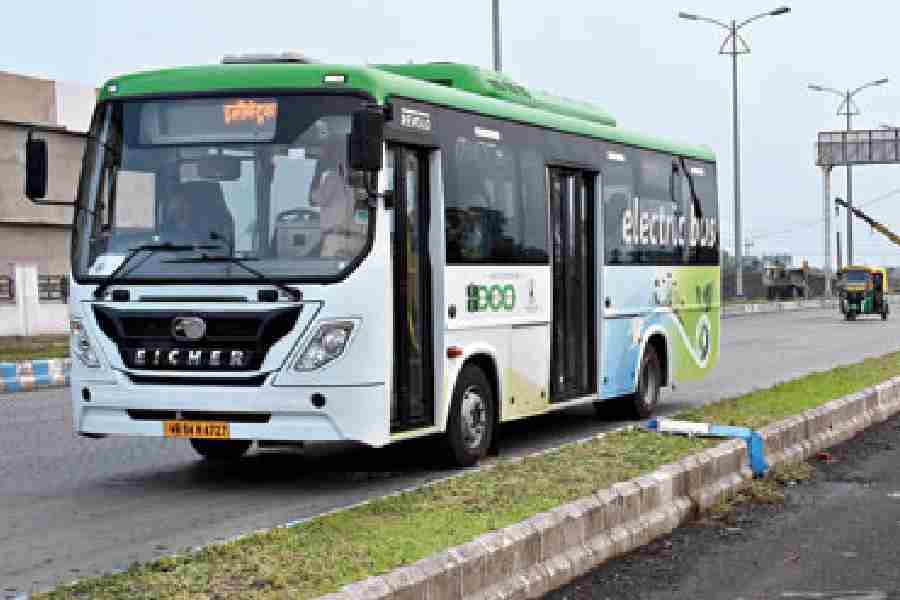
West Bengal wants to add more electric buses to its roads.
The buses could help reduce pollution and make the city better prepared for climate problems.
However, officials say the buses have not traveled as far as manufacturers promised.
Some buses now travel only about 70 kilometres after a full charge.
Charging stations, batteries and replacement parts are also difficult or expensive to obtain.
Waterlogged roads create another problem for operating the buses.
The government plans to seek private companies to provide and operate many of the new buses.
An environmental expert says newer electric-bus technology is much better and should not be judged only by the state’s first buses.

Bengal is processing a tender for 400 buses, combining electric and CNG vehicles.
Officials and operators cited weak vehicle range, costly batteries, scarce spare parts and limited charging infrastructure.
Only about 44 of the 120 electric buses initially procured for Calcutta remain in service.
The state has 140 electric buses, compared with more than 14,000 operating across India.
Environmental experts say newer technology and central schemes could support a larger zero-emission bus fleet.
- Who
- West Bengal government officials, private bus operators, environmental groups and transport experts, including Transport Minister Arjun Singh and Anumita Roychowdhury.
- What
- The state’s plan to expand electric and CNG bus services is facing financial, technological and infrastructure concerns.
- Where
- In Bengal, particularly on routes in Calcutta.
- When
- The concerns were discussed at a recent Sustainable Mobility Network meeting; Bengal began procuring electric buses in 2019.
- Why
- Officials cited poor real-world range, waterlogging, expensive and limited batteries and spare parts, and inadequate charging infrastructure, while experts cited the need to reduce pollution and modernize public transport.
Concerns About E-Bus Viability
Case for Expanding E-Bus Use
Financial and technical sustainability
Concerns About E-Bus Viability
Officials and experts say poor range, high battery and spare-parts costs, limited charging infrastructure and waterlogging make electric buses difficult to sustain without government financial support and route planning.
Case for Expanding E-Bus Use
Environmentalists say electric buses have lower day-to-day running costs than diesel buses and could improve Calcutta’s environment and climate resilience.
Lessons from the first fleet
Concerns About E-Bus Viability
Only about 44 of the 120 electric buses initially procured for Calcutta remain on city roads, and officials say the buses failed to deliver their promised range.
Case for Expanding E-Bus Use
Anumita Roychowdhury says the limitations of Calcutta’s first batch should not be used to assess current technology, whose benchmark has improved substantially.
Future expansion
Concerns About E-Bus Viability
The state’s existing operational and infrastructure problems could hinder the planned procurement of additional buses.
Case for Expanding E-Bus Use
Roychowdhury urged Bengal to use central support through PM E-DRIVE and PM e-Bus Sewa to modernize its fleet and expand zero-emission public transport.
Key facts
- Planned tender
- 400 buses, including electric and CNG buses
- Current electric fleet
- 140 buses in Bengal, including 20 recently added
- Initial Calcutta procurement
- 120 electric buses
- Buses still operating
- About 44 of the initially procured 120 buses
- Reported bus range
- About 70 kilometres per full charge currently, compared with an initially reported 120 kilometres against a promised 150 kilometres
- Other clean-fuel buses
- Around 180 CNG buses in Bengal
- Payment model
- Manufacturers would manage procurement, operations, charging stations, maintenance and ticket collection, with payment based on kilometres traveled
Quotes
A West Bengal government official
Government official discussing the performance of Bengal’s electric buses
“Manufacturers will have to handle everything from procurement and operations to setting up charging stations, mainly at our depots, maintaining the buses and collecting ticket revenues. We will pay them on a per-kilometre basis.”
 telegraphindia.com
“Initially, we got around 120km on a full charge against the promised 150km. Now they run about 70km on a full charge. Running these buses in waterlogged areas is also difficult.”
telegraphindia.com
Sources
Related news

SWITCH Mobility Wins Order for 840 Electric Buses

NITI Aayog Urges States to Rethink EV Subsidies
PMI Electro leads fiercely competitive PM-eBus Sewa tender
Noida E-Bus Depot Reports Rising Ridership And Revenue
Tirumala to Add 25 E-Buses for Free Devotee Transport
Indore Relaunches Organised Transport With Electric AC Buses
Banerjee Alleges Vote Loot in West Bengal Bypoll

West Bengal Chief Minister Meets RSS Chief During State Visit

Mohun Bagan Edge East Bengal to Claim 22nd IFA Shield
Kolkata Metro Adds Overnight Durga Puja Train Services

Eight Kolkata Restaurants Offer Puja Menus and Café Breaks