3 weeks ago
No carmaker applies for India's EV manufacturing scheme yet
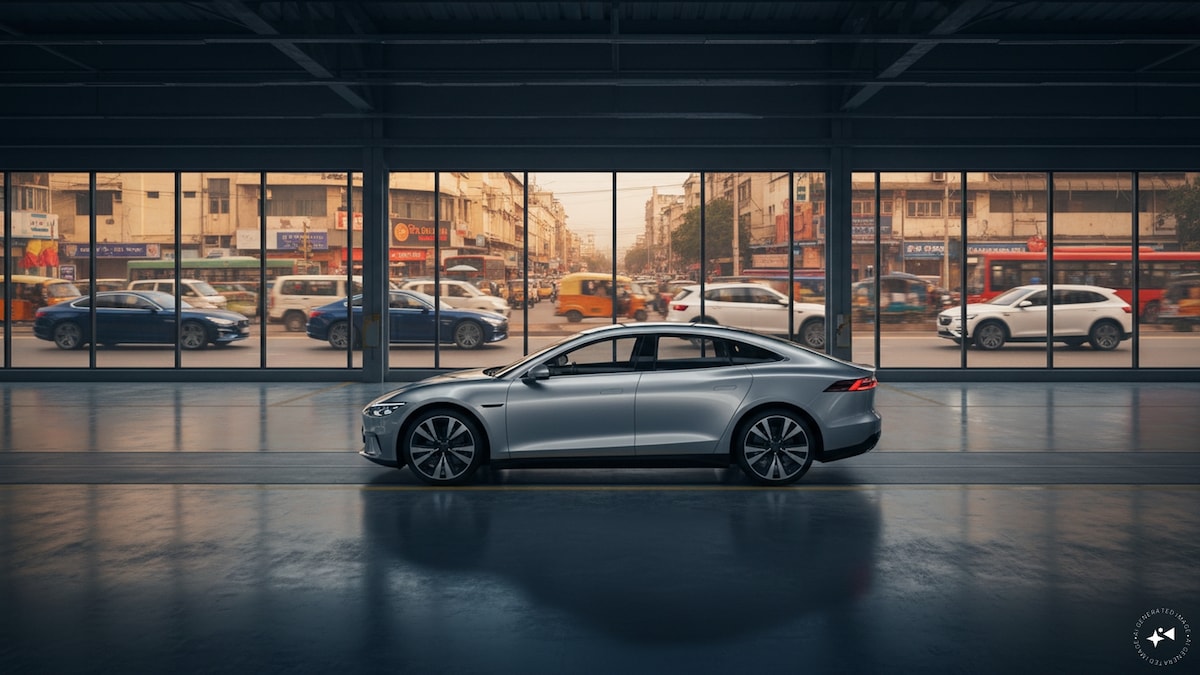
India wants big car companies to build electric cars inside the country.
To encourage them, the government created a special program called SPMEPCI.
So far, no car company has signed up for this program.
Government officials think one reason is that car companies may get lower taxes on cars they bring from other countries.
India made new trade deals with the United Kingdom and the European Union.
These deals mean some foreign cars will have much lower taxes over time.
That could make it cheaper to sell cars made abroad instead of building them in India.
India is also protecting its own car market by only opening it slowly.
The deals give extra protection to cheaper electric cars and mass-market cars.
India and the European Union hope their deal starts by March 2027.

No automaker (OEM) has submitted an application under India's SPMEPCI electric-vehicle manufacturing scheme so far, according to government sources.
Government sources cite the prospect of lower import tariffs under India's trade agreements with the UK and the EU as a possible reason.
Under the India-UK agreement, automotive import duties will eventually fall from as much as about 110% to 10% for eligible vehicles within specified quotas.
Under the India-EU agreement, import duties on eligible EU-made cars are set to fall to 30-35% from the current 66-110%, with EV import quotas beginning only from the fifth year.
India and the EU are aiming to implement their trade agreement by March 2027, and the agreements retain protections for India's mass-market vehicle segment.
- Who
- Government sources and India's Commerce Ministry, along with global automakers (OEMs), the United Kingdom and the European Union.
- What
- India's government scheme to promote electric-car manufacturing, SPMEPCI, has received no applications from automakers, with lower import tariffs under the UK and EU trade agreements cited as a possible reason.
- Where
- India.
- When
- No application deadline is given; India and the EU aim to implement their trade agreement by March 2027.
- Why
- Lower import duties under the India-UK and India-EU trade agreements could give global automakers an alternative route to sell EVs in India without immediately setting up local manufacturing.
Pro-local manufacturing
Pro-import liberalization
EV manufacturing strategy
Pro-local manufacturing
India's SPMEPCI scheme is designed to attract global investment and encourage domestic production of electric four-wheelers.
Pro-import liberalization
Lower import duties under the UK and EU trade agreements give automakers another route to sell EVs in India without immediately setting up local manufacturing.
Tariff protection
Pro-local manufacturing
India retains protections for the mass-market segment and delays EU EV import quotas to shield the domestic industry.
Pro-import liberalization
Progressively cheaper imports could benefit European premium and luxury automakers and influence automakers to weigh importing against investing locally.
Key facts
- Scheme
- SPMEPCI (Scheme to Promote Manufacturing of Electric Passenger Cars in India)
- Applications received
- None so far
- India-UK duty change
- From as much as about 110% to 10% for eligible vehicles within quotas
- India-UK conventional car quota
- 3.78 lakh vehicles over the first 15 years of the agreement
- India-EU duty after agreement
- 30-35% (down from current 66-110%)
- India-EU EV quota start
- Fifth year after the agreement takes effect
- In-quota tariff floor
- 10% eventually
- India-EU implementation target
- March 2027
Sources
Related news

India-China Thaw Raises EV Technology and Component Access Hopes

India–UK CETA Opens Trade and Investment Opportunities for MSMEs
India Plans $1.2 Billion Incentive to Build Equipment

Trump drone tariffs leave India out of preferential trade club

India-UK CETA Opens Growth Opportunities for Haryana Industries
Exports Emerge as Key to India’s Rs 62,500-Crore Mobile Incentives

Ireland Urges Preparation for Potential Northern Ireland Unity Vote
Salvi Praises Charani After India’s Women’s Asia Cup Opener
PCB Questions Selectors Over Imam-ul-Haq, Rizwan Tour Picks
Putin Faces Western Isolation While Russia Builds Non-Western Ties

England Leave Brydon Carse Out of Final Pakistan Test