6 days ago
Exports Emerge as Key to India’s Rs 62,500-Crore Mobile Incentives
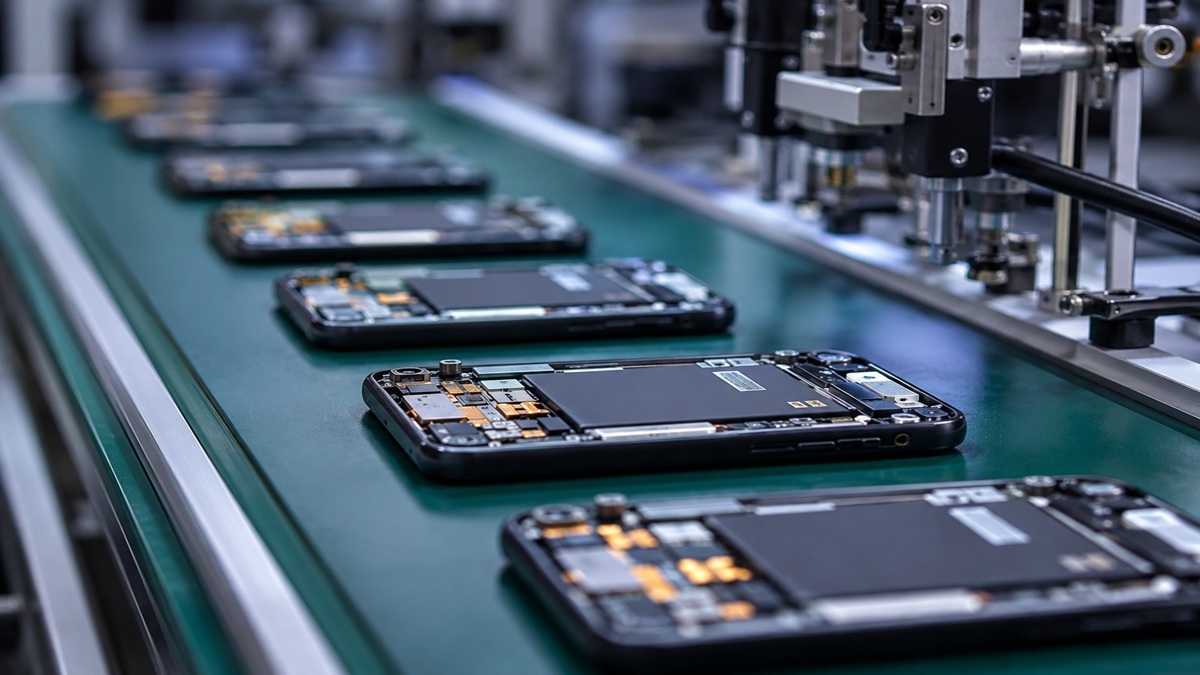
India wants to make more mobile phones and build more of the parts inside the country.
It has created a five-year scheme worth Rs 62,500 crore to reward eligible phone companies.
The scheme begins on April 1, 2026.
Companies in one part of the scheme must grow sales by more than 15% each year.
Selling only in India may not be enough because the number of phones people buy has grown slowly.
Selling phones to other countries could help companies grow faster and receive larger incentives.
Large factories that already export phones may therefore benefit the most.
A second part of the scheme gives extra support to Indian-owned brands.
These brands must keep their intellectual property, control, design and research work in India.

India’s five-year Mobile Phone Manufacturing Scheme offers Rs 62,500 crore in incentives from April 1, 2026.
Kotak Institutional Equities says exports will likely be crucial for companies to exceed the scheme’s 15% annual growth benchmark.
India’s smartphone market recorded only about 1.8% volume growth and 14% value growth annually during 2022-25.
Target Segment 1 supports large manufacturers and electronics manufacturing services firms meeting high turnover and sales thresholds.
Target Segment 2 offers stronger support to Indian-owned brands with domestic intellectual property, management control, design and R&D capabilities.
- Who
- The Indian government, mobile-phone manufacturers, electronics manufacturing services firms and Indian-owned brands.
- What
- A Rs 62,500-crore Mobile Phone Manufacturing Scheme intended to expand production, exports, local sourcing and domestic capabilities.
- Where
- India, including manufacturing hubs such as Tamil Nadu and Karnataka.
- When
- The scheme is effective from April 1, 2026, and runs for five years.
- Why
- To make India a larger and more self-reliant global manufacturing hub, increase domestic value addition, strengthen technology capabilities and create jobs.
Export-led growth
Domestic capability and Indian brands
Best route to incentives
Export-led growth
Kotak Institutional Equities argues that exports are the most practical way for large manufacturers and their electronics manufacturing services partners to exceed the 15% TS1 growth benchmark.
Domestic capability and Indian brands
The scheme also prioritizes domestic value addition, local sourcing, design, research and development, and Indian technology capabilities rather than relying only on higher overseas sales.
Who may benefit most
Export-led growth
Large export-oriented manufacturers serving global clients are better positioned to expand sales quickly and qualify for larger payouts.
Domestic capability and Indian brands
Indian-owned brands may have an easier route under TS2 because of lower turnover thresholds and stronger support, provided they meet ownership, intellectual property, design and R&D conditions.
Limits of domestic demand
Export-led growth
Modest smartphone volume growth in India makes it increasingly difficult to sustain more than 15% annual sales growth through domestic sales alone.
Domestic capability and Indian brands
Domestic premiumisation, local supply chains and higher value addition remain important parts of the government’s longer-term goal of moving beyond final assembly.
Key facts
- Total scheme value
- Rs 62,500 crore over five years
- Start date
- April 1, 2026
- TS1 annual growth hurdle
- More than 15% growth over a moving baseline
- India smartphone volume growth
- Approximately 1.8% CAGR during 2022-25
- India smartphone value growth
- Approximately 14% CAGR during 2022-25
- TS1 turnover requirement
- At least Rs 10,000 crore in 2025-26
- TS2 turnover requirement
- At least Rs 1,000 crore in 2025-26
Quotes
Kotak Institutional Equities
Brokerage firm whose report analysed the Mobile Phone Manufacturing Scheme.
“We, therefore, believe exports will be the key lever for brands to consistently exceed the TS1 baseline and maximise incentive payouts under MPMS, making the scheme structurally more favorable for export-oriented brands and their EMS partners.”
 financialexpress.com
“TS2 is financially more generous and structurally easier on annual sales thresholds, although strict Indian ownership and R&D conditions remain the key criteria.”
financialexpress.com
Sources
Related news
India’s Rs 62,500-Crore Mobile Scheme Targets Brands and Scale
India’s Rs 62,500 Crore Scheme Promotes Domestic Mobile Brands
India Launches Rs 62,500-Crore Mobile Production Scheme for Brands
India's Mobile Manufacturing Scheme Targets Technology and R&D Capabilities

Dixon Emerges as Key Beneficiary of India’s Smartphone PLI 2.0
India's New Smartphone Scheme Faces Consumer Product Test

India’s Top Midcap Funds Take Divergent Portfolio Positions

Just Dial Shares Hit Upper Circuit, Ending Five-Day Losing Streak

Broker Reiterates Buy on Nykaa, Raises Target to ₹475

InCred Capital Launches InCred Black for India’s UHNI Wealth Market