3 weeks ago
India urged to prioritise seafarer safety after Hormuz strike

Many people work on big ships that carry food, fuel, and other goods all around the world.
Some of these ship workers are from India, and many sail through a narrow waterway called the Strait of Hormuz.
Recently, a ship was hit by a missile there, and one Indian sailor died while others were hurt.
Iran's guard corps said two oil tankers hit mines and caught fire, but the United States said that was not true.
India asked Iran to calm things down and keep the waters safe for ships.
The United States wants stronger protection for ships in the area.
The article says countries talk a lot about cargo and trade routes but not enough about the people who work on the ships.
It says India should make keeping its sailors safe a very important part of its plans.
That way, the workers who make world trade possible are protected too.

A missile strike on commercial shipping in the Strait of Hormuz killed an Indian seafarer and injured several others.
On 18 July, Iran's Islamic Revolutionary Guard Corps claimed two oil tankers struck mines and caught fire in the Strait of Hormuz; the United States disputed the account.
India summoned Iran's Deputy Ambassador and called for immediate de-escalation and the restoration of safe, unrestricted navigation in international waters.
The United States proposed stronger maritime security arrangements and a larger role in safeguarding commercial shipping around the Strait of Hormuz.
The article urges India to make seafarer protection an integral part of its maritime and foreign policy, noting India is among the world's largest suppliers of merchant seafarers.
- Who
- Indian seafarers, Iran's Islamic Revolutionary Guard Corps, and the governments of India and the United States
- What
- A missile strike on commercial shipping in the Strait of Hormuz killed an Indian seafarer, prompting calls for better protection of civilian maritime workers
- Where
- Strait of Hormuz
- When
- Recently, including the 18 July tanker incident
- Why
- Geopolitical conflicts are spilling into the global commons and threatening civilian shipping and the seafarers who sustain global trade
Iran's account
US account and approach
Cause of the tanker incident
Iran's account
Iran's Islamic Revolutionary Guard Corps claimed two oil tankers transiting the Strait of Hormuz struck mines and caught fire on 18 July.
US account and approach
The United States disputed Iran's account of the incident.
Maritime security strategy
Iran's account
India favoured diplomatic engagement, summoning Iran's Deputy Ambassador and calling for immediate de-escalation.
US account and approach
The United States adopted a more assertive posture, proposing stronger maritime security arrangements and a larger safeguarding role around the Strait of Hormuz.
Key facts
- Incident
- Missile strike on commercial shipping in the Strait of Hormuz
- Casualties
- One Indian seafarer killed; several others injured
- Tanker incident date
- 18 July
- IRGC claim
- Two oil tankers struck mines and caught fire
- US position
- Disputed Iran's account; proposed stronger maritime security arrangements
- India's response
- Summoned Iran's Deputy Ambassador; called for de-escalation and safe navigation
- World trade by sea
- More than four-fifths of world trade by volume
- India's seafarers
- Among the world's largest suppliers of merchant seafarers
Sources
Related news
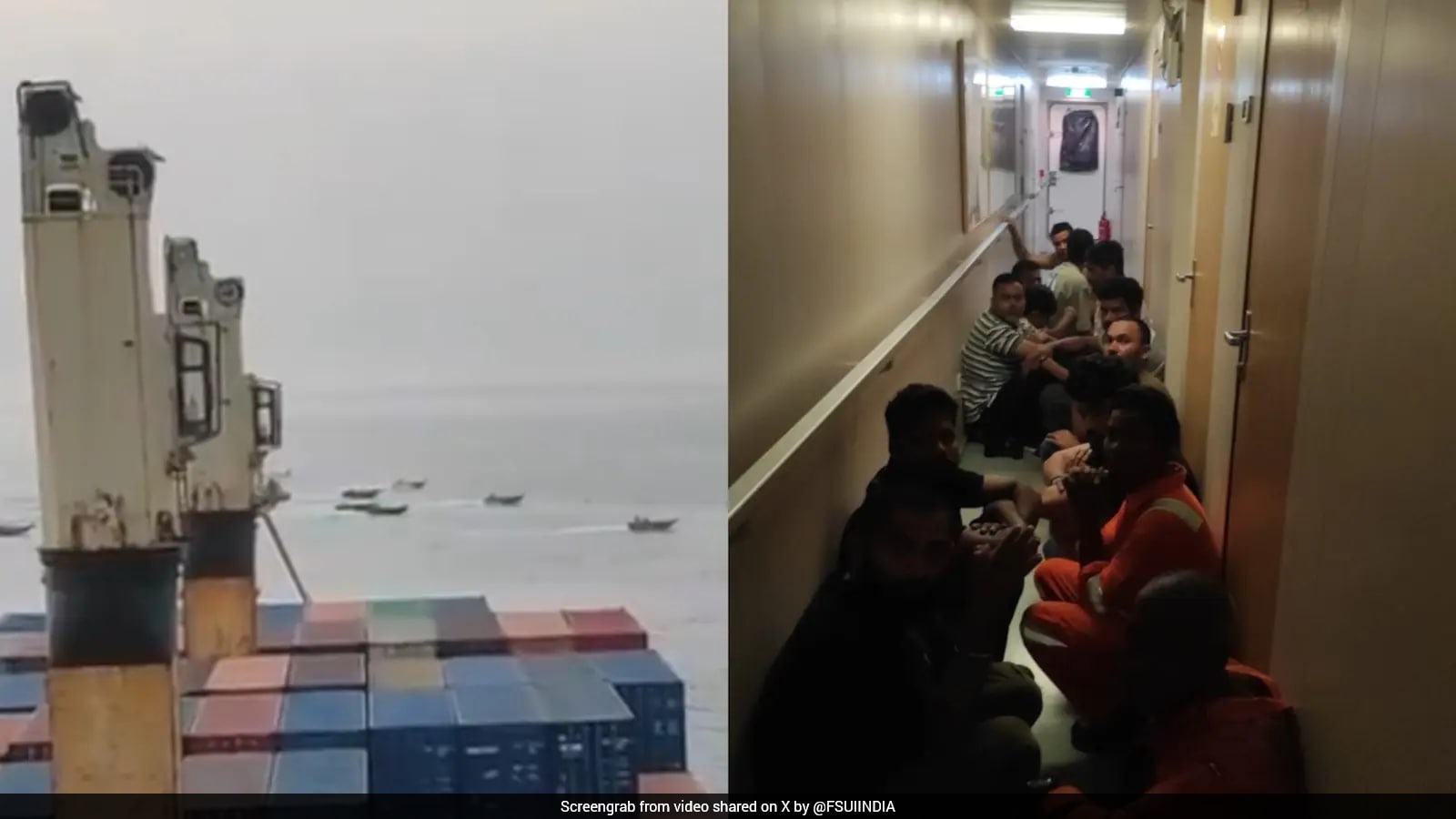
Video Shows Iranian Attack on Ship Carrying 21 Indian Sailors

Indian Seafarers Face Risks Sailing Through Strait of Hormuz

FSUI urges Centre to deploy Navy to protect Indian seafarers
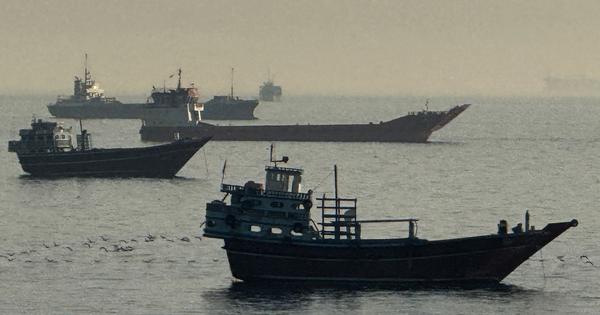
India Repatriates Over 4,000 Seafarers Amid Iran-US Conflict

4,052 Indian Seafarers Repatriated From Gulf Amid Middle East Conflict
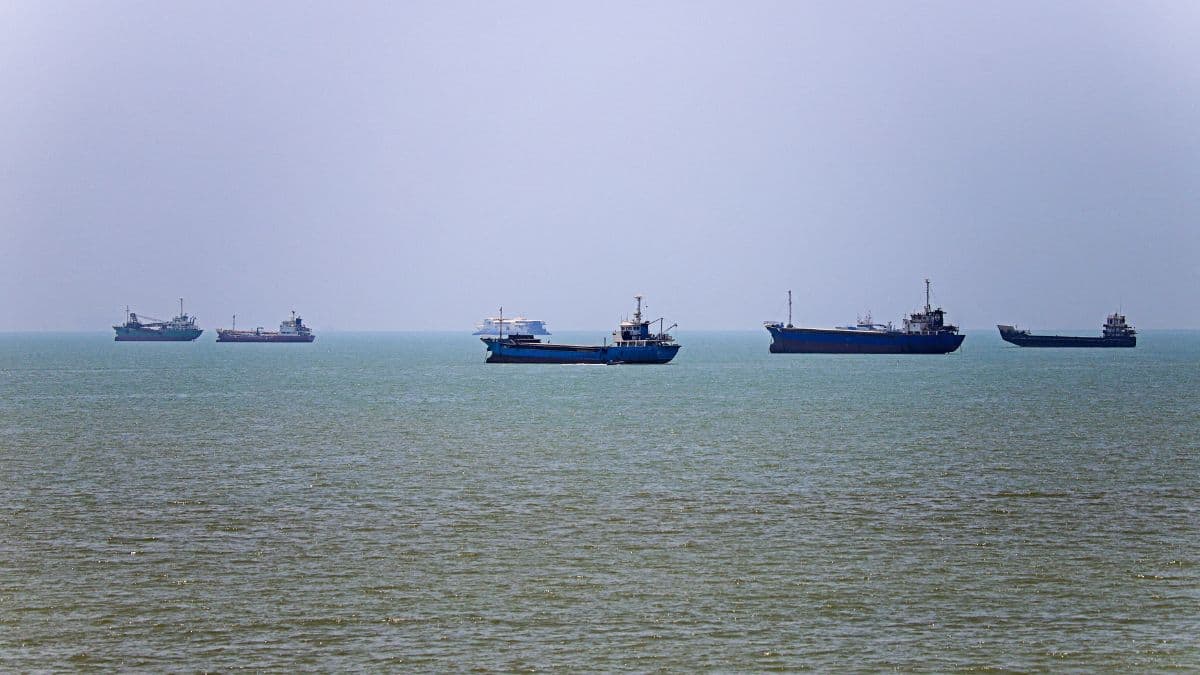
India urges safe navigation after Indian vessel sinks off Yemen

Chevron Plans $7 Billion Venezuela Expansion Amid U.S. Oil Push

Saudi Arabia Says Iranian Tanker Attack Killed Two Sailors
U.S.-Iran Exchange Escalates Across Middle East, Markets Slide
Trump Aides Seek Quiet Iran War Before Midterm Elections
US Warns Middle East Travelers Amid Escalating Iran-Linked Tensions