

3 days ago
Place for People Recast India’s Modern Art Through Figures
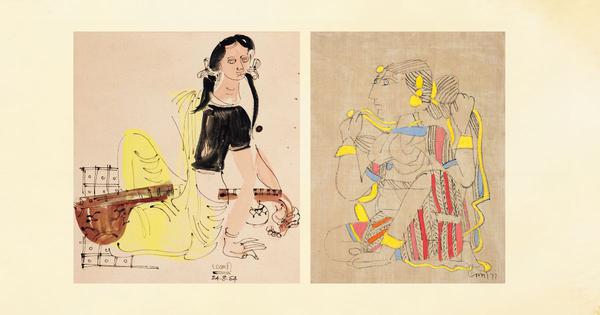
Place for People was an important art exhibition in India during the early 1980s.
It happened after a difficult political period known as the Emergency.
The exhibition wanted paintings to show real people and their everyday stories.
Several artists showed crowded cities, homes, families and lonely individuals.
Some artists were connected to the Baroda art world, while others had different educational backgrounds.
Their pictures mixed personal memories with Indian history and different artistic traditions.
The exhibition challenged the idea that Indian modern art should have only one style or message.
It also asked how people in India lived across different cultures and times.
The exhibition became an important moment in the development of modern Indian art.

The 1981 exhibition Place for People emerged amid the political aftermath of Indira Gandhi’s Emergency and her return to power.
Organized collaboratively by Geeta Kapur and participating artists, the exhibition sought to bring ordinary people and their stories back into Indian art.
Gulammohammed Sheikh, Bhupen Khakhar, Jogen Chowdhury, Vivan Sundaram, Nalini Malani and Sudhir Patwardhan participated in the exhibition.
The artists explored urban density, domestic tension, community, isolation and private experience through narrative figuration.
The exhibition helped establish Baroda modernism as a diverse, historically engaged movement and contributed to international recognition for Indian contemporary art.
- Who
- Geeta Kapur and artists including Gulammohammed Sheikh, Bhupen Khakhar, Jogen Chowdhury, Vivan Sundaram, Nalini Malani and Sudhir Patwardhan.
- What
- The Place for People exhibition advanced narrative figuration and brought social experience, ordinary people and personal stories into Indian modern art.
- Where
- The exhibition was associated with the Baroda art school and the Faculty of Fine Arts at MSU Baroda.
- When
- The exhibition took place in the early 1980s, following the Emergency of 1975–77; Vivan Sundaram’s Passage dates to 1981.
- Why
- It aimed to counter abstract and idealized approaches by representing lived experience, social tensions, history and diverse Indian identities.
Key facts
- Exhibition
- Place for People
- Historical context
- India’s Emergency, 1975–77, and Indira Gandhi’s return to power in 1980
- Participating artists
- Gulammohammed Sheikh, Bhupen Khakhar, Jogen Chowdhury, Vivan Sundaram, Nalini Malani and Sudhir Patwardhan
- Central artistic approach
- Narrative figuration
- Featured work
- Vivan Sundaram’s Passage, 1981
- Artistic setting
- The Baroda school and the Faculty of Fine Arts at MSU Baroda
- Later example
- Rekha Rodwittiya’s The Indian Businessman and his English Lover, 1983
Quotes
Gulammohammed Sheikh
Indian artist whose work was included in Place for People
“Living in India means living simultaneously in several cultures and times. One often walks into ‘medieval’ situations, and runs into ‘primitive’ people. The past exists as a living entity alongside the present, each illuminating and sustaining the other.”
 scroll.in
Sources
Related news

New Thapar Gallery Exhibition Explores India’s Many Modernisms

JJ School of Art Legacy Celebrated Through Nationalist Exhibition
Pune Exhibition Brings Raja Ravi Varma and R.K. Laxman Together
Two Exhibitions Find Grief and Beauty in Everyday Objects
Shailaja Kamat’s Solo Show Traces India’s Changing Urban Landscapes
Delhi Contemporary Art Week Explores the Capital’s Overlooked Everyday Lives
Gujarat University Ganesh Procession Clash Leaves Two Students Injured
Vadodara Bullet Train Station to Link Rail and City
Vadodara Prepares FIFA-Style Production for PM Modi Event

Bhagirath Bhatt Denies Bigg Boss 20 Contestant Rumours