

1 week ago
ICMR Says Circulating H1N1 Strain Is Not New

Health officials say the H1N1 virus spreading now is not a new strain.
They say related viruses have been circulating since 2025.
The strains are also considered well matched to recommended Northern Hemisphere vaccines.
Delhi has seen many more cases than during the same period last year.
Weather changes and crowded indoor spaces may help the virus spread.
Most people with mild symptoms can recover at home with rest and fluids.
Young children, older people, and those with health problems have a higher risk of complications.
People should seek emergency care if they have breathing trouble, chest pain, confusion, or other serious warning signs.

ICMR said the circulating H1N1 strains are not new and have circulated since 2025.
Delhi has reported 1,777 confirmed H1N1 cases among 2,392 Influenza-A infections this year.
The city’s H1N1 count is nearly six times higher than the 229 cases reported last year.
Authorities linked the early surge to humidity, changing monsoon temperatures, and increased indoor gatherings.
Thirty-five hospitals are under heightened surveillance, while authorities say beds, oxygen, medicines, and ventilators are available.
- Who
- The Indian Council of Medical Research, health authorities, Delhi officials, doctors, and people affected by Influenza-A infections.
- What
- ICMR clarified that the circulating H1N1 strains are not new, as Delhi reported a sharp increase in cases.
- Where
- Delhi, with healthcare readiness reviewed across the national capital and Delhi-NCR.
- When
- The strains have circulated since 2025; Delhi’s case figures cover the period so far this year and are compared with the same period last year.
- Why
- Authorities issued the clarification amid the rise in cases and attributed the early-season surge to humidity, changing monsoon temperatures, and increased indoor gatherings.
Key facts
- H1N1 cases in Delhi
- 1,777 confirmed cases reported so far this year.
- Total Influenza-A infections
- 2,392 reported in Delhi so far this year.
- Comparison with last year
- The H1N1 total is nearly six times the 229 cases reported during the corresponding period last year.
- Virus classification
- The viruses belong to clade 6B.1A.5a2a, subclade D.3.1.1.
- Vaccine match
- Health authorities said the strains are well matched with vaccine strains recommended for the Northern Hemisphere.
- Hospitals under surveillance
- Thirty-five designated hospitals have heightened surveillance.
- Mild-case guidance
- Category A patients can be managed at home with isolation, symptomatic relief, and monitoring; routine testing and antivirals are not required.
Sources
Related news

Delhi H1N1 Cases Rise; ICMR Says No New Strain
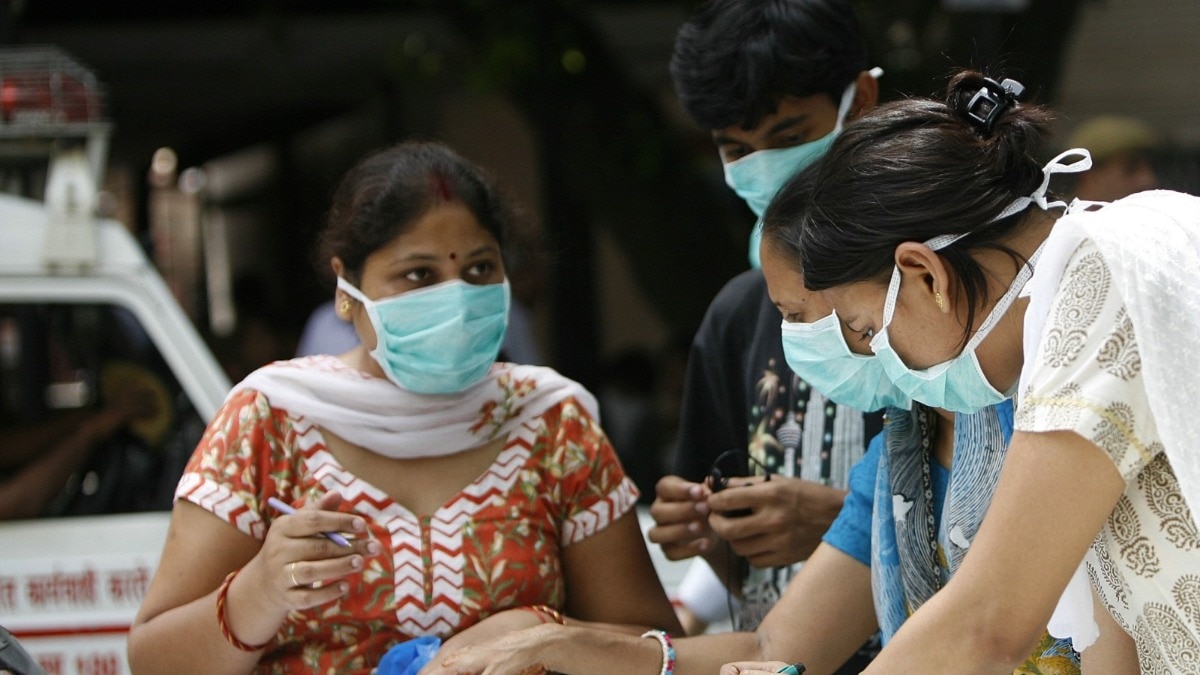
ICMR Says No New H1N1 Strain, Cautions High-Risk Groups

Delhi records nearly six-fold rise in H1N1 cases in 2026

Delhi H1N1 Cases Rise as Government Urges Mask Use

Delhi Records 1,449 H1N1 Cases as Hospitals Step Up Preparedness

H1N1 Cases Rise in North India; Experts Urge Caution
Arunachal Congress Protests FIR Against Rahul Gandhi

Why Calling Rahul Gandhi an Anarchist Draws Political Criticism

Supreme Court Quashes NEET Protest FIRs, CJP Calls Off March
Manipur Healthcare Expansion: RIMS Set for AIIMS Status

Nadda Welcomes CJP’s Decision to Call Off September March