

4 days ago
US Targets Russian Oil Buyers While Preserving Uranium Exceptions

The United States passed a bill designed to pressure countries that buy Russian oil and gas.
The bill allows the president to place tariffs as high as 100 percent on some of those countries.
India and China could be affected, but the tariffs are not automatic.
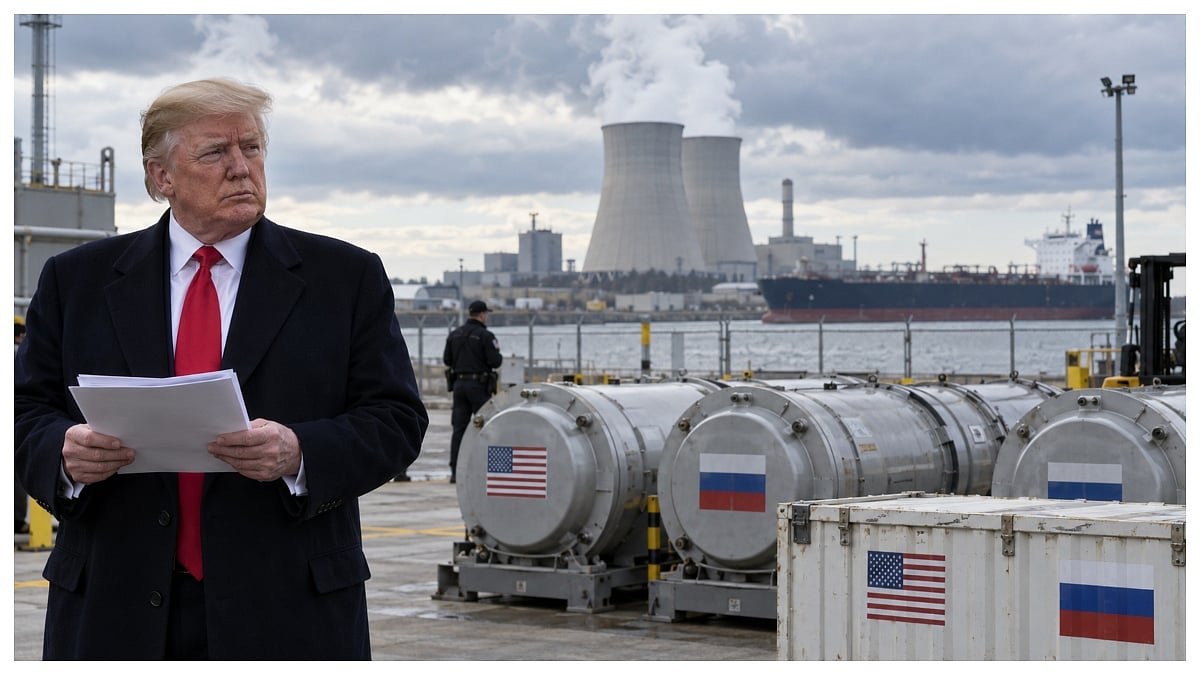
The bill also restricts Russian uranium connected to Rosatom and its subsidiaries.
However, special rules can still allow some Russian nuclear fuel into the United States.
These exceptions may apply when other supplies are unavailable or an import serves the national interest.
The exceptions can continue only until January 1, 2028, under existing law.
Russia supplied 26 percent of the enrichment services bought by US civilian reactor operators in 2025.
The United States is investing in domestic nuclear-fuel capacity because replacing Russian supplies quickly could be difficult.

The Graham Russia-Iran sanctions bill authorizes President Donald Trump to impose tariffs of up to 100% on countries buying Russian oil or gas.
The US House passed the legislation 262-159 after the Senate approved it 86-11 in August 2026.
India and China could face additional tariffs, but any levy, rate, timing, or exemptions would remain at Trump’s discretion.
The bill reinforces restrictions on Russian uranium while preserving limited civilian nuclear cooperation and low-enriched uranium imports under existing waivers.
Russian-origin enrichment accounted for 26% of separative work units purchased by US civilian reactor operators in 2025.
- Who
- The United States, Russia, President Donald Trump, India, China, and the US civilian nuclear industry are central to the issue.
- What
- The Lindsey O. Graham Sanctioning Russia and Iran Act of 2026 authorizes possible tariffs of up to 100% on Russian oil and gas buyers while retaining limited exceptions for Russian uranium imports.
- Where
- The measures concern US trade and sanctions involving Russia, India, China, and the US nuclear-fuel market.
- When
- The Senate approved the bill in August 2026, the House passed it 262-159 on Wednesday, and the reports were published September 18, 2026.
- Why
- The bill seeks to reduce funds flowing to Russia, while uranium exceptions reflect the difficulty of rapidly replacing Russian enrichment services.
Sanctions and Pressure
Energy-Security Concerns
Russian oil purchases
Sanctions and Pressure
The United States says tariffs of up to 100% could pressure countries to reduce Russian oil and gas purchases and limit funds supporting Russia during the Ukraine war.
Energy-Security Concerns
India says energy sourcing is a fundamental national responsibility and that Russian purchases support energy security while it seeks diversified supplies.
Different treatment of uranium and oil
Sanctions and Pressure
The bill reinforces restrictions on Russian uranium, including supplies associated with Rosatom and its subsidiaries, as Washington seeks to reduce dependence on Russia.
Energy-Security Concerns
Existing law permits limited Russian low-enriched uranium imports and civilian nuclear cooperation when alternatives are unavailable or imports serve the national interest.
Speed of reducing Russian dependence
Sanctions and Pressure
The United States is investing in domestic enrichment and fuel-production capacity to develop alternatives to Russian supplies.
Energy-Security Concerns
An immediate cutoff could disrupt nuclear-fuel deliveries, increase costs, and create risks for reactors because new facilities, contracts, and supplies require time.
Key facts
- Legislation
- Lindsey O. Graham Sanctioning Russia and Iran Act of 2026
- Potential tariff
- Up to 100% on qualifying countries buying Russian oil or gas
- House vote
- 262-159
- Senate vote
- 86-11 in August 2026
- Russian enrichment share
- 26% of separative work units purchased by US civilian reactor operators in 2025
- Uranium waiver deadline
- Existing waivers cannot extend beyond January 1, 2028
- Existing India tariffs
- An additional 25% US tariff announced in August reportedly brought tariffs on some Indian goods to 50%
Sources
Related news

India Rejects US Tariffs as Russia Sanctions Law Takes Effect
Trump’s Russia Sanctions Law Puts India Under Fresh Tariff Pressure
House Passes Russia Sanctions Bill, India Faces Tariff Risk
India, China and Russia Resist US Russia Sanctions Bill
US Russia Sanctions Bill Puts India Under Tariff Pressure

Trump Signs Russia-Iran Law, Opens Path to 100% Tariffs

Altman Links Trump-Xi AI Safety Deal to Nobel Prize

India’s Border Roads Emerge as Key Instruments of Himalayan Deterrence
Trump’s India Pressure: Trade Dispute or Strategic Realignment?

Trump Claims China Opening While American Companies Remain Skeptical

India’s Asian Games Day 5 Features Weightlifting and Badminton
