1 week ago
Supreme Court Rejects Retired Professor’s Post-Retirement CPF-to-GPF Pension Claim

K Suman Chandra worked at the National Institute of Rural Development and received retirement benefits under the CPF Scheme.
After he retired, he asked to be moved to the GPF-cum-Pension Scheme.
He said the CPF arrangement did not follow the institute’s rules.
A tribunal first agreed with him.
The Telangana High Court later disagreed, relying on an earlier Supreme Court decision.
The Supreme Court said his 2012 regularisation order clearly kept him in the CPF Scheme.
Chandra had accepted that order and had already received CPF benefits.
The court said he could not challenge those conditions only after retiring.
The ruling shows that employees should carefully review regularisation and pension terms before accepting them.

The Supreme Court dismissed K Suman Chandra’s plea to switch from the CPF Scheme to the GPF-cum-Pension Scheme after retirement.
Chandra joined the National Institute of Rural Development in 1984 and was regularised as a professor under a 2012 order.
That order stated his regularisation began on May 4, 2012, and that he would remain covered by the CPF Scheme.
The Central Administrative Tribunal initially ruled in his favour, but the Telangana High Court overturned that decision.
The Supreme Court held that accepting the regularisation terms and CPF benefits prevented Chandra from challenging the scheme after retirement.
- Who
- K Suman Chandra, a retired former professor of the National Institute of Rural Development, and the Supreme Court bench of Justices Ujjal Bhuyan and Atul S Chandurkar.
- What
- The Supreme Court dismissed Chandra’s plea to receive benefits under the GPF-cum-Pension Scheme instead of the CPF Scheme.
- Where
- The case concerned the National Institute of Rural Development and decisions by the Central Administrative Tribunal, Telangana High Court, and Supreme Court.
- When
- The judgment was delivered earlier in the week; Chandra retired on January 31, 2017, and his services were regularised under the relevant order dated May 4, 2012.
- Why
- The court found that Chandra had accepted regularisation terms keeping him under the CPF Scheme and had received CPF benefits before challenging those terms after retirement.
Chandra’s Position
Court and NIRD’s Position
Applicable pension scheme
Chandra’s Position
Chandra argued that he should be covered by the GPF-cum-Pension Scheme and that the CPF arrangement was contrary to NIRD’s rules and service bye-laws.
Court and NIRD’s Position
The court held that the regularisation order expressly continued his coverage under the CPF Scheme.
Timing of the challenge
Chandra’s Position
Chandra sought GPF coverage after retirement, relying in part on the earlier Central Administrative Tribunal ruling in his favour.
Court and NIRD’s Position
The court said he had accepted the regularisation conditions and CPF benefits, so he could not challenge those terms at the post-retirement stage.
Effect of regularisation
Chandra’s Position
The claim treated his eligibility as extending from the point at which he became eligible for GPF coverage.
Court and NIRD’s Position
The court found that regularisation operated from May 4, 2012, consistent with its earlier ruling in the case of Shyam Sunder Prasad Sharma.
Key facts
- Petitioner
- K Suman Chandra, a former professor at the National Institute of Rural Development.
- Initial appointment
- Chandra joined as a contractual Research Associate in November 1984.
- Regularisation order
- The May 4, 2012 order made regularisation effective from its date and continued CPF coverage.
- Retirement date
- January 31, 2017.
- CPF benefits
- Chandra received NIRD’s contributions and his own contribution to his CPF account after retirement.
- Earlier tribunal decision
- The Central Administrative Tribunal ruled in his favour in July 2019.
- Final outcome
- The Supreme Court dismissed his special leave petition and upheld the high court’s decision.
Sources
Related news

Supreme Court Rejects Post-Retirement Switch Between Pension Schemes
Centre says no proposal to restore Old Pension Scheme
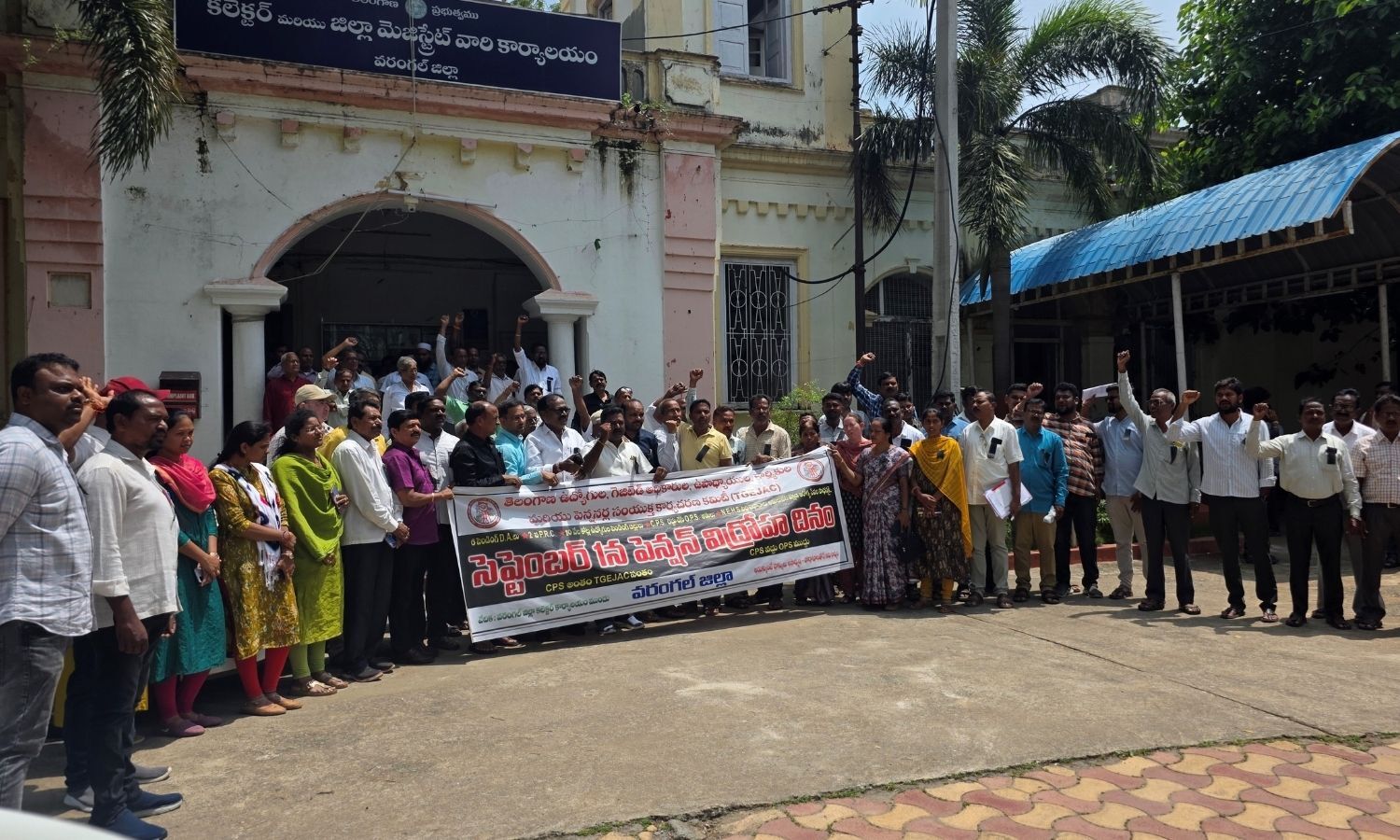
Telangana Employees Demand Old Pension Scheme Restoration and Pay Action

When EPF Interest Stops After Retirement: EPFO Explains Rules
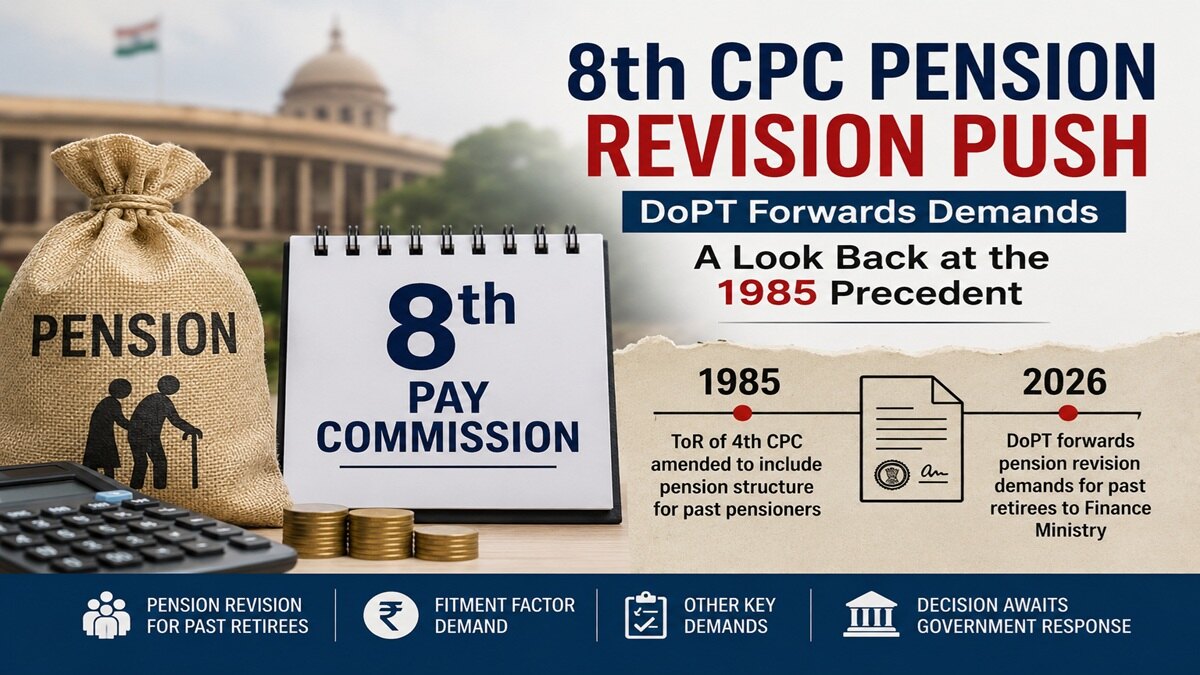
DoPT Forwards Pre-2026 Pension Demands to Expenditure Department

Govt explains EPF waiting periods and 75% partial withdrawal rules

Supreme Court Special Bench to Review OBC Creamy Layer Criteria

Delhi Prison Officials Face Termination Over Identity Record Discrepancies

High Court Sets Aside Chandigarh Police Promotion Rules