

1 week ago
Tata’s Patient Bets Aim to Build India’s Missing Capabilities
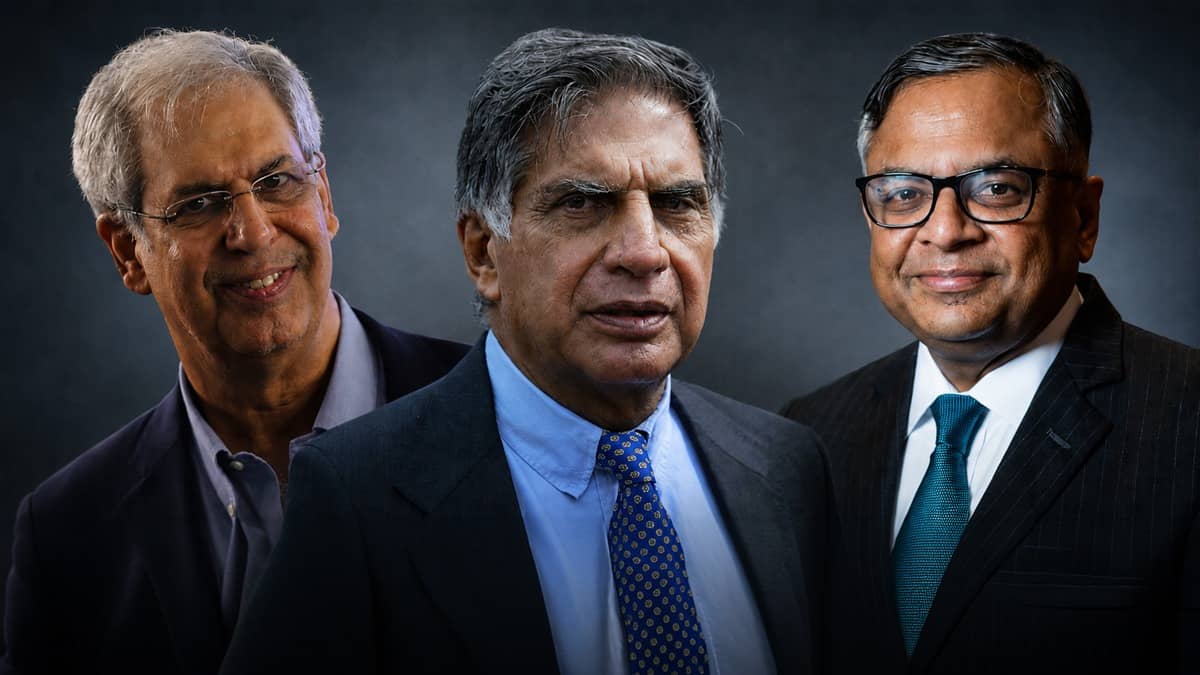
In 1944, several Indian business leaders said India needed to build important industries instead of relying on other countries.
After independence, the government tried to do this by investing heavily in steel, power and machinery.
These projects helped create industrial capacity but were expensive and took a long time to produce results.
Today, the Tata Group is making similarly long-term investments in computer chips, airplanes, electronics and Air India.
These businesses are currently losing substantial amounts of money.
The article says this does not necessarily mean the projects have failed because large capabilities take years to develop.
Tata’s charitable trusts own much of Tata Sons and can support plans that may take decades to mature.
The group’s upcoming leadership changes will test whether it continues to pursue these long-term national goals.

The 1944 Bombay Plan urged India to build heavy industry and capital goods despite slow returns.
Independent India adopted state-led industrialisation through the Mahalanobis model and the Second Five-Year Plan.
The Tata Group is now investing in semiconductors, aircraft assembly, electronics manufacturing and Air India.
Tata Sons’ consolidated profit fell by about one-third for the year ending March 2026, while Air India reported a ₹22,238 crore loss.
The group’s trust-based ownership is presented as a structure capable of funding national-scale projects over decades.
- Who
- The Tata Group, its philanthropic trusts, and Indian industrial and political figures including JRD Tata, John Mathai, Noel Tata and N. Chandrasekaran.
- What
- The article examines Tata’s long-term investments in strategic industrial capabilities and the leadership challenge of sustaining them.
- Where
- The initiatives include semiconductor manufacturing in Dholera, aircraft assembly in Vadodara, and other operations across India.
- When
- The story traces the approach from the 1944 Bombay Plan through investments underway in 2026, including a planned leadership transition in February 2027.
- Why
- The stated aim is to build capabilities India lacks, including semiconductors, aircraft, electronics and national supply chains, even before they become profitable.
State-led Industrialisation
Private Patient Capital
Who should fund long-term industrial capacity?
State-led Industrialisation
The post-independence model placed responsibility on the state, which invested in steel, power and heavy engineering through central planning.
Private Patient Capital
The Tata Group’s trust-anchored ownership is presented as an alternative able to carry long-term investment within a private institution designed to think across generations.
How should slow returns be judged?
State-led Industrialisation
The state-first approach faced slow returns, foreign-exchange shortages and insufficient attention to agriculture, while a centralised Planning Commission drew criticism from John Mathai.
Private Patient Capital
Current Tata losses in Air India, digital businesses and electronics are portrayed as gestation costs that may be justified if the projects eventually create strategic capabilities.
What should guide Tata’s next leadership?
State-led Industrialisation
A focus on near-term financial performance could treat the group’s current losses and capital commitments as problems requiring correction.
Private Patient Capital
The article argues that future leaders should preserve the long horizon and continue building capabilities before they become commercially mature.
Key facts
- Bombay Plan
- A 1944 document signed by eight leading industrialists that advocated large-scale development of heavy industry and capital goods.
- Semiconductor project
- Tata Electronics’ fabrication venture with Taiwan’s Powerchip Semiconductor Manufacturing Corporation represents an investment of about $11 billion.
- Aircraft assembly
- A Tata-Airbus facility in Vadodara is assembling C-295 military transport aircraft.
- Electronics manufacturing
- Tata Electronics acquired Wistron’s India operations and a 60% stake in Pegatron’s India business.
- Air India loss
- Air India reported a loss of ₹22,238 crore.
- Tata ownership
- Philanthropic trusts own close to two-thirds of Tata Sons.
- Leadership transition
- N. Chandrasekaran has chosen to step down when his Tata Sons term ends in February 2027; Noel Tata became chair of the Trusts in October 2024.
Quotes

Noel Tata
Chair of the Tata philanthropic trusts since October 2024
“do what India needs”
 republicworld.com
Sources
Related news
Tata Chairman's Exit Leaves $120 Billion Spending Ambition in Limbo
JRD Tata vs Haksar: 1984 letters expose Licence Raj

India's 75-Year Economic Transformation: Agriculture to $4.15 Trillion GDP
Tata Titans Locked in Tussle Over Chandrasekaran's Future
Tata Succession Uncertainty: Noel Tata or Chandrasekaran

Next Tata Chairman Faces Toughest Job, Management Professor Warns
JRD Tata’s Quote Links Leadership With Service And Purpose

Experts Outline Leadership Choices in Tata Sons Succession
Tata Succession Uncertainty Raises Questions About Group’s Future Leadership
Air India building to honour 106 Samyukta Maharashtra martyrs
