1 week ago
Trump and Netanyahu Clash Over West Asia Peace Strategy
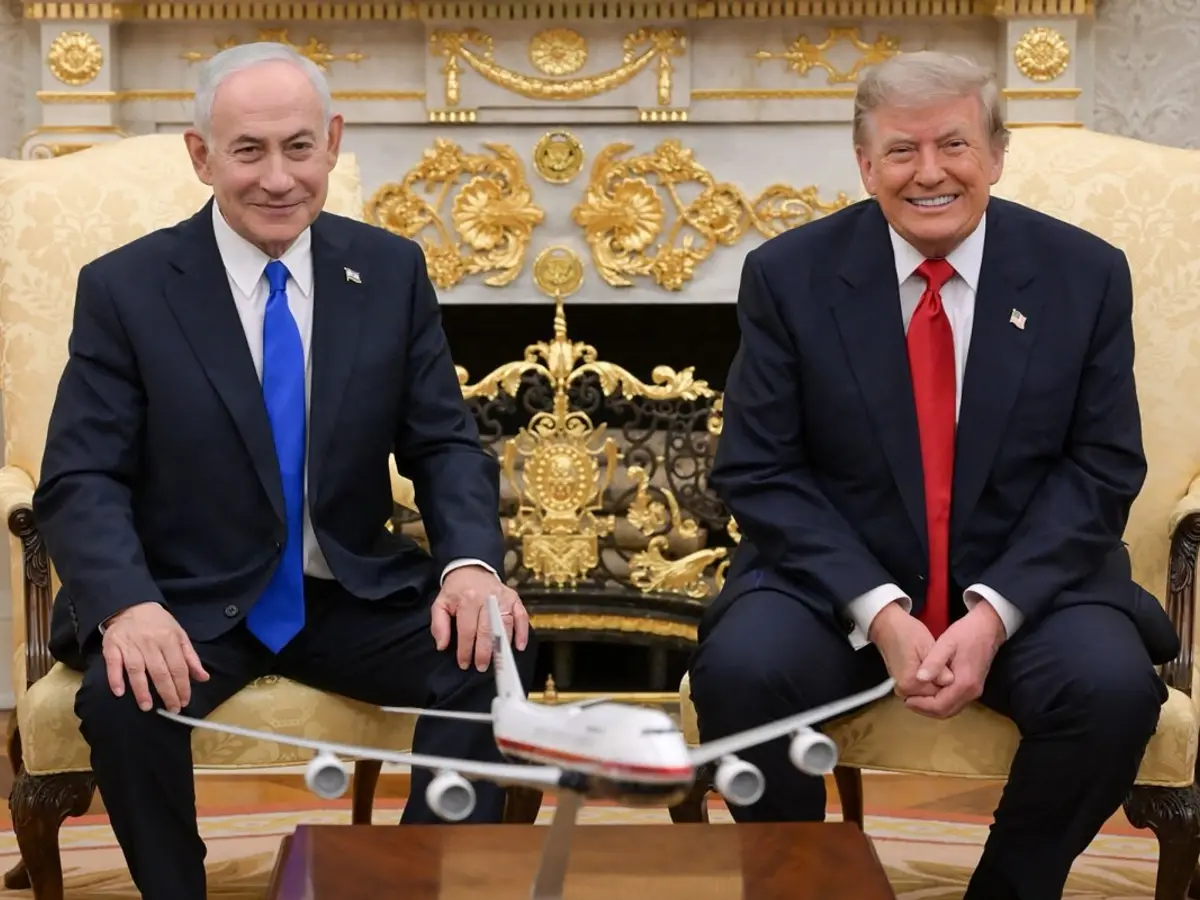
The article says Donald Trump and Benjamin Netanyahu disagree about how to handle wars in West Asia.
Trump is described as wanting a peace deal with Iran.
He wants the United States to appear to have achieved a major victory.
Netanyahu is described as wanting Israel to keep using military force.
He wants to say that Israel removed the danger from Iran.
The article says Netanyahu has also rejected a peace plan supported by Trump for Gaza.
Both leaders are facing elections, which may affect their decisions.
The article also says wars are difficult to end because Hamas cannot simply be bombed away and Iran cannot easily be forced to surrender.

The article portrays Donald Trump and Benjamin Netanyahu as pursuing different approaches to ending conflicts in West Asia.
Trump is described as pressing for a peace deal with Iran before the United States midterm elections in November.
Netanyahu is portrayed as favoring continued military escalation and seeking what he calls a permanent solution involving Iran’s destruction.
The article says Netanyahu has also rejected a Trump-backed peace deal for Gaza.
It argues that election pressures, political standing, military resources, money, and corruption cases are influencing both leaders’ strategies.
- Who
- Donald Trump, president of the United States, and Benjamin Netanyahu, prime minister of Israel.
- What
- The two leaders are described as being at odds over whether to pursue peace agreements or continued military escalation in West Asia.
- Where
- West Asia, including Iran, Israel, and Gaza.
- When
- Ahead of the United States midterm elections in November and Israel’s general elections in October.
- Why
- The article attributes their differing strategies partly to election pressures, political standing, military resources, financial costs, and Netanyahu’s corruption cases.
Trump’s Peace-First Approach
Netanyahu’s Military-First Approach
How to end the conflict
Trump’s Peace-First Approach
Trump is described as pressing for a peace agreement with Iran and wanting wars concluded because they are consuming weapons, American power, money, and political capital.
Netanyahu’s Military-First Approach
Netanyahu is portrayed as favoring military dominance and continuing the war until Israel believes the threats have been eliminated.
Iran’s future threat
Trump’s Peace-First Approach
The article presents Trump as seeking a negotiated outcome that would allow the United States to claim a major victory.
Netanyahu’s Military-First Approach
The article says Netanyahu wants a permanent solution and to tell Israelis that he ensured Iran’s destruction.
Gaza peace proposal
Trump’s Peace-First Approach
Trump backed a peace deal for Gaza, according to the article.
Netanyahu’s Military-First Approach
Netanyahu rejected the Trump-backed Gaza peace deal, according to the article.
Political calculation
Trump’s Peace-First Approach
Trump is portrayed as wanting progress before the United States midterm elections and as concerned about the costs of war.
Netanyahu’s Military-First Approach
Netanyahu is portrayed as unwilling to appear to have compromised or allowed America to gain the upper hand before Israel’s elections; the article also cites his corruption cases.
Key facts
- United States election
- Donald Trump is described as facing midterm elections in November.
- Israel election
- Benjamin Netanyahu is described as preparing for general elections in October.
- Trump’s strategy
- Press for a peace deal with Iran while presenting the United States as the winner.
- Netanyahu’s strategy
- Continue military escalation until Israel determines that threats have been eliminated.
- Gaza
- The article says Netanyahu rejected a Trump-backed peace deal for Gaza.
- Political pressures
- The article links both leaders’ approaches to fears of losing elections.
- Additional pressure on Netanyahu
- The article says he faces multiple corruption cases and is seeking to delay or avoid them.
Sources
Related news
Trump Avoids Endorsing Netanyahu Four Times as Israel Election Nears
Trump Aides Seek Quiet Iran War Before Midterm Elections

Netanyahu Rules Out Iran Deal, Backs Trump’s Economic Pressure Campaign
Trump low-keys Iran pressure as Netanyahu rejects Gaza peace framework
Trump Desperate to Quit Iran War as Peace Deal Eludes
Trump Insists Netanyahu Relationship "Very Good" Despite Gaza Rift
Miliband Threatens West Bank Sanctions as Israel Warns Britain
Iran’s Proxy Network Weakens, But Its Wars Persist
World Roundup Spans Xi’s Egypt Visit and FBI Hamas Seizure

Israel Says Forces Captured Hamas Security Chief in Gaza
UN Halves West Bank Food Aid as Funding Shortages Deepen