

1 week ago
South Korea Tests Arctic Route Amid Western Russia Concerns
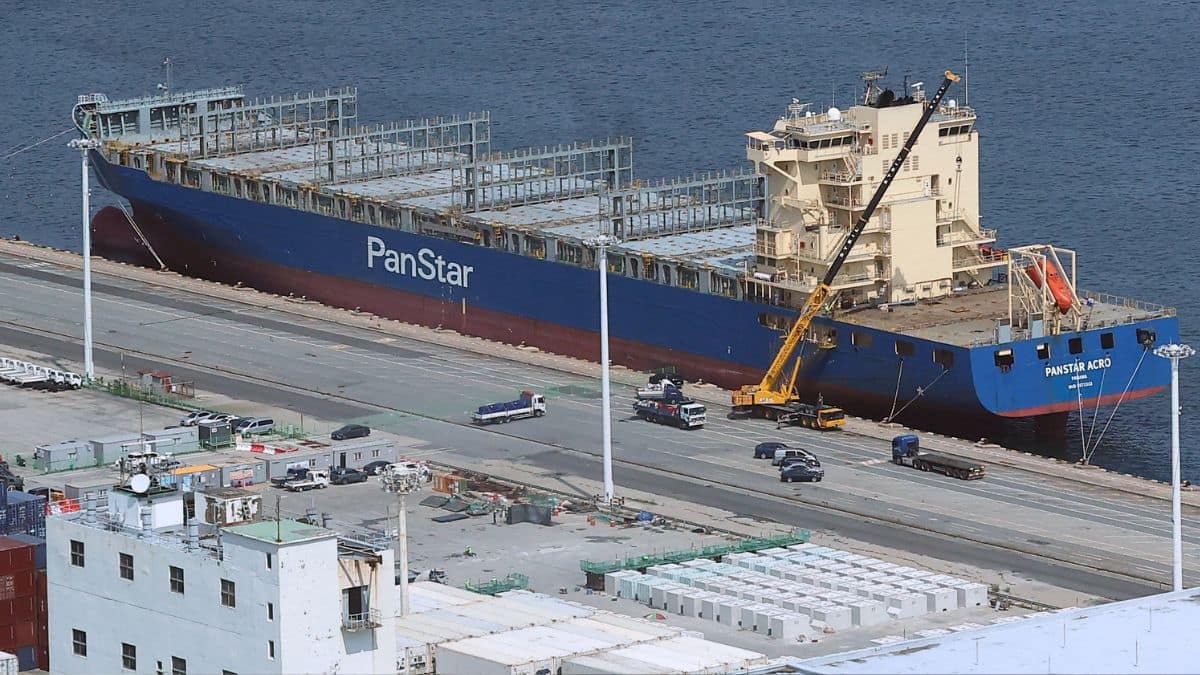
South Korea is sending a container ship through the Arctic to Europe.
This is the country’s first commercial test of this route.
The PanStar Acro will travel past Russia’s Kamchatka peninsula, across the Bering Sea and along the Northern Sea Route.
It will stop in Britain, the Netherlands and Poland.
The trip should take about 40 to 45 days.
The ship is carrying goods such as auto parts and chemical products.
South Korea hopes this route will help make Busan a major shipping hub.
The voyage may cause concern among Western countries because it involves coordination with Russia.
Scientists also warn that more Arctic shipping can add to global warming.

The PanStar Acro is making South Korea’s first commercial container voyage to Europe through the Arctic.
The ship will use the Northern Sea Route after passing Kamchatka and crossing the Bering Sea.
The 40- to 45-day journey includes stops in Felixstowe, Rotterdam and Gdansk before returning to South Korea.
The 2,758-TEU vessel is carrying 837 TEU of cargo, including auto parts and chemical products.
Seoul hopes the route will strengthen Busan and become a regular trade corridor, but allies have concerns about Russia ties and environmental effects.
- Who
- The South Korean government and PanStar are conducting the voyage aboard the PanStar Acro, with President Lee Jae Myung supporting Arctic shipping.
- What
- A government-backed container ship is testing the commercial viability of transporting cargo from South Korea to Europe through the Arctic.
- Where
- The voyage begins in Busan, follows the Northern Sea Route through Arctic waters, and stops in Felixstowe, Rotterdam and Gdansk.
- When
- The ship was scheduled to depart on the Saturday reported on Aug. 22, with departure planned for around 8 p.m. local time, or 1100 GMT.
- Why
- South Korea wants to assess the route, strengthen Busan’s role as a global maritime hub and potentially establish regular Arctic trade by 2030.
Route proponents
Critics and concerned allies
Economic and maritime opportunity
Route proponents
South Korean officials see the voyage as a way to test a potentially useful Asia-Europe trade route, strengthen Busan and develop a regular Arctic corridor by 2030.
Critics and concerned allies
Western allies are concerned that the voyage could undermine efforts to keep Russia isolated during its war in Ukraine.
Coordination with Russia
Route proponents
South Korea consulted Moscow about the voyage and possible assistance if the ship encountered problems such as becoming trapped in ice.
Critics and concerned allies
The consultation highlights the diplomatic friction created by using a route that requires interaction with Russia while Western pressure on Moscow continues.
Arctic access and climate effects
Route proponents
Melting Arctic ice has made passage through the region easier and has contributed to growing shipping activity.
Critics and concerned allies
Scientists warn that increased shipping in the Arctic further accelerates global warming.
Key facts
- Vessel
- PanStar Acro
- Vessel capacity
- 2,758 TEU
- Cargo aboard
- 837 TEU, including auto parts, chemical products and about 100 empty containers
- Expected duration
- 40 to 45 days
- Route
- Kamchatka, the Bering Sea, the Northern Sea Route, Felixstowe, Rotterdam and Gdansk
- Northern Sea Route activity
- 88 vessels made 103 transits last year, compared with 97 in 2024 and 43 in 2022
- Target year
- South Korean officials hope the Arctic can become a regular trade route by 2030
Sources
Related news

South Korea Tests Arctic Shipping Route Amid Western Concerns

China's New Arctic Route Is A 20-Day Voyage To Europe

China's Sea Legend launches first regular Arctic shipping route service

China opens first regular cargo route through Arctic waters
Putin Says India Shows Growing Interest in Northern Sea Route

India, Russia Discuss Deeper Northern Sea Route Cooperation, MEA Says

European T20 Premier League Opens Inaugural Season In The Hague

Climate-Resilient Urban Planning Could Make India’s Cities Safer

The Surprisingly Political History of the Hoodie

Ashwin hails Ireland's India series win as huge positive for cricket
