1 week ago
Supreme Court reduces judicial exam practice requirement to one year

The Supreme Court changed the rules for people who want to become junior judges.
Before, they needed three years of legal practice before taking the exam.
Now, future applicants generally need one year of actual practice.
People covered by a temporary transition period can apply even without already completing that practice.
If they are selected, they will first train at a judicial academy for one year.
They must then work as law clerks under experienced judges for another year.
Their performance will be checked before they can receive a regular judicial appointment.
The court said legal experience is important, but the sudden three-year rule had created problems for young lawyers and recent graduates.

The Supreme Court reduced the legal-practice requirement for Civil Judge (Junior Division) examinations from three years to one year.
Candidates in examinations notified during the transition period may apply regardless of prior experience, though reports differ on whether it begins May 20 or May 25, 2025.
Transition-period appointees will serve as trainee judicial officers for one year before completing a further year of structured clerkship.
The clerkship will comprise six months under a district-level judicial officer and six months under a sitting high court judge.
For examinations notified from April 1, 2027, candidates must demonstrate one year of actual practice, while the revised scheme will be reviewed after five years.
- Who
- The Supreme Court bench led by Chief Justice Surya Kant, with Justices Augustine George Masih and K. Vinod Chandran; the decision affects law graduates and judicial-service aspirants.
- What
- The court, by a 2:1 majority, modified its May 2025 ruling by reducing the practice requirement for direct recruitment as Civil Judges (Junior Division) from three years to one year.
- Where
- The framework applies to entry-level judicial-service examinations conducted under high-court and state judicial-service rules.
- When
- The decision was delivered on Friday, August 21. The transition covers examination notifications through March 31, 2027, but reports differ on whether it begins May 20 or May 25, 2025; the one-year actual-practice rule applies from April 1, 2027.
- Why
- The majority retained the view that courtroom experience is important for judges, but said the sudden restoration of the three-year requirement had caused hardship to young lawyers and recent law graduates.
Court’s rationale
Aspirants’ concerns
Need for courtroom experience
Court’s rationale
The majority said civil judges handle matters involving life, liberty, property and personal rights from the start, so familiarity with court procedure and the roles of judges and lawyers is necessary.
Aspirants’ concerns
Aspirants challenging the earlier ruling argued that the three-year requirement lacked empirical support and overlooked practical training already provided through legal education.
Effect of the three-year rule
Court’s rationale
The court retained the earlier judgment’s core principle that candidates should have professional legal exposure before entering judicial service.
Aspirants’ concerns
The court acknowledged that restoring the requirement suddenly, without a transitional arrangement, harmed young lawyers and graduates who had planned their careers under the previous rules.
Training as an alternative
Court’s rationale
The court said academy training and supervised clerkship could provide professional exposure and count as equivalent to Bar practice for eligibility purposes.
Aspirants’ concerns
Candidates entering through the transition will not become regular judges immediately; they must complete two years of training and clerkship and receive a satisfactory evaluation.
Key facts
- Earlier requirement
- Three years of legal practice before appearing for the Civil Judge (Junior Division) examination.
- Requirement from April 1, 2027
- At least one year of actual legal practice, supported by a practice certificate in the manner prescribed by high courts.
- Transition eligibility
- Candidates covered by the transition period may apply regardless of prior experience; reports cite May 20 and May 25, 2025 as different starting dates.
- Judicial academy training
- Selected transition-period candidates must serve as trainee judicial officers and complete one year of academy training.
- Structured clerkship
- A further year is required, consisting of six months under a district-level or higher-service judicial officer and six months under a sitting high court judge.
- Remuneration
- During academy training, trainees will receive half the remuneration payable to a Judicial Magistrate First Class.
- Implementation and review
- High courts and state governments must amend service rules within three months; the scheme will be reviewed after five years using empirical material.
Quotes
Chief Justice Surya Kant
Chief Justice of India and member of the majority bench
“The direction is that all law graduates will be eligible to apply notwithstanding the three-year practice requirement, having regard to the fact that more than one year has elapsed since the judgment under review was pronounced. Such candidates, for the purposes of their applications, will be deemed to have completed one year of active practice and shall not be required to produce a certificate of practice in respect of the said period.”
 livemint.com
“The first six months shall be spent as a law clerk under the supervision of the Principal District Judge or members of the higher judicial service, and the remaining six months under the supervision of sitting judges of the concerned High Court. The aforesaid one-year period of law clerkship shall also be treated as equivalent to one year of practice at the Bar for the purposes of satisfying the three-year requirement.”
livemint.com
Sources

SC reduces three-year mandatory legal practice to one year for entry level judicial exam
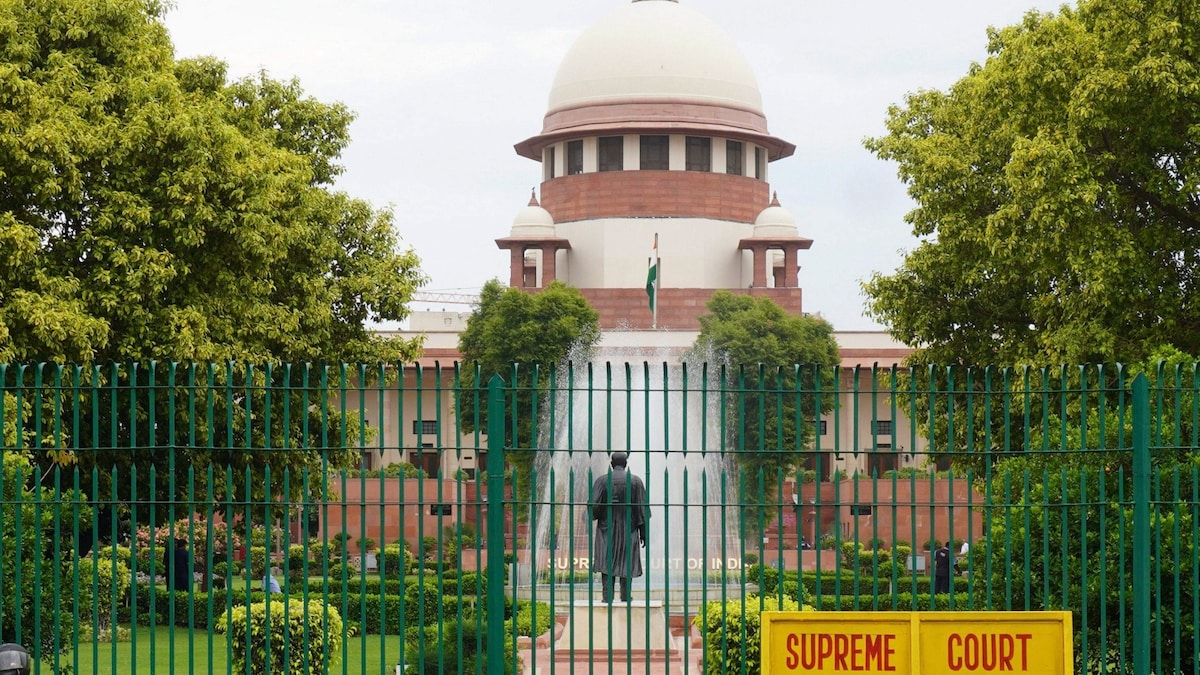
Supreme Court cuts legal practice rule for judicial exams from 3 years to 1 year
Supreme Court retains 3-year practice rule for judicial service entry
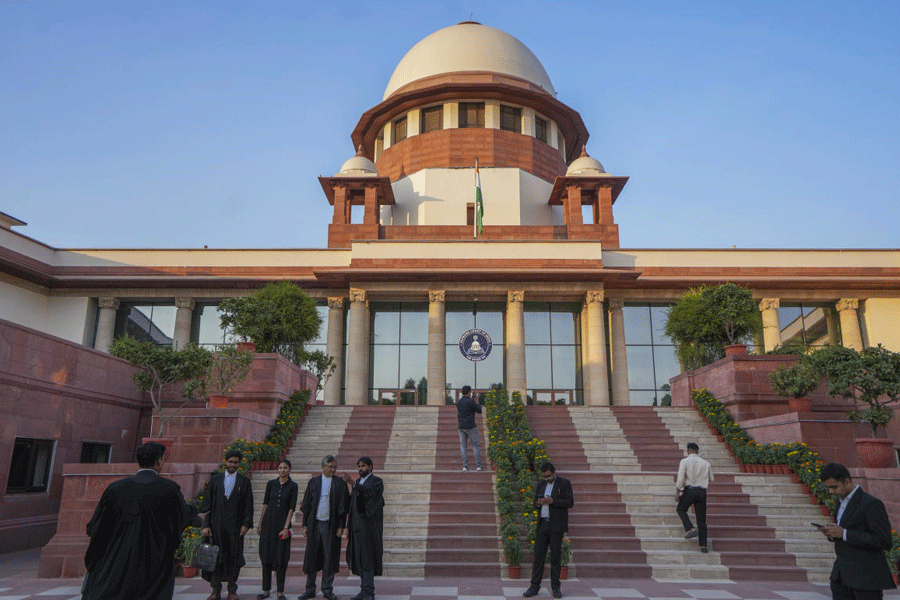
Supreme Court cuts legal practice requirement for entry-level judicial exams from 3 years to 1
Supreme Court cuts mandatory legal practice for civil judge aspirants from 3 years to 1: What it means for them
Related news

Supreme Court Creates New Judicial Recruitment Model
Supreme Court Revises Three-Year Judicial Entry Experience Requirement

India Compresses Professional Training Across Law, Science, and Medicine
Delhi High Court Rejects Challenge Over Deleted Exam Question

High Court Restores 2013 MBBS Admission, Orders Degree Issuance

Telangana High Court Rules on Enrolment, Food Adulteration Cases
Two Years After RG Kar Doctor's Rape-Murder, Case Remains Unresolved

ED widens Chhattisgarh probes with two arrests and searches

Delhi High Court Orders Madhya Pradesh to Pay Advocate Dues

Haryana sanitation workers’ strike puts BJP government under pressure
Orissa High Court Says Brothel Customers Cannot Face Trafficking Charges