3 weeks ago
Supreme Court Urges Law Ministry to Regulate Private Detectives

In India, there is a big court called the Supreme Court, the highest court in the country.
Judges there were looking at a case where two married people were fighting.
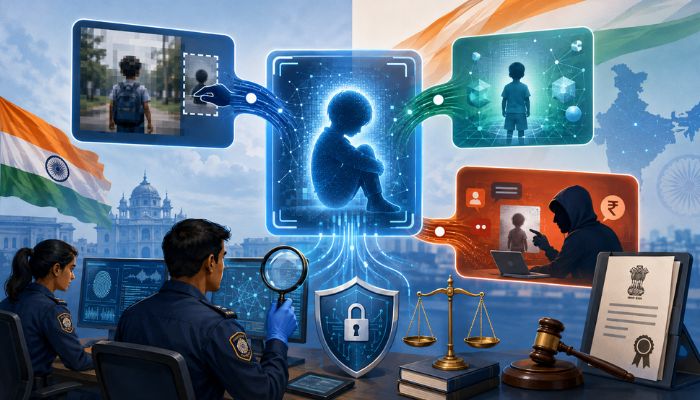
Someone had hired a private detective, a person who secretly watches and takes pictures of other people, to gather proof.
The judges asked, "Who took these pictures, and were they allowed to?"
Nobody could give a clear answer, because there are no special rules for private detectives in India.
The court said this area has no rules, which it called an "area sans regulation."
It asked the government's law ministry to think about making new laws for private detectives.
Some rules already protect people, like laws against spying and rules about personal data.
But no law clearly says when a detective may watch someone and when that becomes wrong spying.
Now the law ministry will decide how to make fair rules.

The Supreme Court of India, while reviewing photographic evidence in a matrimonial dispute, asked who took the images and under what authority.
The court called private investigation an "area sans regulation" and referred the matter to the Union law ministry.
The apex court suggested introducing laws to regulate the field in which private detectives operate.
Existing protections under Article 21, criminal law and the Digital Personal Data Protection Act do not clearly establish where observation ends and surveillance begins.
The Private Detective Agencies (Regulation) Bill, 2007, which proposed central and state boards, licences, records and penalties, never became law.
- Who
- The Supreme Court of India and the Union law ministry.
- What
- The Supreme Court called private investigation an unregulated area and suggested introducing laws to regulate private detectives.
- Where
- India.
- When
- Recently, during a matrimonial dispute case; no exact date is given in the article.
- Why
- Photographic evidence in the case was taken by a private detective, and the court found no law clearly defining where observation ends and surveillance begins.
Backers of regulation
Defenders of detective freedom
How to handle unregulated private investigation
Backers of regulation
Private investigation is an unregulated area; laws with licences, boards, records and penalties are needed to protect privacy and clearly define the line between observation and surveillance.
Defenders of detective freedom
A private detective's appeal comes from working outside official police procedure - following intimate trails, using deception and entering closed social circles - freedom that stricter regulation could remove.
Key facts
- Court
- Supreme Court of India
- Context
- Matrimonial dispute involving photographic evidence taken by a private detective
- Court's observation
- Private investigation is an "area sans regulation"
- Referred to
- Union law ministry
- Existing protections
- Article 21 of the Constitution, criminal law on stalking, voyeurism and unauthorised electronic intrusion, and the Digital Personal Data Protection Act
- Failed reform attempt
- Private Detective Agencies (Regulation) Bill, 2007
- Proposed measures in 2007 bill
- Central and state boards, licences, records and penalties for violating privacy
Sources
Related news

Supreme Court Bars Police From Independently Probing PCPNDT Offences
Allahabad High Court Calls for Modern UP History-Sheet Rules

Delhi court rejects NEET accused's plea for polygraph tests

CJI Says Indian Judiciary Proactively Tackles Digital Arrest Scams
Supreme Court Broadens Insider-Trading Defences, Raising Legal Uncertainty