1 week ago
U.S. Debt Reaches $40 Trillion, Raising Fiscal Freedom Concerns

The United States now owes more than $40 trillion in federal debt.
This does not mean the country is about to run out of money.
The dollar is widely used around the world, and many investors still want to buy U.S. Treasury securities.
However, the government must pay more interest when borrowing costs are higher.
Money used for interest cannot also be used for roads, research, defense or emergencies.
The country spends more than it collects for several reasons, including retirement programs, defense and tax policies.
Borrowing can be useful during emergencies or for investments that help the economy grow.
But borrowing year after year to cover regular spending can pass costs to future generations.
The article says leaders will eventually have to spend less, collect more taxes or accept fewer government commitments.

Gross federal debt has surpassed $40 trillion, marking a major psychological and fiscal milestone.
The United States retains strong borrowing advantages because the dollar is the principal reserve currency and Treasury securities remain central to global finance.
Ageing-related benefits, defense spending, tax preferences, recessions and emergencies continue to widen the gap between federal spending and revenue.
Interest payments are consuming more of the budget as rates remain above ultra-low levels, limiting funds for other priorities.
The article argues that delaying action could force future governments to cut spending, raise taxes or accept slower growth in government commitments.
- Who
- The United States government, Congress and successive presidential administrations, including Donald Trump’s administrations.
- What
- Gross federal debt has exceeded $40 trillion, prompting concern about rising interest costs and shrinking government policy choices.
- Where
- In the United States, particularly in Washington’s federal budget.
- When
- The milestone has now been reached; the article also discusses debt accumulation during Donald Trump’s first presidency and after his return to office.
- Why
- Persistent gaps between federal spending and revenue, combined with higher interest rates, are increasing debt-service costs and limiting future government choices.
Fiscal restraint
Targeted borrowing
How to manage debt
Fiscal restraint
Supporters of restraint would emphasize reducing structural gaps between spending and revenue before interest costs further limit federal choices.
Targeted borrowing
The article recognizes that borrowing can be justified when it finances productive investment, cushions an extraordinary crisis or prevents a deeper economic contraction.
Meaning of the $40 trillion milestone
Fiscal restraint
The milestone is presented as a warning that postponing reform may make future adjustments more painful and transfer costs to people who did not make today’s decisions.
Targeted borrowing
The United States still has substantial borrowing capacity, with the dollar’s reserve status and the importance of Treasury securities providing time to address the problem.
Key facts
- Debt milestone
- U.S. gross federal debt has surpassed $40 trillion.
- Borrowing position
- The dollar remains the principal global reserve currency, and U.S. Treasury securities remain central to international finance.
- Major pressures
- Social Security and Medicare face pressure from an ageing population, while defense spending remains politically difficult to reduce.
- Political challenge
- Tax cuts are popular, but broad-based tax increases are not; neither major party is described as having addressed the fiscal arithmetic comprehensively.
- Interest costs
- Higher interest rates are causing debt servicing to consume an increasing share of federal resources.
- Trump administration
- The article says debt rose sharply during Donald Trump’s first presidency, especially during the pandemic, and continued climbing after his return to office.
- Policy choices
- The article identifies spending cuts, higher taxes, slower growth in government commitments or indirectly imposed reductions through rising interest costs as possible choices.
Sources
Related news

US National Debt Tops $40 Trillion, Raising Crisis Concerns
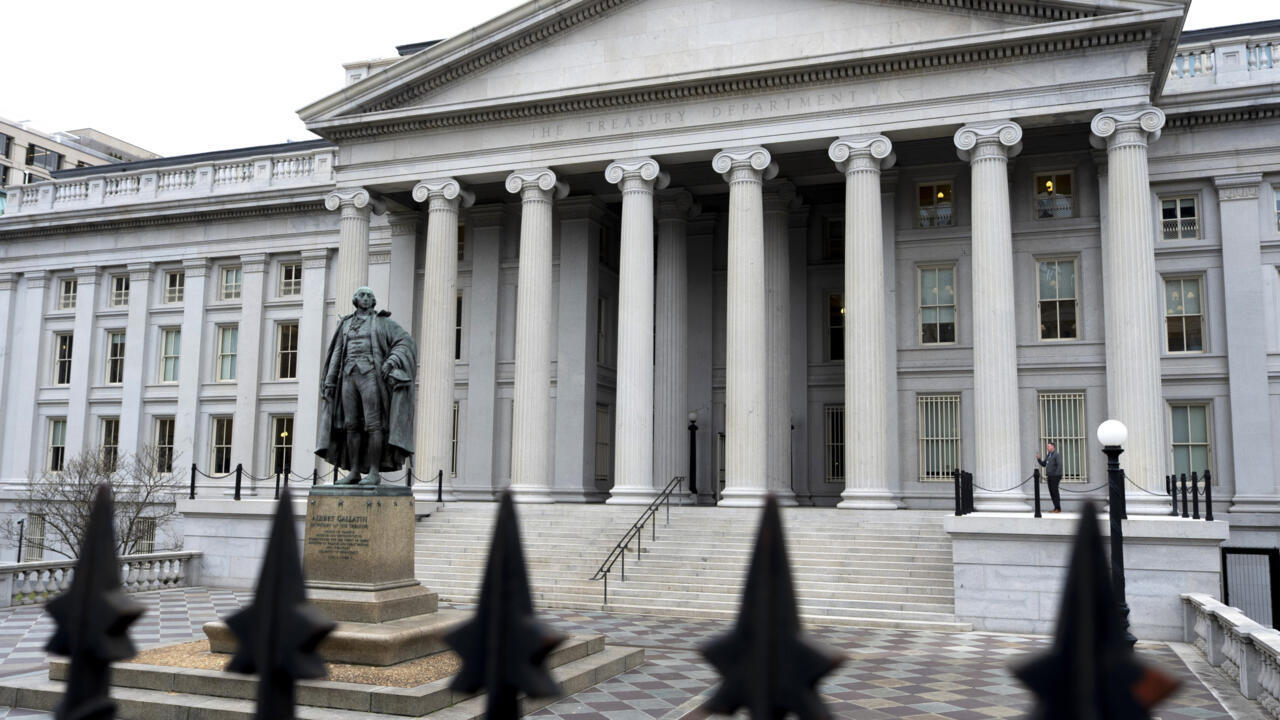
U.S. Debt Tops $40 Trillion, Prompting Fresh Fiscal Crisis Warnings

US National Debt Surpasses $40 Trillion Amid Rising Costs

US National Debt Surpasses $40 Trillion as Fiscal Pressures Mount

US Debt Tops $40 Trillion Amid Deficits and Tariff Pressure

US Debt Tops $40 Trillion, Raising Household Borrowing Concerns

Former Big Tech Workers Describe Layoffs’ Harsh Aftermath

Google Maps Prank Renames Lincoln Memorial Reflecting Pool

Trump Calls Iran a Failed Nation Amid Hormuz Tensions

Trump Says He Will Host Xi Jinping at September Summit

Supreme Court Allows Trump to Continue White House Ballroom Construction