1 day ago
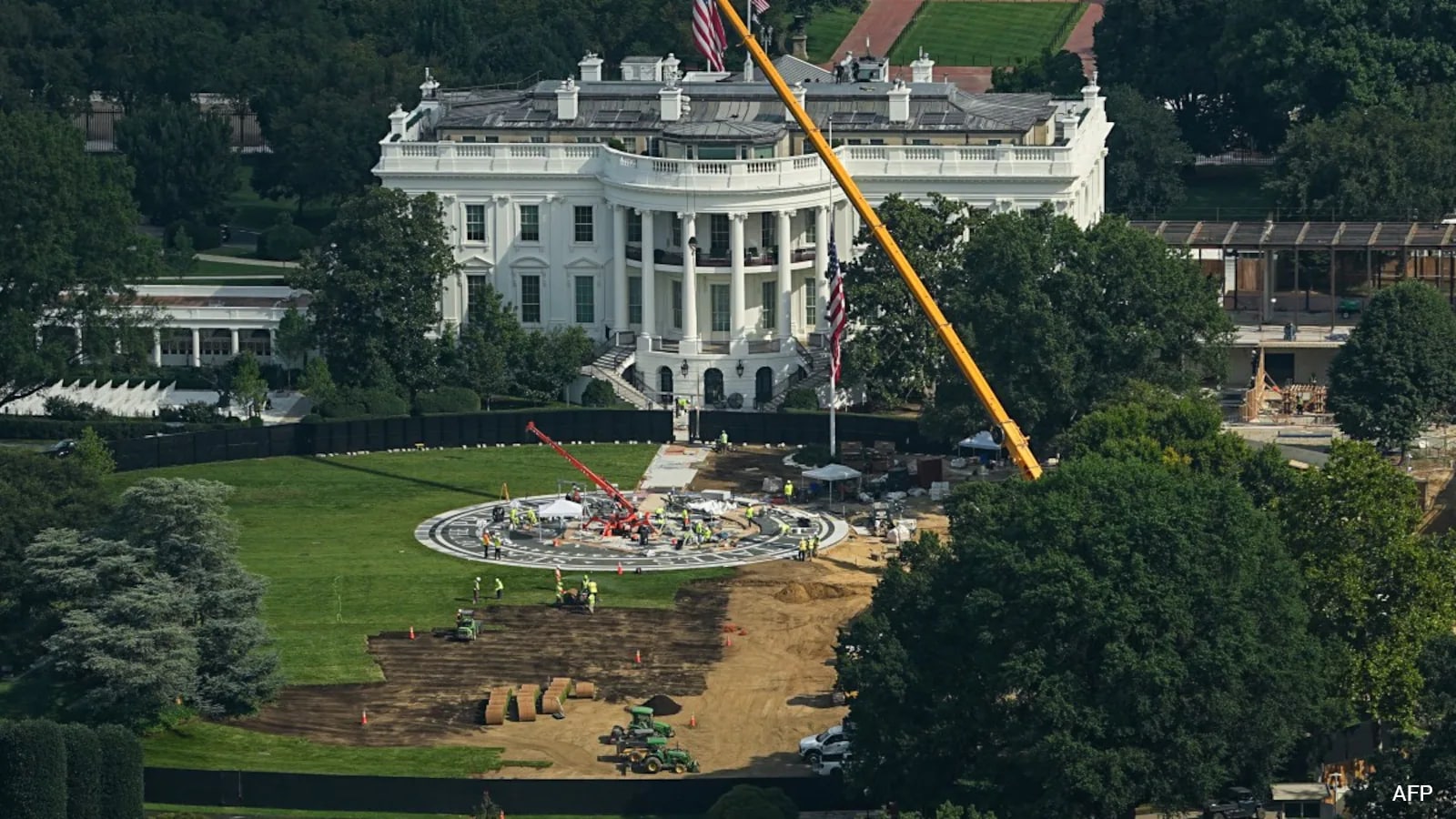
Supreme Court Allows Trump to Continue White House Ballroom Construction

The Supreme Court said workers can keep building a new ballroom at the White House for now.
The project is expected to cost $400 million and hold about 1,000 people.
A historic-preservation group says President Donald Trump cannot build it without permission from Congress.
Lower courts had ordered much of the work to stop.
The Supreme Court paused those orders while the legal case continues.
The justices did not decide whether the ballroom is ultimately legal.
The administration says the president can renovate the White House and that national security makes the project important.
The preservation group says the White House is building too quickly, possibly to finish before the courts can decide.
Court documents say the project is expected to be completed in August 2028.

The Supreme Court ruled 5-4 to let construction of the $400 million White House ballroom continue.
The ruling blocks lower-court orders halting aboveground work while the National Trust lawsuit proceeds.
The court did not decide whether the project itself is legal, saying the government is likely to show the Trust lacks standing.
The Trust argues that Donald Trump cannot authorize the project without congressional approval, while the administration cites presidential authority and national security.
The 90,000-square-foot ballroom is reportedly 65 percent complete, with full completion projected for August 2028.
- Who
- The Trump administration, the Supreme Court, the National Trust for Historic Preservation, and lower-court judges are central to the dispute.
- What
- The Supreme Court allowed aboveground construction of a planned White House ballroom to continue while litigation proceeds.
- Where
- The project is at the White House in Washington, D.C.
- When
- The Supreme Court issued its 5-4 ruling on Monday, August 31; projected completion is August 2028.
- Why
- The administration says the president has authority to renovate the White House and that national security supports the project; the National Trust says congressional approval is required.
National Trust and Project Opponents
Trump Administration
Authority to build
National Trust and Project Opponents
The National Trust for Historic Preservation argues that Donald Trump lacks unilateral authority to undertake the project and that Congress must approve it.
Trump Administration
The administration argues that the president has broad or total authority to renovate the White House and other federal buildings.
National security justification
National Trust and Project Opponents
The preservation group’s lawyers accuse the White House of accelerating construction to outrun the courts; the articles note that national security was not an initial focus when the project was announced.
Trump Administration
Government lawyers say completing the ballroom is vitally required by national security and that blocking the work would cause irreparable harm.
Legal standing
National Trust and Project Opponents
The National Trust is pursuing a lawsuit challenging the project and its authority to proceed without congressional approval.
Trump Administration
Solicitor General D. John Sauer argued that the Trust lacks the legally required injury to sue in federal court, an argument the Supreme Court said the government was likely to establish.
Project funding
National Trust and Project Opponents
Reports about Secret Service funds being used for security enhancements cast doubt on the claim that the project would be funded entirely through private donations.
Trump Administration
The administration previously said the ballroom project would be funded by private donations.
Key facts
- Estimated cost
- $400 million
- Planned size
- 90,000 square feet, designed to accommodate about 1,000 guests
- Supreme Court vote
- 5-4; Chief Justice John Roberts joined the dissent
- Legal effect
- Aboveground construction may continue while the lawsuit returns to lower courts
- Court's ruling
- The justices did not decide the project's ultimate legality and said the government was likely to prevail on its argument that the National Trust lacked Article III standing
- Construction status
- The administration said the project was 65 percent complete, with a 250-person crew working 20 hours a day, seven days a week
- Projected timeline
- The framework was expected in November, much of the facade by April, and full completion in August 2028
- Funding dispute
- The project was announced as privately funded, but NBC News reported that Secret Service funds had been allocated for some security enhancements
Quotes

US Supreme Court
The nation’s highest federal court explaining the limited basis of its ruling
“We conclude only that, based on the submissions before us, the government is likely to prevail in showing that the Trust lacks Article III standing to challenge the project in federal court and that the remaining stay factors favor relief.”
 thehansindia.com
Sources
Related news

Supreme Court Temporarily Allows Trump White House Ballroom Construction

Trump Asks Supreme Court to Allow White House Ballroom Construction
US Appeals Court Halts Trump's $400 Million White House Ballroom

Trump Calls White House Ballroom Ruling 'National Security Threat'

Supreme Court Allows Trump White House Ballroom Construction

Trump appeals to Supreme Court over blocked White House complex