

2 days ago
Nepal Rescue Slowed by Shortages as Flood Toll Tops 900
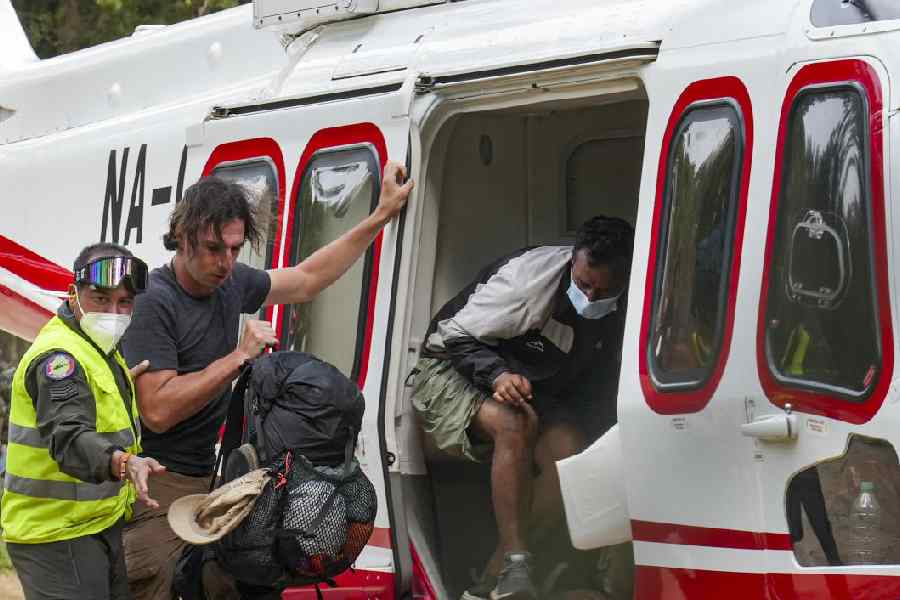
A very large flood hit Nepal after ice and rock reportedly collapsed near the Nepal-Tibet border.
The flood destroyed homes, roads, bridges and parts of hydropower projects.
More than 900 people have died, and over 4,000 people are still missing.
Soldiers and police are searching for survivors and recovering bodies.
Their work is difficult because they do not have enough helicopters, ropes, body bags or special search equipment.
Sniffer dogs are helping teams locate victims.
India and China have sent experts to help with searches and identifying victims.
Officials say Nepal has faced disaster-response equipment, staffing and funding problems for a long time.

Flash floods that struck Nepal’s Bhotekoshi River corridor on August 26 killed more than 900 people and left over 4,000 missing.
Rescuers report shortages of thermal cameras, life-detection devices, cutting tools, body bags, ropes and advanced helicopters.
The Nepal Army, Nepal Police and Armed Police Force have mobilised 19,895 personnel for rescue and recovery operations.
India and China are providing specialist assistance, including forensic, tunnel-rescue and hydropower-site search teams.
Officials say the crisis exposes longstanding shortages in Nepal’s disaster-management expertise, equipment and funding.
- Who
- The Nepal Army, Nepal Police, Armed Police Force, Indian and Chinese specialist teams, and other relief workers are involved.
- What
- Rescue and recovery operations are continuing after flash floods killed more than 900 people and left over 4,000 missing.
- Where
- The disaster struck the Bhotekoshi River corridor near the Nepal-Tibet border, including difficult-to-access hydropower sites.
- When
- The floods occurred on August 26, and the death toll surpassed 900 on Monday.
- Why
- Rescue work is being hampered by shortages of specialised equipment, helicopters, body bags, ropes, expertise and funding.
Active rescue and international assistance
Capacity and resource concerns
Current response
Active rescue and international assistance
Nepal has mobilised 19,895 security personnel, trained sniffer dogs and specialised search teams, while joint operations continue across affected areas.
Capacity and resource concerns
Officials say dangerous terrain, insufficient helicopters and shortages of cutting tools, ropes and detection equipment prevent rescuers from reaching some people.
Reasons for equipment shortages
Active rescue and international assistance
Former NDRRMA chief executive Anil Pokharel said international market shortages had made some specialised equipment difficult to obtain.
Capacity and resource concerns
Other officials described the problem as a longstanding domestic disaster-management weakness involving inadequate staffing, equipment and funding.
Outside support
Active rescue and international assistance
India and China are supplying specialist personnel, while India has sent a 19-member forensics team and a tunnel-rescue team; Sikkim also sent a relief mission.
Capacity and resource concerns
The need for foreign specialist teams and equipment highlights concerns about Nepal’s own disaster-response capacity.
Key facts
- Reported death toll
- More than 900 people
- People missing
- Over 4,000
- Security personnel mobilised
- 19,895
- Personnel breakdown
- 7,293 Nepal Police, 8,399 Nepal Army and 4,203 Armed Police Force personnel
- Hydropower workers out of contact
- More than 930 workers and employees
- NDRRMA budget
- Rs 200 million for the current fiscal year, described by officials as inadequate
- Sniffer-dog searches
- An Armed Police Force officer said dogs helped locate 5–7 bodies daily
Quotes
Armed Police Force officer
Officer involved in Nepal's flood search and rescue operations.
“In a humble endeavour to extend a helping hand and convey our heartfelt solidarity with Nepal and its people, Sikkim has come forward to provide essential relief materials and medical assistance to those affected by this tragedy.”
 telegraphindia.com
“It would be easier if there were equipment, but even when I was at the authority, there was a shortage in the international market when I tried to purchase those equipment.”
 m.rediff.com
telegraphindia.com
m.rediff.com
telegraphindia.com
 rediff.com
Sources


Related news
Nepal Flood Toll Rises as Rescue and Relief Continue

Nepal Floods Kill 175 as Hundreds Remain Missing
Nepal Flood Death Toll Reaches 675 as Thousands Remain Missing
Nepal Flood Toll Rises as Rescue Teams Face More Flooding

Nepal Flood Death Toll Reaches 903 as Search Continues

Nepal Flood Death Toll Rises to 469 as Search Widens

Nepal Thanks India as Glacial Disaster Rescue Efforts Continue
Nepal Warns of Heavy Rain After Deadly Floods
Nepal Flood Exposes Delayed Alerts and Cross-Border Warning Gaps
India to Rebuild Nepal School After Principal Saves 1,600
Maharashtra Mountaineers Join Search for Missing Nepal Trekkers
