

2 hrs ago
Maharashtra Conversion Law Raises Privacy and Interfaith Rights Questions
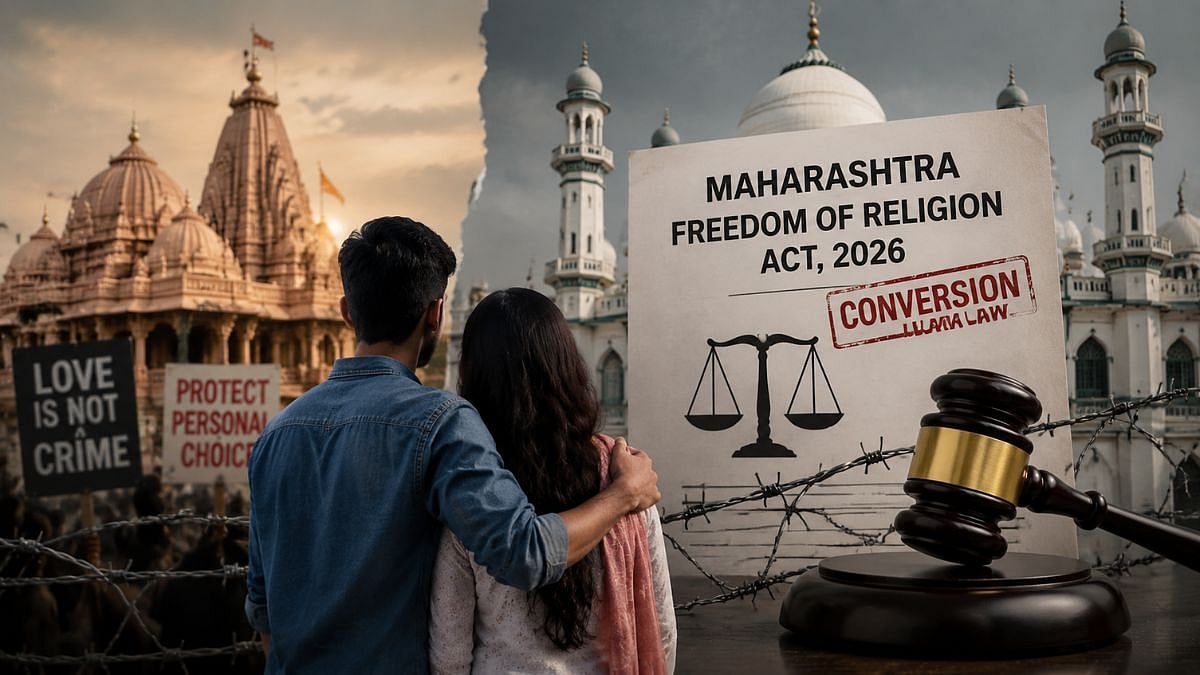
Maharashtra has brought a new law about changing religions into effect.
The government says it is meant to stop people from being forced or tricked into converting.
The law also covers gifts, money, jobs, education, marriage promises and claims of divine healing.
People who want to convert must give the district magistrate 60 days’ notice.
In some interfaith marriages, relatives can make complaints.
Critics worry that families or police could use the law against couples who freely choose their relationship or religion.
They also object to making accused people prove that their conversion was voluntary.
The first case under the law was registered in Pune.
Similar laws in other Indian states are being challenged in court.

The Maharashtra Freedom of Religion Act, 2026, is now fully in force after being passed in March.
The law aims to prevent conversions involving force, fraud, coercion, misrepresentation, allurement or undue influence.
It requires 60 days’ notice before conversion and permits certain relatives to file complaints involving interfaith marriages.
Critics oppose the broad definition of inducement and the requirement that accused people prove their conversion was voluntary and lawful.
The first case under the Act was registered in Pune last month, while similar laws in other states face legal challenges.
- Who
- The Maharashtra government, including the government led by Devendra Fadnavis, enacted the law; critics, police, converts and interfaith couples are affected.
- What
- The Maharashtra Freedom of Religion Act, 2026, regulates religious conversions and creates criminal provisions for conversions allegedly caused by force, fraud, coercion, misrepresentation, allurement or undue influence.
- Where
- Maharashtra, with the first case registered in Pune, India.
- When
- The law was passed in March 2026 and has now fully come into force; its first case was registered last month.
- Why
- The stated purpose is to prevent unlawful or coerced religious conversions; critics say the law threatens privacy, religious choice and the rights of interfaith couples.
Critics of the Act
Act’s stated rationale
State oversight of conversion
Critics of the Act
Critics say extensive government oversight can interfere with privacy, conscience and the constitutional protection to choose one’s religion.
Act’s stated rationale
The law is intended to prevent conversions resulting from force, fraud, coercion, misrepresentation, allurement or undue influence.
Interfaith marriages and complaints
Critics of the Act
Critics say allowing relatives to complain can turn family or social opposition to interfaith marriages into a legal issue and expose genuine couples to proceedings.
Act’s stated rationale
The Act allows complaints connected to conversions in interfaith marriages as part of its effort to investigate potentially unlawful inducements or coercion.
Burden of proof
Critics of the Act
Critics object that accused people must prove that a conversion was voluntary and lawful, potentially leaving them to establish their innocence for years.
Act’s stated rationale
The provision gives authorities a mechanism to investigate alleged unlawful conversions rather than placing the entire evidentiary burden on complainants.
Key facts
- Law
- Maharashtra Freedom of Religion Act, 2026
- Status
- Fully in force
- Legislative timeline
- Passed in March 2026, within days of the Bill’s introduction
- First case
- Registered in Pune last month
- Notice requirement
- A person must give the district magistrate 60 days’ notice before conversion
- Inducements covered
- Money, gifts, employment, education, marriage promises, assurances of an improved life and divine healing
- National context
- Maharashtra is described as the 13th Indian state to enact such a law
Sources
Related news
New Maharashtra Anti-Conversion Law Sparks Religious Freedom Debate
Maharashtra Freedom of Religion Act Takes Effect August 28

Civil Society Groups Challenge Maharashtra Religion Law

Maharashtra Freedom of Religion Act Takes Effect Amid Criticism

British Indian Church Leader Faces India Anti-Conversion Law Dispute

Lodha Urges Schools to Prioritize Welfare, Skills and Drug Prevention
Maharashtra Colleges Urged to Organise Job Fairs Before 2026 Mahakumbh
Roundtable Unanimously Endorses One Nation, One Election
Congress Leads Mumbai MLA Rankings as Assembly Questions Plunge
