7 hrs ago
U.S. Targets Russian Oil Buyers Despite Its Own Dependence
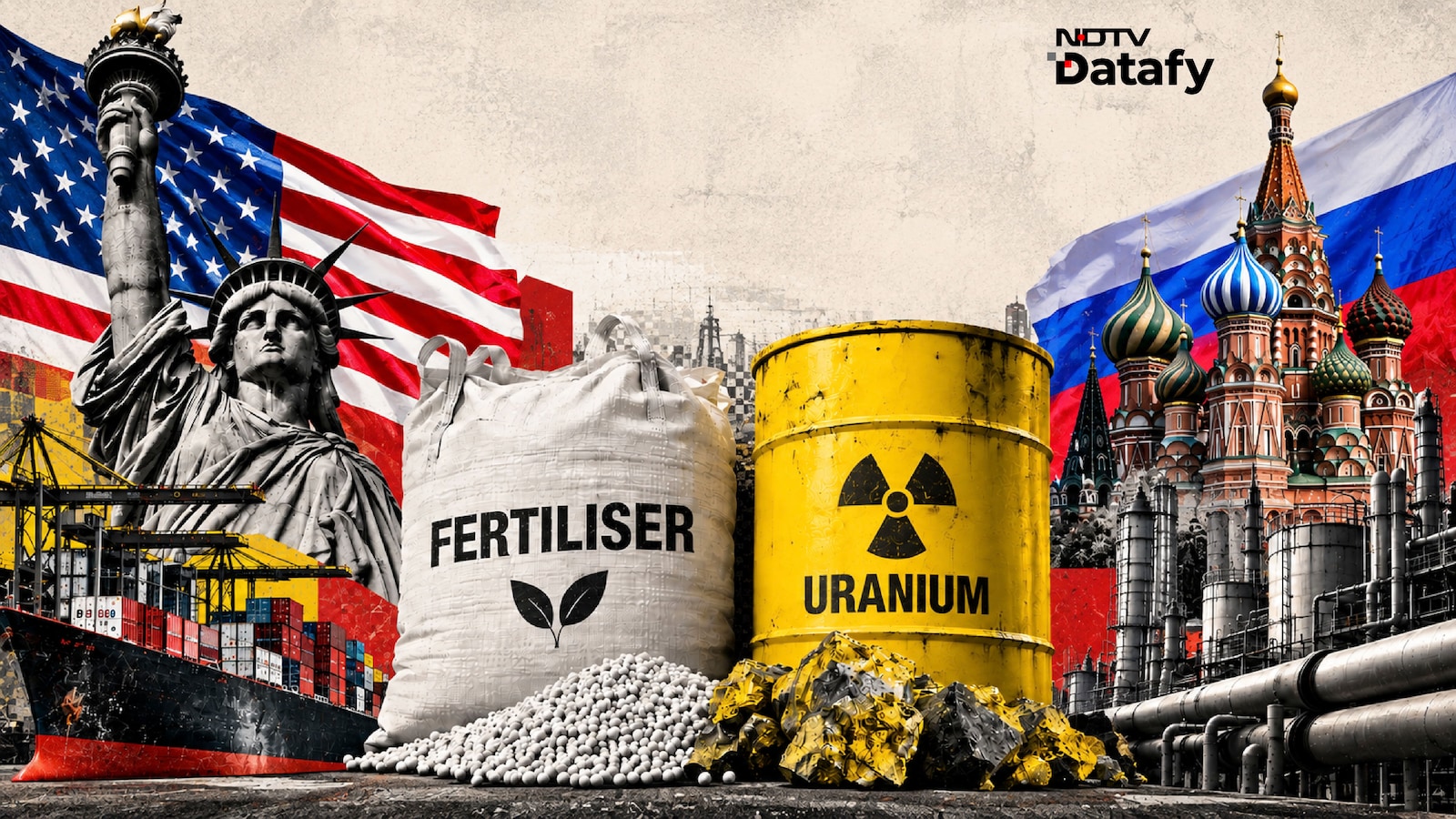
The United States wants to pressure countries that buy oil from Russia.
A proposed law could place very large tariffs on those countries.
China, India and Turkey have been important customers for Russian fossil fuels.
India bought much more Russian oil after the war in Ukraine began.
Europe bought less Russian oil because of sanctions and policy changes.
However, the United States still buys some important products connected to Russia.
Russia provided about one-third of the foreign uranium-enrichment services used by U.S. reactors in 2025.
Russia also supplied more than one-quarter of U.S. nitrogen-fertiliser imports in 2026.
This creates a difficult situation because the United States is trying to reduce Russia’s energy income while still relying on Russian products for nuclear power and farming.

The United States is considering 100 per cent tariffs on countries that continue buying Russian oil.
Since January 2023, China, India and Turkey accounted for 35.3, 20.2 and 13.8 per cent of Russia’s fossil-fuel export earnings, respectively.
European Union imports of Russian crude declined after 2022, while India sharply increased purchases of discounted Russian oil.
Russia supplied 33.6 per cent of foreign uranium-enrichment services used by U.S. nuclear reactors in 2025.
Russia’s share of U.S. nitrogen-fertiliser imports rose from 5.3 per cent in 2010 to 27 per cent in 2026.
- Who
- The United States, Russia, China, India, Turkey and European Union countries are central to the story.
- What
- The United States is proposing 100 per cent tariffs against countries that continue buying Russian oil while maintaining dependence on some Russian nuclear and agricultural supplies.
- Where
- The issue involves Russian exports, buyers in China, India, Turkey and Europe, and U.S. nuclear and agricultural markets.
- When
- The proposed tariff action is discussed alongside trade data from January 2023 onward, uranium data through 2025 and fertiliser data through 2026.
- Why
- Washington seeks to pressure Russia and countries supporting its fossil-fuel revenues, but U.S. industries still rely on Russian uranium-enrichment services and nitrogen fertiliser.
Pressure on Russian Energy Revenues
Supply Dependence and Economic Constraints
Tariffs and sanctions
Pressure on Russian Energy Revenues
The United States is pursuing stronger action against countries that buy Russian fossil fuels, including a proposed 100 per cent tariff.
Supply Dependence and Economic Constraints
The article highlights that the United States itself continues to purchase Russian-linked products important to nuclear power and agriculture.
Russian oil trade
Pressure on Russian Energy Revenues
Reducing purchases by Europe and other countries could limit Russia’s fossil-fuel export income and increase pressure on Moscow.
Supply Dependence and Economic Constraints
India and other buyers have helped maintain Russian oil exports, while India has benefited from discounted crude.
Strategic supplies
Pressure on Russian Energy Revenues
Reducing economic ties with Russia remains a stated policy direction for Washington and its partners.
Supply Dependence and Economic Constraints
Russia supplied 33.6 per cent of foreign uranium-enrichment services used by U.S. reactors in 2025 and 27 per cent of U.S. nitrogen-fertiliser imports in 2026, making rapid disengagement difficult.
Key facts
- Proposed tariff
- 100 per cent tariffs on countries continuing to purchase Russian oil
- Largest Russian fossil-fuel customer
- China accounted for 35.3 per cent of Russia’s fossil-fuel export earnings since January 2023
- India’s share
- India accounted for 20.2 per cent of Russia’s fossil-fuel export earnings during the same period
- U.S. uranium dependence
- Russia supplied 33.6 per cent of foreign uranium-enrichment services used by U.S. reactors in 2025
- U.S. fertiliser dependence
- Russia accounted for 27 per cent of U.S. nitrogen-fertiliser imports in 2026
- European imports
- European Union purchases of Russian crude declined after 2022
- India’s oil purchases
- India’s imports of Russian crude increased sharply after the Ukraine war began
Sources
Related news
India Warns US Russian Oil Tariffs Could Harm Ties

US Targets Russian Oil Buyers While Preserving Uranium Exceptions
Trump Signs Russia Sanctions Law, Putting India Ties Under Pressure

India’s Russian Oil Share Rose Amid US Tariff Threats
Trump’s Russia Sanctions Law Puts India Under Fresh Tariff Pressure

India Rejects US Tariffs as Russia Sanctions Law Takes Effect

Livestock Feed Makers Face Maize Competition From Ethanol Producers
Weak Monsoon and El Niño Threaten India’s Food Prices
Erratic Monsoon and El Niño May Keep Food Prices Elevated

Wheat falls as profit-taking offsets Black Sea war concerns