

1 week ago
Telangana High Court Questions Marriage Aid Schemes’ Legal Basis

The Telangana government gives eligible women money to help with marriage costs through two welfare schemes.
A lawyer has asked the High Court whether the government was allowed to create the schemes using Government Orders alone.
He says lawmakers should have passed a specific law setting the rules.
The government says it can run the schemes using its executive powers after the legislature approves money in the budget.
The court said it was not declaring welfare schemes wrong.
Instead, it is examining their legal basis and how government money is prioritized.
The judges also discussed people waiting for land compensation and other unpaid benefits.
The State was asked to provide more information about its finances and debt.
The court did not make a final decision and will hear the matter again.

The Telangana High Court is examining eight Government Orders governing the Kalyana Lakshmi and Shaadi Mubarak marriage-assistance schemes.
Petitioner Vijay Gopal argues that eligibility rules, income limits and assistance amounts require legislative authorization rather than only executive orders.
The State says the schemes are welfare policies implemented under Article 162 and supported by legislature-approved budget allocations.
The court questioned the State’s affidavit after finding that Article 162 had been reproduced incorrectly and ordered a fresh affidavit.
The court also sought financial and debt details while emphasizing that land-acquisition compensation and other statutory benefits cannot be left unpaid.
- Who
- The Telangana High Court, advocate Vijay Gopal, and the Telangana State government represented by Additional Advocate-General Mohammed Imran Khan.
- What
- The court is examining challenges to eight Government Orders introducing and revising the Kalyana Lakshmi and Shaadi Mubarak schemes, along with their constitutional and financial basis.
- Where
- The Telangana High Court in Hyderabad.
- When
- The articles report hearings on Wednesday and Thursday; the matter was adjourned for further consideration.
- Why
- Vijay Gopal argues that the schemes’ eligibility conditions and financial assistance require legislative authorization, while the State relies on executive power, budget approvals and welfare objectives.
Petitioner’s Challenge
State Government’s Defense
Need for legislation
Petitioner’s Challenge
Vijay Gopal argues that creating the schemes and setting eligibility criteria, income limits, assistance amounts and guidelines are essential legislative functions that cannot be performed solely through executive orders.
State Government’s Defense
The State says the schemes are policy decisions that can be implemented through Government Orders under the State’s executive power after budgetary allocations are approved.
Constitutional validity
Petitioner’s Challenge
The petitioner says the executive orders lack a specific legislative foundation and are arbitrary and contrary to Articles 14 and 15 of the Constitution.
State Government’s Defense
The State relies on Article 162 and other constitutional provisions concerning public finances, arguing that the schemes implement social-justice and welfare objectives within the legislative financial process.
Public-fund priorities
Petitioner’s Challenge
The court’s discussion highlighted the petitioner’s concern that statutory land-acquisition compensation and other legally owed benefits should not be delayed while welfare schemes receive funding.
State Government’s Defense
The State defended the schemes as support for economically weaker families and as measures intended to discourage child marriage, while saying pending compensation claims would be examined on priority.
Key facts
- Schemes
- Kalyana Lakshmi and Shaadi Mubarak provide marriage assistance to eligible beneficiaries.
- Government Orders
- The petition challenges eight orders issued between 2014 and 2019; one report specifies September 2014 to June 2019.
- Petitioner
- Advocate Vijay Gopal filed the writ petition and appeared in person.
- State’s legal position
- The State says the schemes were issued under Article 162 as welfare measures supported by legislative budget allocations.
- Affidavit issue
- The court said Article 162 was reproduced incorrectly in the State’s affidavit; the State called it a typographical error and promised a fresh affidavit.
- Financial information sought
- The Finance department was directed to provide details of the State’s financial position, borrowing for the schemes and total debt.
- Interim order
- The State sought to vacate an interim order staying the eight Government Orders and disbursements under them.
- Current status
- The court recorded no final finding on the constitutional validity of either scheme.
Quotes

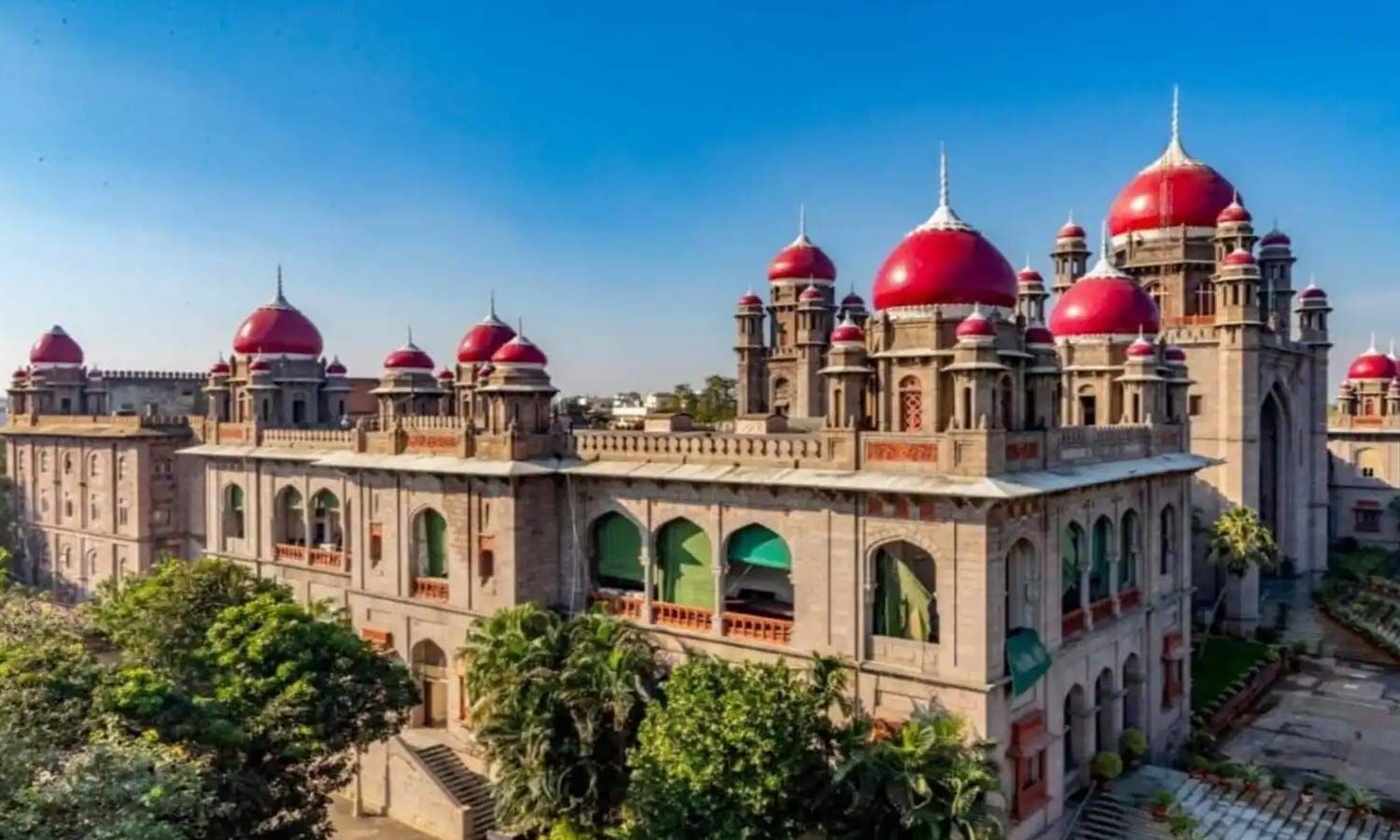
Telangana High Court
The bench of the Telangana High Court
“Compensation is a right, whereas this is a welfare scheme.”
 thehansindia.com
Sources
Related news
Telangana High Court Lifts Stay on Marriage Assistance Schemes

Telangana to contest High Court stay on Kalyana Lakshmi schemes
Telangana High Court stays Kalyana Lakshmi, Shaadi Mubarak schemes
Telangana High Court Advances Welfare Appeal, Delays Other Cases

Telangana High Court Seeks Details on Debt, Welfare Spending

Telangana High Court Maintains Stay on Welfare Schemes
