23 hrs ago
Telangana High Court Lifts Stay on Marriage Assistance Schemes
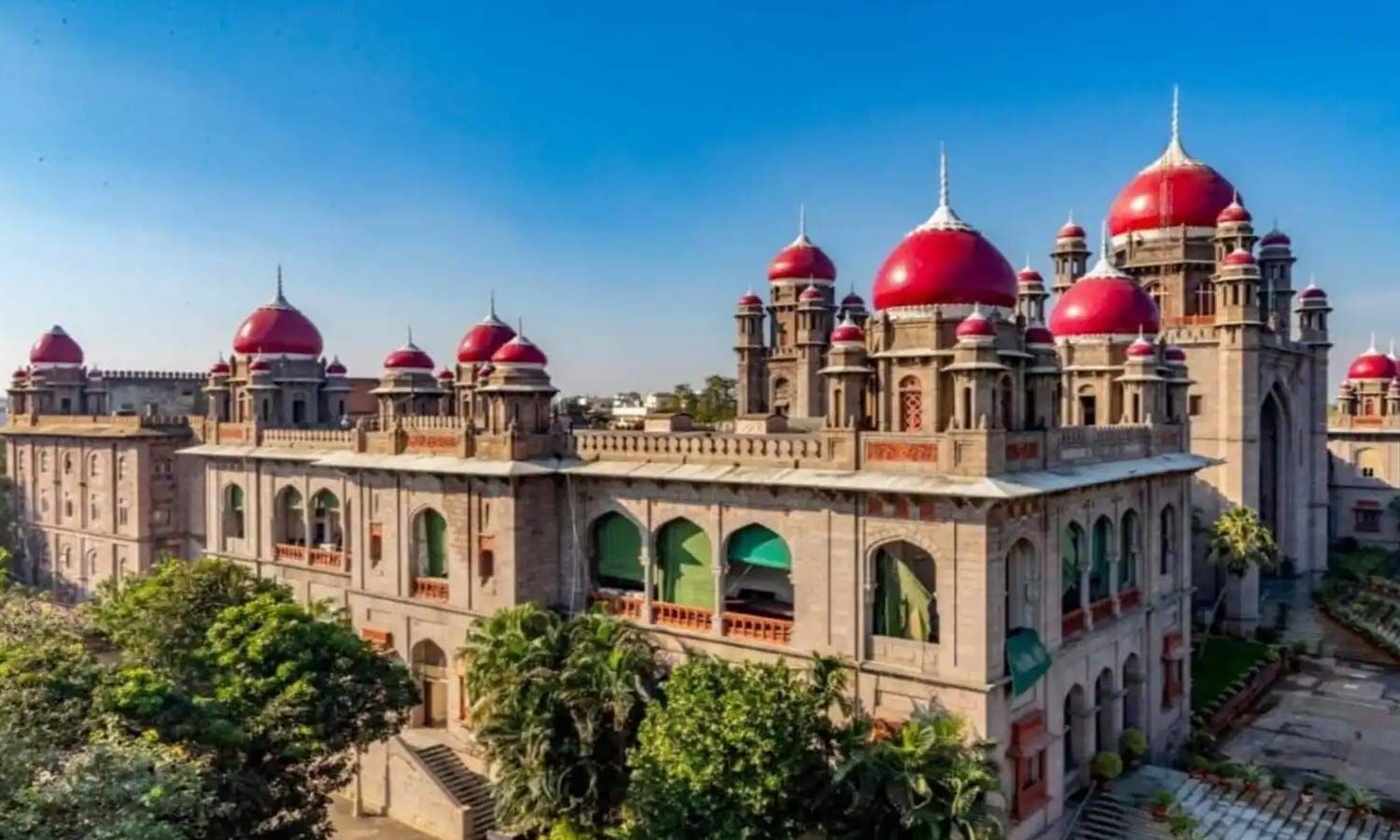
The Telangana government gives financial help to some families when their daughters get married.
The help is provided through two schemes called Kalyana Lakshmi and Shaadi Mubarak.
A single judge had temporarily stopped the schemes because of questions about how they were created.
Advocate Vijay Gopal said the government should not make such a large program only through government orders.
The government appealed that decision.
A division bench of the Telangana High Court lifted the temporary stop.
This means the schemes can operate and payments can continue for now.
The court noted that the government auditor had not specifically said the spending lacked legal or constitutional approval.
The court’s interim ruling did not finally settle whether the schemes have sufficient legislative backing.

A Telangana High Court division bench lifted the single judge’s interim stay on the Kalyana Lakshmi and Shaadi Mubarak schemes.
The ruling permits continued implementation and disbursal of assistance to eligible families across communities within specified income limits.
The single judge had halted eight government orders after advocate Vijay Gopal challenged them and the government initially failed to file its counter.
The government argued that the schemes had operated since 2014, did not prejudice Gopal and supported welfare and child-marriage prevention objectives.
Gopal argued that the executive could not create the schemes, eligibility rules and large public expenditures through government orders without legislative backing.
- Who
- The Telangana government, the Telangana High Court division bench, advocate Vijay Gopal and Advocate-General A. Sudarshan Reddy were involved.
- What
- The division bench lifted the single judge’s interim stay and allowed the Kalyana Lakshmi and Shaadi Mubarak schemes to continue.
- Where
- The proceedings took place in the Telangana High Court in Hyderabad.
- When
- The division bench heard and decided the government’s appeal on Tuesday; the single judge’s interim orders were issued on August 12. No year was stated.
- Why
- The government appealed after the single judge halted eight government orders connected with the schemes, while the division bench found that the Comptroller and Auditor-General had not specifically indicted the expenditure as lacking legislative or constitutional sanction.
Petitioner’s Position
State Government’s Position
Legislative backing
Petitioner’s Position
Vijay Gopal argued that the executive could not formulate the welfare policy, set eligibility criteria and distribute large amounts of public money through government orders without legislation.
State Government’s Position
The state defended the schemes and sought continuation of their implementation, arguing that they were lawful welfare programs that had operated since 2014.
Standing and maintainability
Petitioner’s Position
Gopal argued that he could challenge the executive orders as a citizen because his petition targeted executive action without statutory authority, not legislation or a statutory rule.
State Government’s Position
Advocate-General A. Sudarshan Reddy argued that Gopal had suffered no prejudice, was not a beneficiary and had not shown a violation of his rights, so the petition was not maintainable.
Purpose and payment arrangements
Petitioner’s Position
Gopal questioned the executive-created arrangements for distributing assistance of ₹1 lakh and above, including payments in the bride’s mother’s name and, in some instances, through MLAs.
State Government’s Position
The government said the schemes were welfare measures consistent with objectives concerning prevention of child marriage and noted that the Supreme Court had permitted or applauded similar schemes.
Key facts
- Schemes
- Kalyana Lakshmi and Shaadi Mubarak
- Court ruling
- A division bench lifted the single judge’s interim stay
- Government orders
- Eight orders related to implementation and disbursal were challenged
- Beneficiaries
- Families of brides across communities meeting specified family-income limits
- Scheme start
- The government said the schemes had operated continuously since 2014
- Assistance
- The petitioner referred to financial assistance of ₹1 lakh and above
- Audit position
- The Comptroller and Auditor-General had not specifically indicted the expenditure as lacking legislative or constitutional sanction
Quotes
Vijay Gopal
Petitioner challenging the government orders implementing the welfare schemes
“Article 246 gives Parliament and the State Legislature the power to make laws. No such legislation has been made by the state regarding these schemes.”
 deccanchronicle.com
Sources

Related news
Telangana High Court stays Kalyana Lakshmi, Shaadi Mubarak schemes
Telangana High Court Advances Welfare Appeal, Delays Other Cases

Telangana to contest High Court stay on Kalyana Lakshmi schemes

Telangana High Court Questions Marriage Aid Schemes’ Legal Basis

Telangana High Court Maintains Stay on Welfare Schemes
Telangana High Court lifts stay on aid for disabled girls
PUCL Urges CJI Action Over Rajasthan High Court Allegations

Supreme Court Questions IPS Deputation for CAPF Leadership Positions

Supreme Court Quashes 20-Year Conviction, Reaffirms Juvenile Legal Protections
Two Years After RG Kar Doctor's Rape-Murder, Case Remains Unresolved

ED widens Chhattisgarh probes with two arrests and searches